
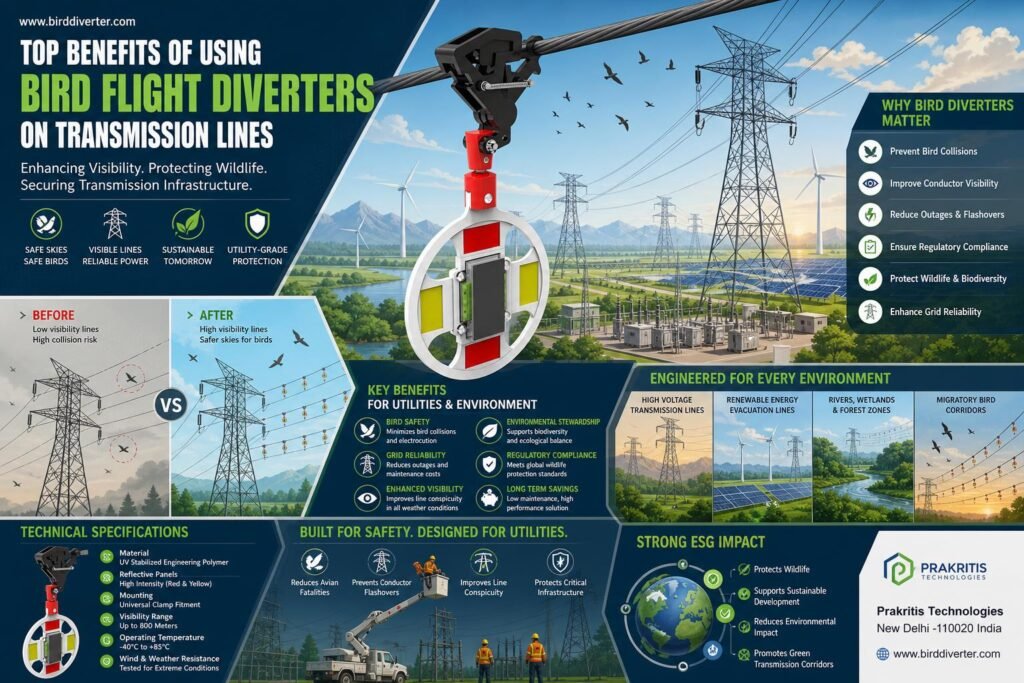
In the evolving landscape of utility infrastructure, particularly in the transmission sector, avian safety remains a significant concern. The rapid development of renewable energy sources, coupled with an increase in transmission lines, necessitates effective strategies to protect migratory birds while ensuring grid reliability. Bird flight diverters, innovative avian safety devices, play a critical role in this regard, offering numerous benefits to state power utilities, EPC contractors, and renewable energy companies.
Technical Overview of Bird Flight Diverters
Bird flight diverters are devices attached to overhead power lines to enhance visibility for birds, thereby preventing collisions. These devices come in various types, including LED and non-LED options, designed to maximize visibility during flocking conditions. The diverters function by creating a visual signal in the airspace, thus alerting birds to the presence of transmission infrastructure.
How They Work
The effectiveness of bird flight diverters relies on their ability to catch the light and create shadows, drawing attention to power lines especially during low visibility conditions, such as dawn or dusk. This technology improves overhead line markers’ visibility, making them an essential component of avian protection strategies.
Industry Applications
Bird flight diverters find their applications across various sectors within the utility and renewable energy industries:
- State Power Utilities: Ensure safe operation of high-voltage transmission systems while complying with environmental regulations.
- EPC Contractors: Facilitate the installation of sustainable infrastructure that meets avian safety standards.
- Renewable Energy Companies: Integrate bird flight diverters in new projects, ensuring minimal ecological disruption.
- Transmission Line Companies: Maintain grid reliability while safeguarding migratory bird routes.
- Government Infrastructure Agencies: Develop policies to incorporate avian safety devices in national infrastructure projects.
Benefits for Utilities and EPC Contractors
The adoption of bird flight diverters offers several key advantages for utilities and EPC contractors:
1. Enhanced Avian Protection
Mitigating bird collisions is paramount for compliance with environmental regulations, making bird flight diverters an essential tool for avian safety.
2. Improved Grid Reliability
Ensuring the integrity of transmission lines directly correlates with grid reliability. Bird flight diverters help minimize failures caused by wildlife interference.
3. Regulatory Compliance
With stringent regulations regarding environmental impact, incorporating bird diverters helps utilities demonstrate commitment to compliance and sustainability.
4. Cost-Effectiveness
Investing in bird flight diverters may reduce long-term operational costs associated with wildlife collisions and line damages.
Renewable Energy Transmission Relevance
As the global shift towards renewable energy accelerates, the need to safeguard natural habitats becomes increasingly important. Bird flight diverters play a pivotal role in ensuring that infrastructure development does not come at the expense of avian safety. Their integration into renewable energy projects fosters environmental stewardship, a crucial aspect of sustainability initiatives.
Transmission Safety Advantages
Bird flight diverters enhance transmission safety by:
- Boosting Overhead Conductor Visibility: The devices improve visibility for both birds and utility personnel, reducing the risk of accidents during maintenance activities.
- Addressing Human Safety: By preventing bird collisions, these devices indirectly secure the safety of utility workers who maintain the lines.
- Mitigating Service Interruptions: Fewer wildlife-related incidents translate to reduced service interruptions, contributing to overall grid integrity.
Environmental Compliance and ESG Discussion
Adopting bird flight diverters not only fulfills regulatory requirements but also aligns with Environmental, Social, and Governance (ESG) criteria. By enhancing avian protection, companies position themselves as environmentally responsible stakeholders. This not only fortifies their market reputation but can also attract favorable investment opportunities.
Product Comparison Table
| Type of Bird Flight Diverter | Visibility | Installation Ease | Cost |
|---|---|---|---|
| LED Diverter | High | Moderate | Higher |
| Non-LED Diverter | Moderate | Easy | Lower |
Best Practices for Implementation
Implementing bird flight diverters effectively requires adherence to best practices, such as:
- Conducting thorough site assessments to determine optimal placement.
- Selecting the appropriate type of diverter based on site conditions.
- Engaging with local wildlife experts during the planning phase.
- Regularly monitoring and maintaining installations to ensure effectiveness.
Call to Action
For state power utilities and contractors, investing in bird flight diverters is pivotal for ensuring avian safety and compliance with regulatory standards. Contact Bird Diverter for technical consultation or to explore our range of products tailored to your needs. Visit our contact page to get started on enhancing your transmission safety measures.
FAQ Section
What are bird flight diverters?
Bird flight diverters are devices attached to power lines that enhance visibility, helping to prevent bird collisions with overhead wires.
How do bird flight diverters improve safety for transmission lines?
They make transmission lines more visible to birds, reducing the risk of collision, which can lead to outages or accidents.
What are the benefits of using avian safety devices?
Using avian safety devices ensures compliance with environmental regulations, promotes avian protection, and enhances the reliability of electrical transmission.
Are bird flight diverters suitable for all types of transmission lines?
Yes, they can be implemented across various overhead power line configurations to enhance visibility and safety.
How can utilities monitor the effectiveness of bird flight diverters?
Utilities can monitor bird collision rates before and after installation, conduct visual inspections, and engage in field assessments to evaluate effectiveness.