
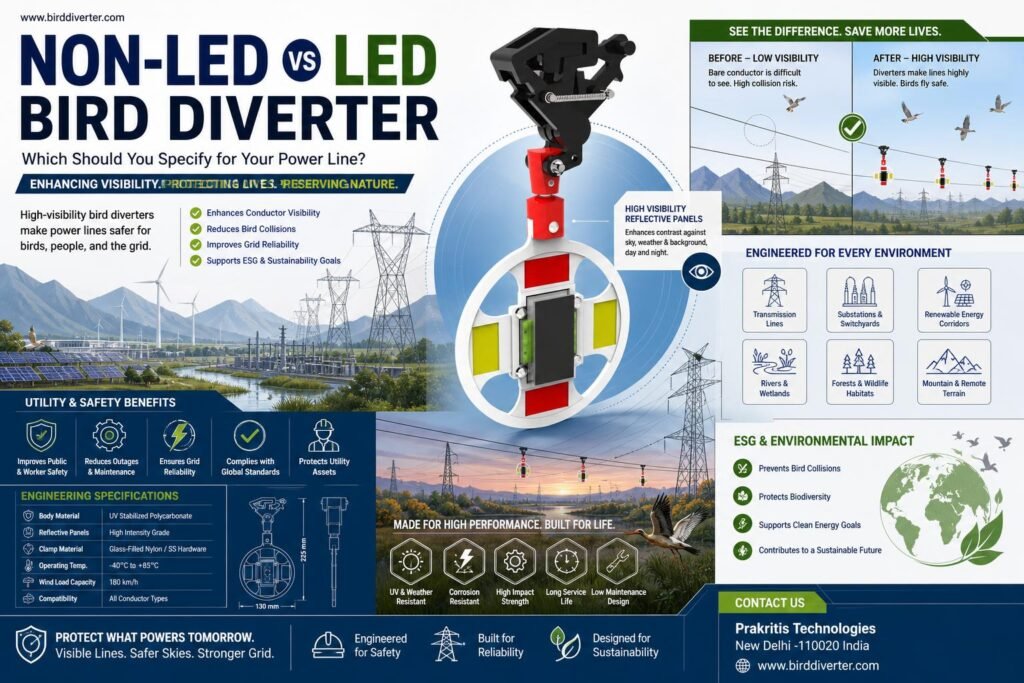
In the evolving landscape of energy transmission, ensuring the visibility of power lines is paramount not only for operational efficiency but also for avian protection. As organizations focus on both safety and sustainability, understanding the differences between non-LED and LED bird diverters becomes essential for State Power Utilities, EPC Contractors, and renewable energy companies. This article delves into the features, benefits, and applications of both types of bird diverters, providing a comprehensive analysis to help decision-makers choose the right product for their transmission infrastructures.
Technical Overview
Bird diverters are critical components in power line infrastructure aimed at preventing bird strikes on overhead lines. These devices enhance the visibility of lines, thereby protecting avian life and minimizing operational disruptions. Non-LED bird diverters use passive technology, while LED bird diverters employ active light-emitting technology.
Understanding Bird Diverter Technologies
Both non-LED and LED bird diverters serve the primary function of marking power lines for birds, but they do so differently:
- Non-LED Bird Diverters: Typically made from colored materials that reflect light, these devices rely on natural light for visibility. They are commonly used in areas with low ambient lighting or where bird activity is minimal.
- LED Bird Diverters: Utilizing colored lights, these devices are designed to be clearly visible in different weather conditions, including fog or rain. They are particularly effective in high-risk areas with significant avian activity.
Industry Applications
Both types of bird diverters are applicable in a variety of industries, particularly where transmission lines intersect with avian migration paths.
State Power Utilities
Utilities must comply with environmental regulations focused on avian protection while maintaining grid reliability. Implementing either type of bird diverter can enhance operational safety and meet regulatory requirements.
EPC Contractors
Engineering, procurement, and construction (EPC) contractors need to consider the visibility of power transmission lines in their designs. The choice between non-LED and LED diverters can impact project specifications significantly, especially in areas prone to bird strikes.
Renewable Energy Companies
With the increase in renewable energy infrastructure, such as wind and solar farms, incorporating effective bird diverters becomes critical for minimizing the impact on local wildlife while ensuring compliance with sustainability goals.
Benefits for Utilities and EPC Contractors
Choosing the right bird diverter can lead to numerous benefits for utilities and EPC contractors:
- Enhanced Visibility: LED diverters provide greater visibility in adverse weather conditions, leading to reduced bird strikes.
- Regulatory Compliance: Many regions have specific regulations regarding bird protection near transmission lines. Implementing these devices supports compliance efforts.
- Operational Efficiency: Reduced bird incidents can lead to significant cost savings related to operational downtime and repairs.
Renewable Energy Transmission Relevance
In the context of India’s growing renewable energy sector, the choice of bird diverters becomes even more crucial. With projects often located in areas rich in wildlife, employing effective avian protection measures is vital.
Sustainability Goals
Integrating LED bird diverters aligns with sustainability goals, ensuring that renewable energy projects minimize their ecological footprint while maximizing energy production.
Transmission Safety Advantages
The safety of transmission lines can significantly benefit from the strategic use of bird diverters:
- Reduced Risks: By clearly marking power lines, bird diverters help mitigate the risk of avian collisions, thus protecting both wildlife and the infrastructure.
- Improved Maintenance: With better visibility, maintenance crews can operate more effectively, reducing the risk of accidents in the vicinity of high-voltage lines.
Environmental Compliance and ESG Discussion
Environmental, social, and governance (ESG) factors are increasingly shaping the utility landscape. Utilizing bird diverters is a proactive measure to enhance environmental compliance and demonstrate a commitment to avian protection.
Product Comparison Table
| Feature | Non-LED Bird Diverter | LED Bird Diverter |
|---|---|---|
| Visibility | Passive technology; depends on light conditions | Active light-emitting technology for high visibility |
| Effectiveness | Good in clear weather | Excellent in all weather conditions |
| Power Source | No power required | Requires battery or solar power |
| Installation Cost | Generally lower | Higher initial investment but reduced operational risks |
| Maintenance Frequency | Lower | May require more frequent checks |
Best Practices Section
When selecting and installing bird diverters, consider the following best practices:
- Assess the specific environmental conditions of the installation site.
- Evaluate the avian activity in the area to determine the most suitable type of diverter.
- Regularly inspect and maintain bird diverters to ensure optimal functionality.
Call to Action
If you are looking to enhance your project’s avian protection strategies, consider connecting with Bird Diverter for expert consultation on product selection and project support. For more information, visit our contact page.
FAQ Section
What are bird diverters?
Bird diverters are devices installed on power lines to enhance visibility for birds, thereby reducing the risk of collisions with overhead wires.
How do non-LED bird diverters work?
Non-LED bird diverters use passive technology that relies on light reflection to make power lines visible, which works best in areas with adequate natural lighting.
What are the advantages of using LED bird diverters?
LED bird diverters provide better visibility in all weather conditions, reducing bird strikes significantly, and are more effective in high-risk avian areas.
How do I choose the right bird diverter for my project?
Consider factors like environmental conditions, avian activity, and compliance with local regulations when selecting a bird diverter.
Are there regulations regarding bird protection for power lines?
Yes, many regions have specific regulations aimed at protecting bird populations near power lines, making bird diverters essential for compliance.