
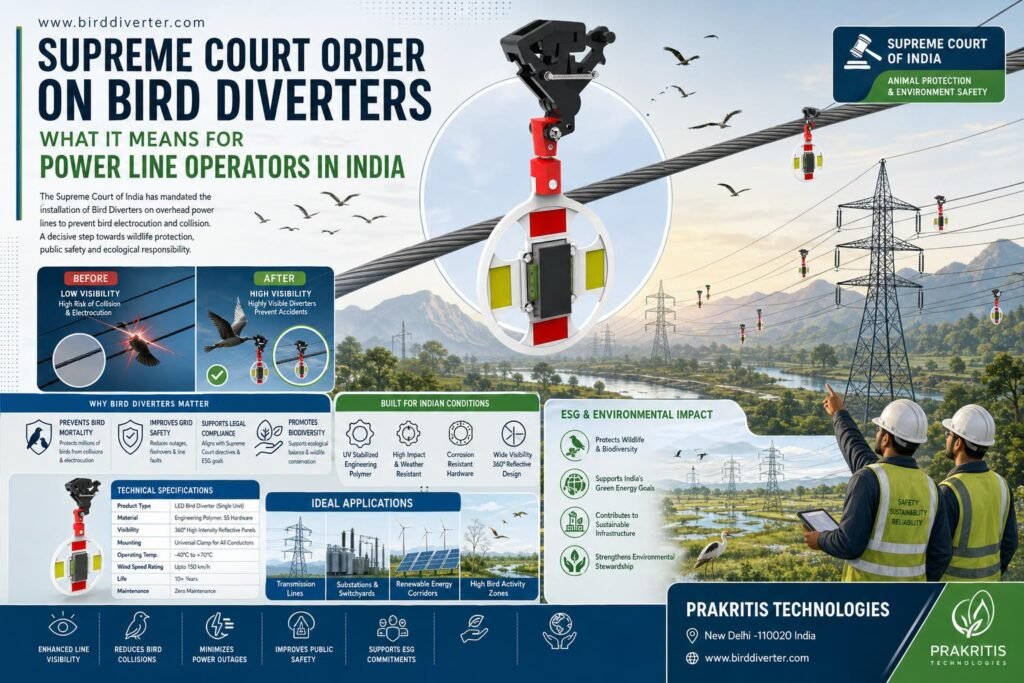
The recent Supreme Court ruling in India regarding bird diverters has far-reaching implications for power line operators across the country. This decision mandates the installation of bird diverters on transmission lines, particularly in areas where endangered species like the Great Indian Bustard are prevalent. The ruling is not merely about avian safety; it also intersects with compliance standards, environmental responsibility, and the operational protocols of energy providers. In this article, we will explore the technical specifications, industry applications, and the benefits that this ruling brings, particularly for state power utilities, EPC contractors, renewable energy companies, and government infrastructure agencies.
Technical Overview of Bird Diverters
Bird diverters are devices designed to enhance the visibility of overhead power lines to birds, thereby reducing the likelihood of collision. These devices are installed at specific intervals along transmission lines and come in various forms, including LED, non-LED, and Aerospin bird diverters. Effective installation can significantly decrease bird mortality and enhance the sustainability of power systems.
Types of Bird Diverters
- LED Bird Diverters: These devices utilize LED technology for improved visibility, especially at night. Their brightness helps birds discern transmission lines from the sky.
- Non-LED Bird Diverters: These traditional designs are effective in daylight and are often more cost-effective.
- Aerospin Bird Diverters: These aerodynamic designs spin in the wind, creating movement that catches the attention of birds, enhancing visibility.
Industry Applications of Bird Diverters
Bird diverters play a critical role in several sectors, including renewable energy and traditional utility infrastructure. With the Supreme Court’s recent ruling, their application has become more vital than ever, especially for companies involved in the transmission of electricity.
Renewable Energy Companies
As the push for renewable energy accelerates, the integration of bird diverters into wind and solar projects is essential. Compliance with the Supreme Court order not only helps in avian protection but also reinforces the commitment of these companies to environmental sustainability.
Transmission Line Companies
For transmission line operators, implementing bird diverters can help mitigate risks of fines and operational delays. Compliance with the Court’s order can enhance their reputation as environmentally responsible entities.
Benefits for Utilities and EPC Contractors
The implementation of bird diverters presents numerous benefits for power utilities and EPC contractors, especially in compliance and operational efficiency.
Compliance with Environmental Regulations
Adherence to the Supreme Court’s ruling not only ensures compliance with national laws but also demonstrates a company’s commitment to environmental stewardship.
Reduction in Litigation Risks
By proactively adopting bird diverters, companies can reduce the risk of legal challenges related to avian collisions and habitat destruction.
Renewable Energy Transmission Relevance
As companies increasingly build renewable energy infrastructure, the role of bird diverters becomes paramount. Integrating these devices into design phases improves the likelihood of regulatory approvals and community support. The requirement also emphasizes energy companies’ responsibilities towards ecological balance, particularly concerning endangered species like the Great Indian Bustard.
Transmission Safety Advantages
Implementing bird diverters contributes directly to improving transmission safety. The visibility enhancements lead to fewer collisions and longer running times for transmission lines, ultimately resulting in reduced maintenance costs.
Environmental Compliance and ESG Discussion
Compliance with the Supreme Court ruling is a crucial aspect of Environmental, Social, and Governance (ESG) initiatives. By installing bird diverters, entities showcase their commitment to responsible environmental practices. This can further enhance their market position, attracting investors who prioritize sustainability.
Product Comparison Table
| Type of Bird Diverter | Visibility | Cost | Installation | Durability |
|---|---|---|---|---|
| LED Bird Diverter | High | Moderate | Easy | 5-10 years |
| Non-LED Bird Diverter | Moderate | Low | Easy | 3-5 years |
| Aerospin Bird Diverter | High | Moderate | Moderate | 5-10 years |
Best Practices for Implementation
When implementing bird diverters, adherence to best practices is essential:
- Conduct thorough site assessments to determine optimal installation locations.
- Ensure compliance with local regulations and site-specific requirements.
- Regularly maintain and inspect installed diverters to ensure functionality.
Call to Action
If you are a power line operator or an infrastructure provider in India, now is the time to assess your compliance with the Supreme Court order on bird diverters. Contact Bird Diverter for expert guidance on suitable products, technical consultation, and project support. Visit our contact page to get started.
FAQ Section
What are bird diverters and why are they important?
Bird diverters are visibility-enhancing devices installed on power lines to prevent bird collisions. They are crucial for avian protection and compliance with environmental regulations.
How do I choose the right bird diverter for my project?
The selection of bird diverters depends on factors such as visibility needs, cost, and environmental considerations. Consulting with experts can facilitate the decision-making process.
What are the consequences of non-compliance with the Supreme Court ruling?
Failure to comply may result in fines, legal actions, and increased scrutiny from regulatory agencies, which can hinder project timelines and operations.
Can bird diverters be used on renewable energy infrastructure?
Yes, bird diverters are essential in renewable energy projects, enhancing avian protection and meeting compliance with environmental laws.
What maintenance is required for installed bird diverters?
Regular inspections for wear and functionality, as well as cleaning debris from diverters, are recommended to maintain their effectiveness.