
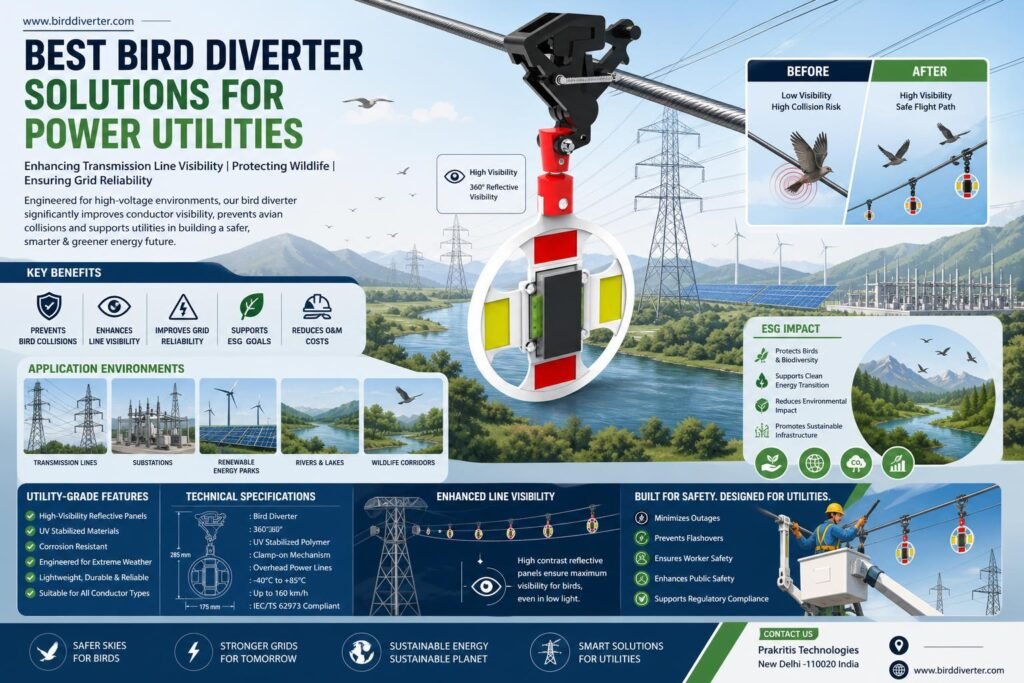
In the evolving landscape of power utilities, ensuring the safety of both infrastructure and wildlife is paramount. Effective bird diverter solutions are an integral part of this strategy, specifically designed to enhance visibility and prevent avian collisions with overhead transmission lines. This article explores the importance of bird diverters in the utility sector, their applications, advantages, and the best practices for implementation.
Technical Overview of Bird Diverter Solutions
Bird diverters, commonly known as transmission line markers, are devices installed on overhead lines to improve their visibility. These devices come in various designs and colors, tailored to suit different environments and avian species. They serve a dual purpose: enhancing the safety of high-voltage infrastructure and protecting migratory birds that might otherwise collide with unmarked lines.
How Bird Diverters Work
Bird diverters operate by increasing the visibility of power lines to foraging and migrating birds. By using bright colors and reflective materials, they ensure that birds can easily perceive the lines from a distance, allowing them to navigate safely through their flight paths.
Industry Applications
Bird diverter solutions find relevance across various sectors, particularly within power utilities, renewable energy projects, and infrastructure management. They are essential for:
- State Power Utilities
- Renewable Energy Companies
- EPC Contractors
- Transmission Line Companies
- Government Infrastructure Agencies
Applications in Renewable Energy Projects
As renewable energy projects increase, particularly in wind and solar installations, the integration of bird diverters becomes crucial. They ensure that these infrastructures align with environmental compliance standards and minimize ecological impact, thereby enhancing the sustainability of energy projects.
Benefits for Utilities and EPC Contractors
Implementing bird diverter solutions provides numerous benefits for utilities and contractors:
Enhanced Safety and Reliability
By incorporating these devices, utilities can significantly reduce the risk of bird collisions, which in turn protects the critical transmission infrastructure. This not only maintains grid reliability but also ensures compliance with environmental standards.
Cost-Efficiency
Investing in bird diverters can lead to long-term savings by reducing maintenance costs associated with damage from wildlife collisions. Moreover, compliance with regulatory requirements can help avoid potential fines and litigation costs associated with environmental negligence.
Transmission Safety Advantages
The safety of transmission lines is vital for operational efficiency and environmental responsibility. By reducing bird collisions:
- Utilities enhance the integrity of their electrical networks.
- Grid reliability is maintained, minimizing outages and disturbances.
- Environmental compliance goals are achieved, reinforcing corporate social responsibility efforts.
Environmental Compliance and ESG Discussion
Environmental, Social, and Governance (ESG) commitments are increasingly shaping utility operations. Deploying bird diverter solutions is a proactive measure in fulfilling these responsibilities:
Reducing Avian Mortality
Bird diverters are a key element in reducing avian mortality rates associated with overhead lines. By actively preventing collisions, utilities can demonstrate their commitment to ecological preservation, positively impacting their ESG ratings.
Support for Migratory Bird Conservation
With many species relying on migratory routes that intersect with power lines, bird diverters play a crucial role in conservation efforts. Utilities can position themselves as leaders in environmental stewardship while maintaining operational excellence.
Product Comparison Table
| Product Type | Features | Best For |
|---|---|---|
| LED Bird Diverter | High visibility, energy-efficient lighting | Urban areas and high-traffic zones |
| Non-LED Bird Diverter | Cost-effective, maintenance-free options | Rural and low-traffic environments |
| Aerospin Bird Diverter | Spinning motion, dynamic visibility | Regions with frequent bird activity |
Best Practices for Implementing Bird Diverters
To maximize the effectiveness of bird diverter solutions, utilities and EPC contractors must adhere to several best practices:
- Assessing avian activity in the area to determine the optimal placement and type of diverter.
- Regular inspections and maintenance to ensure that all devices remain functional and minimize the risk of wildlife collisions.
- Training personnel on the importance of bird diverters and the ecological impacts of their operation.
Call to Action
For tailored bird diverter solutions that align with your utility’s safety goals and environmental compliance, contact us at Bird Diverter. Our team is here to assist you in choosing the right products for your projects and ensuring successful implementation.
FAQ Section
What are bird diverters and how do they work?
Bird diverters are devices that improve the visibility of transmission lines, thereby reducing the risk of bird collisions. They work by adding bright colors and reflective materials to overhead lines.
Why are avian protections important for power utilities?
Avian protections help to prevent bird fatalities, enhance safety compliance, and reflect a utility’s commitment to environmental responsibility.
Can bird diverters be used in renewable energy projects?
Yes, bird diverters are crucial for renewable energy installations, ensuring minimal ecological impact and supporting regulatory compliance.
What types of bird diverters are available?
Several types of bird diverters are available, including LED bird diverters, non-LED options, and aerospin models designed for different environments and avian interactions.
How can I choose the right bird diverter for my needs?
Choosing the right bird diverter depends on factors such as location, bird species prevalent in the area, and the specific characteristics of the transmission lines.