
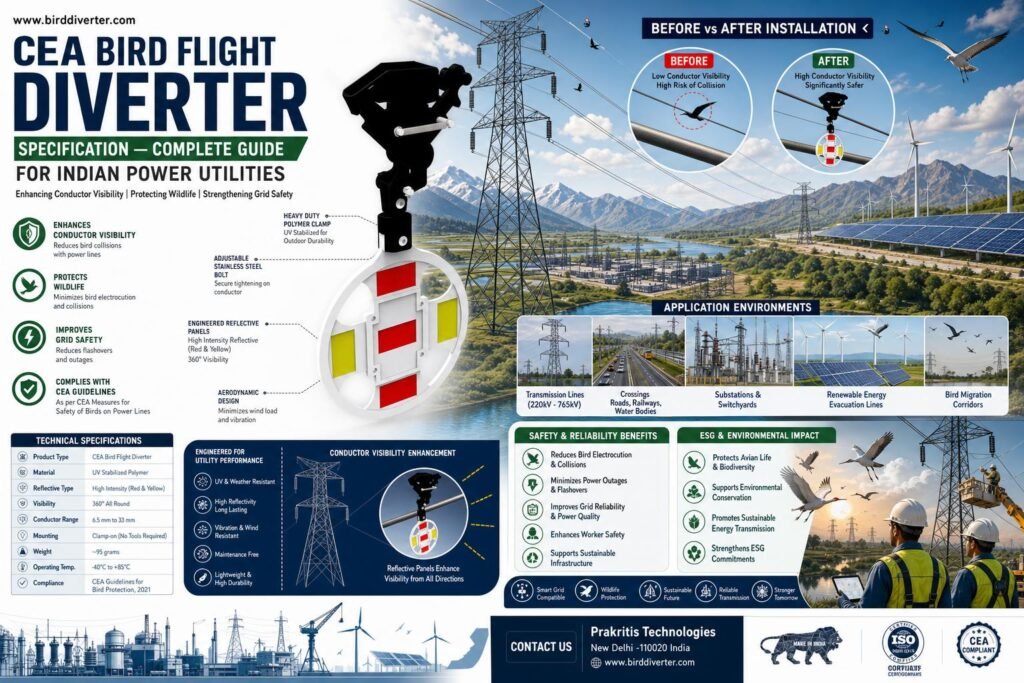
The protection of avian species in India, particularly in the context of power transmission, has become a significant concern. With the rise of renewable energy projects and the expansion of existing power lines, the Central Electricity Authority (CEA) has established guidelines for bird flight diverters. These diverters play an essential role in enhancing visibility for migratory birds, ultimately reducing collision risks. This complete guide will delve into the CEA bird flight diverter specification, addressing its necessity, installation, and the benefits it brings to state power utilities and EPC contractors.
Technical Overview
The CEA bird flight diverter specification outlines the design, materials, and functionality of these crucial devices. A bird flight diverter is generally a visual marker attached to power lines, designed to increase the visibility of overhead conductors. By making these lines more visible, especially in areas with high bird traffic, they serve to protect avian populations from collisions.
Design and Materials
Typically, CEA-compliant bird diverters are made from durable materials suited for harsh environmental conditions. Here are some critical aspects of their design:
- Colors: Bright colors such as yellow, red, and reflective materials to enhance visibility.
- Shape: Varied shapes that catch the light and draw birds’ attention.
- Attachment Mechanism: Secure attachments that withstand strong winds and severe weather.
Standards and Specifications
The CEA mandates specific criteria to ensure bird diverters are effective. This includes minimum visibility distances, recommended materials, and installation guidelines. Compliance with these standards is crucial for approval and effectiveness in avian protection.
Industry Applications
Bird flight diverters have widespread applications across various sectors, particularly within the following:
State Power Utilities
State power utilities are responsible for the maintenance and operation of extensive transmission networks. The implementation of bird flight diverters helps manage the impact of transmission lines on local avian populations.
EPC Contractors
Engineering, Procurement, and Construction (EPC) contractors are increasingly tasked with integrating environmental protection measures in their projects. Utilizing CEA-compliant bird diverters not only enhances project compliance but also fosters ecological responsibility.
Renewable Energy Companies
The rise of renewable energy projects, including wind and solar farms, necessitates careful consideration of wildlife impacts. Implementing bird flight diverters on associated transmission lines significantly mitigates potential bird collisions.
Benefits for Utilities and EPC Contractors
The adoption of CEA bird flight diverters offers a plethora of benefits for utilities and contractors:
- Enhanced Safety: Reduces the risk of avian collisions, promoting local biodiversity.
- Regulatory Compliance: Aligns with CEA guidelines, ensuring adherence to national standards.
- Positive Public Image: Demonstrates a commitment to environmental stewardship, potentially enhancing stakeholder trust.
- Cost-Effective Solutions: Preventive measures can lead to reduced liability and maintenance costs associated with avian injuries.
Renewable Energy Transmission Relevance
As India progresses towards renewable energy targets, the role of CEA bird flight diverters becomes paramount. For wind and solar energy projects, where transmission lines can traverse critical bird habitats, these devices are essential to maintain grid reliability without compromising wildlife safety. Additionally, the integration of bird diverters in renewable infrastructures serves dual purposes: enhancing energy transmission and ensuring ecological balance.
Transmission Safety Advantages
Beyond avian protection, CEA bird flight diverters also provide significant transmission safety advantages:
- Visibility Enhancement: Improves the visibility of transmission lines, thereby reducing accident risks.
- Operational Efficiency: Minimizes interruptions caused by wildlife interactions, in turn promoting continuous energy supply.
- Safety Compliance: Meets both CEA and local safety regulations, reinforcing operational legitimacy.
Environmental Compliance and ESG Discussion
In today’s regulatory landscape, adherence to Environmental, Social, and Governance (ESG) standards is crucial. Implementing bird flight diverters not only fulfills regulatory requirements but also signals a commitment to sustainability. This practice can positively influence business operations, particularly for organizations aiming for sustainable growth in the infrastructure sector.
Product Comparison Table
| Type of Bird Diverter | Visibility Range | Durability | Cost |
|---|---|---|---|
| LED Bird Diverter | Visible up to 300 meters | High | Premium |
| Non-LED Bird Diverter | Visible up to 200 meters | Moderate | Economical |
| Aerospin Bird Diverter | Visible up to 250 meters | High | Mid-range |
Best Practices for Installation and Maintenance
To ensure the effectiveness of bird flight diverters, following best practices during installation and maintenance is essential:
Installation Guidelines
- Install diverters at regular intervals along power lines to maximize visibility.
- Choose locations based on bird migration patterns for optimal efficiency.
- Ensure all installations comply with CEA specifications.
Maintenance Protocol
- Conduct regular inspections to check for wear or damage.
- Replace or repair diverters as necessary to maintain efficacy.
- Document maintenance activities to ensure compliance and effectiveness audits.
Call to Action
For further details on selecting the right bird flight diverters for your projects or for technical consultation tailored to your specific needs, contact us at Bird Diverter. Our knowledgeable team is ready to assist you in enhancing transmission safety and avian protection in your utility operations.
FAQ Section
What are bird diverters?
Bird diverters are visual markers placed on transmission lines to enhance visibility, reducing the risk of bird collisions.
Why are bird diverters mandatory in India?
Bird diverters are mandated to protect avian populations and promote safe transmission practices under CEA regulations.
How do bird diverters enhance transmission safety?
By increasing visibility of overhead lines, bird diverters help prevent collisions, thereby enhancing operational safety.
What is the role of the CEA regarding bird protection?
The CEA provides specifications and guidelines to ensure safe operations of transmission lines concerning avian populations.
Can bird diverters be used in renewable energy projects?
Yes, they are crucial for renewable energy transmission lines, helping mitigate the impact of energy infrastructure on local wildlife.