
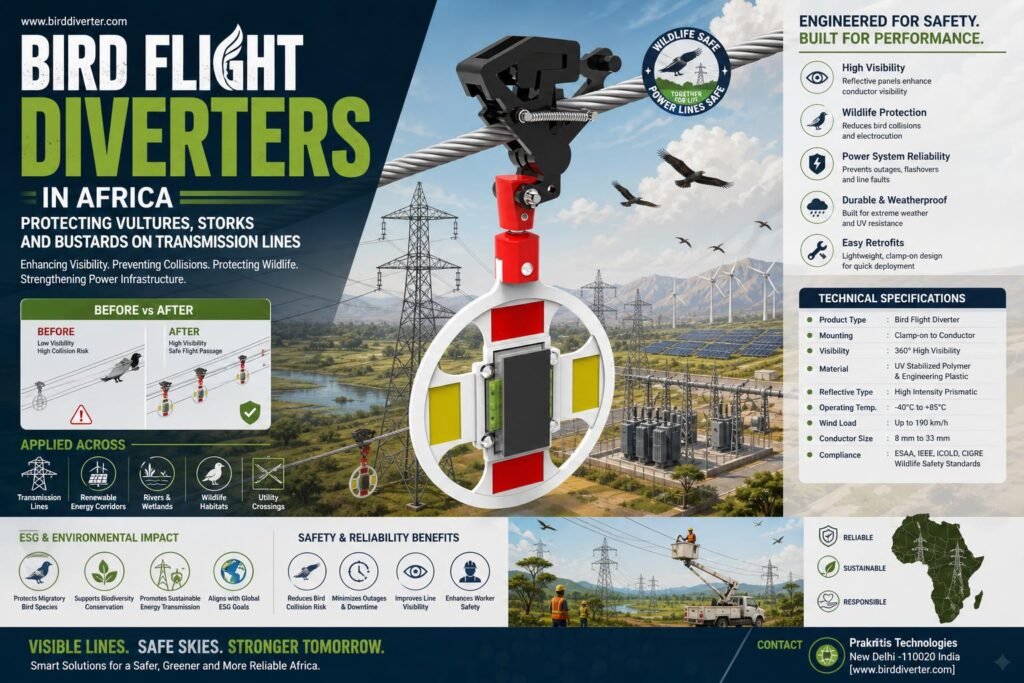
As Africa’s energy demands continue to grow, the interplay between power generation and wildlife conservation becomes increasingly critical. Bird flight diverters serve a pivotal role in safeguarding avian species, particularly vultures, storks, and bustards, by enhancing the visibility of transmission lines. This article delves into the importance, functionality, and benefits of bird flight diverters within the context of Africa’s unique transmission infrastructure.
Technical Overview
Bird flight diverters are strategically designed devices installed on power lines to increase their visibility to birds flying at low altitudes. When placed along transmission lines, these diverters reduce the risk of avian collisions, thus serving as a key solution for utilities and infrastructure agencies. The technology utilized in bird diverters often encompasses:
- High-visibility materials: Brightly colored polymers or reflective materials attract bird attention.
- Variety of designs: From LED-based to non-LED models tailored for specific environments.
- Durability: Engineered to withstand harsh weather conditions associated with Africa’s diverse climates.
Industry Applications
Bird flight diverters find application across various spheres of the power sector. Key settings include:
- Power Utilities: Essential for state-owned or private power companies managing extensive high-voltage networks.
- EPC Contractors: Engaged in the construction and maintenance of transmission infrastructure can enhance safety measures.
- Renewable Energy Projects: Integrating bird diverters into wind farms and solar facilities is critical for wildlife management.
Benefits for Utilities and EPC Contractors
Implementing bird flight diverters not only aligns with environmental goals but also aids in compliance with legal frameworks surrounding avian protection. Specific benefits include:
- Reduced Liability Costs: By minimizing bird collisions, utilities can avoid penalties and damage claims.
- Enhanced Public Image: Prioritizing environmental stewardship improves stakeholder relations and community support.
- Operational Efficiency: Fewer bird-related outages lead to increased grid reliability and performance.
Renewable Energy Transmission Relevance
With the escalating shift towards renewable energy sources in Africa, the integration of bird flight diverters has never been more pertinent. These devices:
- Support Sustainability Goals: By protecting local wildlife, companies can advance their environmental, social, and governance (ESG) initiatives.
- Facilitate Project Approvals: Regulatory bodies often require avian protection strategies as part of the project approval process.
Transmission Safety Advantages
Safety in transmission networks is paramount. Bird flight diverters contribute to this safety in several ways:
- Increased Visibility: The presence of diverters makes power lines more discernible to both birds and utility personnel.
- Reduced Bird Mortality: By directing birds away from lines, these devices safeguard biodiversity.
- Interference Reduction: Maintaining a wildlife-friendly transmission environment lessens the chances of nature-related disruptions.
Environmental Compliance and ESG Discussion
Increased regulatory scrutiny surrounding environmental issues requires energy companies to exhibit responsibility in their operations. Bird flight diverters play a significant role in:
- Meeting Regulatory Standards: Compliance with both local and international wildlife protection laws.
- Enhancing Environmental Stewardship: Tools like bird diverters underscore a commitment to minimizing ecological footprints.
- Engaging Stakeholders: Transparency around wildlife protection measures enhances trust with operational communities.
Product Comparison Table
| Type of Diverter | Material | Visibility Color | Power Source | Durability |
|---|---|---|---|---|
| LED Bird Diverter | Polymer | High-visibility Red | Solar | 5+ Years |
| Non-LED Bird Diverter | Reinforced Plastic | Fluorescent Yellow | N/A | 5+ Years |
| Aerospin Diverter | Composite | Bright Green | N/A | 3-5 Years |
Best Practices Section
To maximize the effectiveness of bird flight diverters, utilities and contractors should adhere to best practices including:
- Regular Maintenance: Ensuring that diverters remain intact and functional.
- Strategic Placement: Installing diverters at optimal intervals to ensure maximum visibility.
- Monitoring and Assessment: Conducting periodic assessments to gauge reduction in avian collisions.
Contact Us for Support
Bird flight diverters are essential for enhancing transmission line safety and protecting avian wildlife. For technical consultations, product selection, or project support, please contact us today.
FAQ Section
What are bird flight diverters?
Bird flight diverters are devices installed on transmission lines to enhance visibility and reduce the risk of bird collisions, particularly for vulnerable species.
How do bird diverters enhance transmission safety?
By making power lines more visible to birds, diverters significantly decrease the risk of avian fatalities, ensuring safer operations for energy infrastructure.
Are bird flight diverters effective in reducing bird mortality?
Yes, studies show that appropriately installed bird flight diverters can substantially reduce bird mortality associated with transmission lines.
What types of bird diverters are available?
Common types include LED diverters, non-LED models, and specialized designs like aerospin diverters, each catering to different environmental conditions.
How can I ensure best practices when installing bird diverters?
Regular maintenance, strategic placement, and continuous monitoring are key to maximizing the effectiveness of bird flight diverters on transmission lines.