
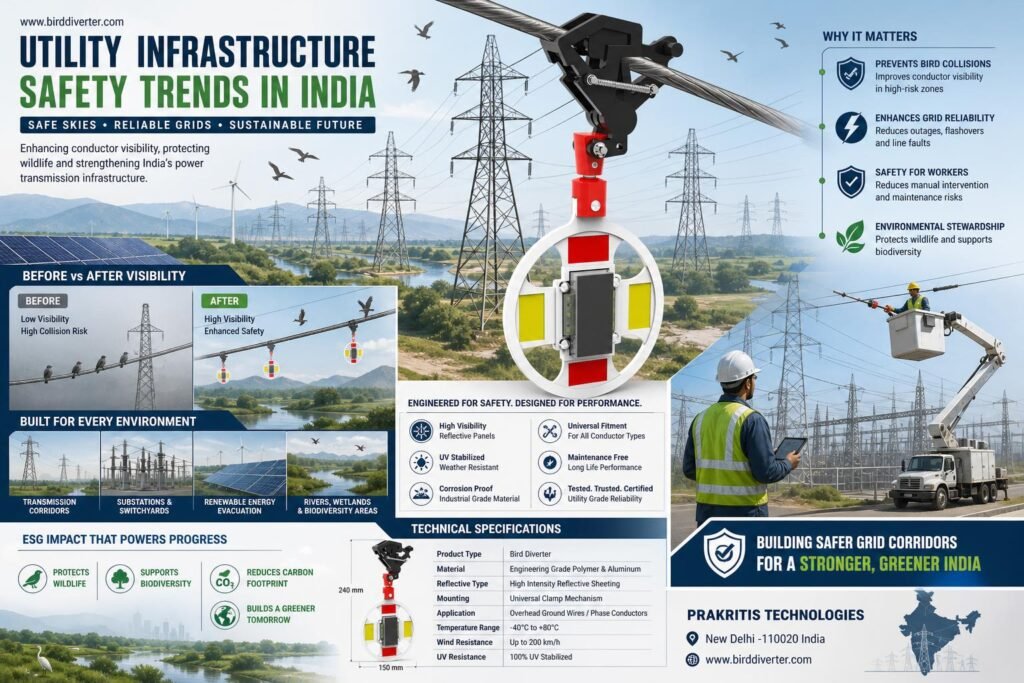
Utility infrastructure safety in India is of paramount importance as the nation continues to modernize its power systems. As population growth and energy demands escalate, ensuring safe and reliable power transmission becomes vital. This article delves into current trends, technical overviews, and the critical role of avian protection in fostering a sustainable energy future.
Technical Overview
The complexity of utility infrastructure involves various components, including transmission lines, power stations, and renewable energy systems. Each component must adhere to stringent safety regulations and standards to mitigate risks associated with electrocution, fires, and environmental impacts.
Transmission Line Safety Measures
- High-voltage transmission systems require rigorous standards to ensure the integrity of overhead conductors.
- Regular inspection and maintenance protocols are essential for identifying potential hazards.
- Innovative bird diverters assist in increasing overhead conductor visibility, reducing wildlife interaction.
Power Line Protection Technologies
Emerging technologies are redefining power line protection trends. Smart sensors and automation systems play a critical role in early hazard detection, enabling rapid response to electrical faults.
Industry Applications
Several sectors rely heavily on robust utility infrastructure safety measures:
- State Power Utilities: Implementing safety measures tailored to state-specific regulations.
- EPC Contractors: Focused on integrating safety features during construction and maintenance phases.
- Renewable Energy Companies: Prioritizing avian protection while enhancing transmission efficiency.
- Transmission Line Companies: Exploring advanced protection technologies to mitigate risks.
- Government Infrastructure Agencies: Establishing comprehensive frameworks for utility safety.
Benefits for Utilities and EPC Contractors
Implementing utility infrastructure safety measures offers myriad advantages such as:
- Enhanced grid reliability, minimizing downtime and service disruptions.
- Mitigated legal liabilities through compliance with safety standards.
- Increased public trust and confidence in energy providers’ commitment to safety.
Financial Implications
Although initial investments in safety improvements can be substantial, the long-term financial benefits often outweigh these costs, leading to significant savings through operational efficiencies.
Renewable Energy Transmission Relevance
The transition to renewable energy sources is a critical priority for India. Effective utility infrastructure safety measures play a vital role in facilitating the integration of renewable systems into the existing grid.
- Wind Energy: Employing bird diverters on transmission lines associated with wind farms to safeguard migratory birds.
- Solar Power: Ensuring overhead lines connecting solar farms utilize best practices for environmental protection.
Transmission Safety Advantages
Investing in modern safety technologies creates a multitude of advantages:
- Improved operational efficiency through minimized interruptions caused by wildlife interactions.
- Enhanced environmental compliance, fulfilling corporate social responsibility and ESG mandates.
Environmental Compliance and ESG Discussion
Utility infrastructure safety is intrinsically linked to environmental stewardship. Companies must navigate complex regulatory landscapes while addressing public concerns over wildlife protection.
ESG Considerations
- Broadening ESG initiatives aligns company values with community expectations.
- Transparent reporting on environmental impacts bolsters corporate reputation.
Product Comparison
| Product | Features | Applications | Benefits |
|---|---|---|---|
| LED Bird Diverter | High visibility, solar powered | Wind and solar power lines | Reduced wildlife collisions, eco-friendly |
| Non-LED Bird Diverter | Durable, cost-effective | Traditional overhead lines | Increased conductor visibility |
| AeroSpin Bird Diverter | Unique design, 360° visibility | Rail and remote areas | Versatile application, enhanced safety |
Best Practices Section
Adopting best practices ensures long-term safety and compliance:
- Conduct thorough risk assessments prior to infrastructure investments.
- Invest in staff training focused on utility safety and environmental awareness.
- Utilize modern technologies for monitoring and maintenance of transmission lines.
Call to Action
For expert guidance on selecting the right bird diverters and enhancing utility infrastructure safety in your projects, contact Bird Diverter today.
FAQ
What are bird diverters?
Bird diverters are devices installed on transmission lines to increase visibility and reduce bird collisions.
How do bird diverters improve transmission safety?
By making overhead lines more visible, bird diverters help prevent wildlife interactions, promoting safety for both the environment and infrastructure.
What role do bird diverters play in renewable energy?
In renewable energy projects, bird diverters are critical for minimizing impacts on bird populations, ensuring environmentally compliant operations.
How can utilities enhance their infrastructure safety?
Implementing modern technologies, regular inspections, and avian protection measures can significantly enhance infrastructure safety.
Why is transmission line safety important?
Transmission line safety is crucial for ensuring reliable power delivery, minimizing service disruptions, and protecting wildlife.