
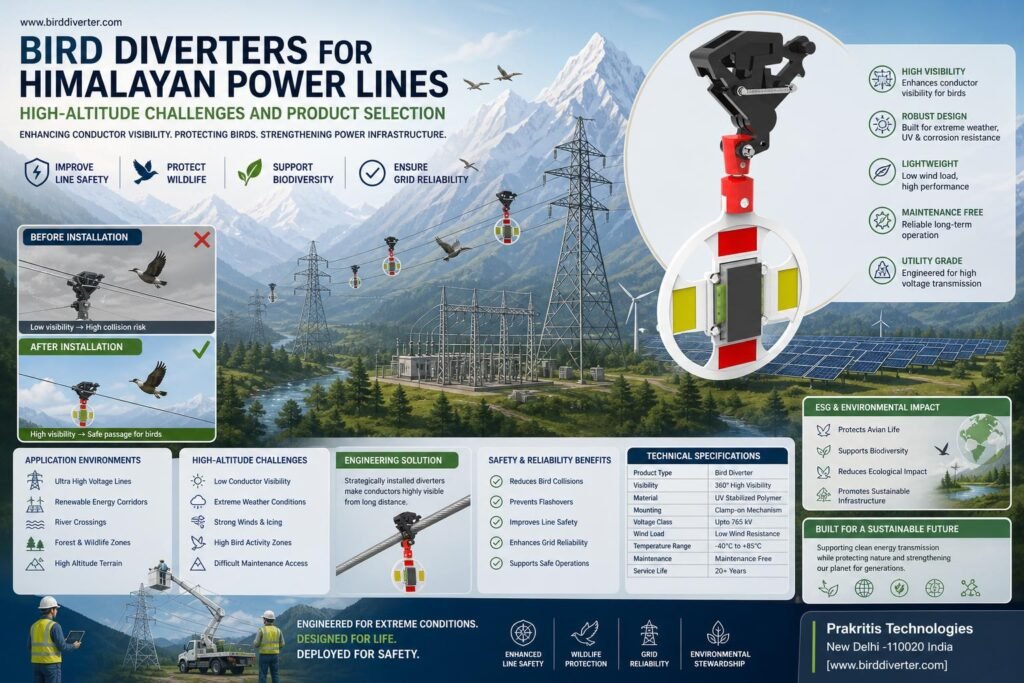
In the challenging terrains of Himalayan regions, the effective integration of bird diverters in power lines is crucial for both avian safety and infrastructure integrity. As various bird species, including the majestic Himalayan vulture and various eagles, navigate through these areas, the need for effective solutions to prevent wire strikes becomes increasingly important. This article will delve into the importance of bird diverters, particularly in high-altitude regions, outlining their benefits for state power utilities, EPC contractors, and renewable energy companies.
Technical Overview
Bird diverters, also known as aerial markers, are devices mounted on overhead power lines designed to increase visibility for birds, thereby minimizing the risk of collisions. The implementation of bird diverters in high-altitude regions poses unique challenges, primarily due to harsh weather conditions, rugged terrains, and the need for durable materials. A successful bird diverter must withstand extreme conditions while ensuring ease of installation and maintenance.
Design and Material Considerations
Durability is paramount for bird diverters in the Himalayan terrain. Common materials used include:
- Polycarbonate: Known for its strength and resistance to weathering.
- Aluminum: Lightweight yet robust, often used in high-altitude applications.
- UV-resistant Coatings: Protect against sun degradation, extending the product’s lifespan.
Types of Bird Diverters
Different types of bird diverters can be employed based on specific environmental and transmission needs:
- LED Bird Diverters: Provide high visibility in low-light conditions. (Learn more)
- Non-LED Bird Diverters: Typically used in areas with sufficient sunlight.
- AeroSpin Bird Diverters: Designed for wind resistance and greater visibility. (Explore options)
Industry Applications
Bird diverters are critical components in the power line infrastructure in various sectors:
State Power Utilities
State power utilities are mandated to ensure not only the reliability of their networks but also environmental compliance. Bird diverters play a significant role in meeting both these objectives by enhancing conductor visibility and preventing costly infrastructural damage caused by wildlife.
EPC Contractors
Engineering, Procurement, and Construction (EPC) contractors face unique challenges during the installation of power lines in remote areas. Incorporating bird diverters early in the design phase can streamline processes and ensure compliance with wildlife protection regulations.
Renewable Energy Companies
The shift towards renewable energy sources further emphasizes the need for bird diverters. Wind farms and solar plants require integration with existing transmission lines, where avian protection is crucial to mitigate negative impacts on wildlife.
Benefits for Utilities and EPC Contractors
Utilizing bird diverters yields numerous advantages for utility companies and contractors:
- Decreased Bird Strikes: Reduces fatal collisions, contributing to wildlife preservation.
- Improved Infrastructure Safety: Enhanced visibility prevents damages to both birds and power lines.
- Regulatory Compliance: Meets environmental standards required for operational permits.
Renewable Energy Transmission Relevance
The growing emphasis on renewable energy sources in India necessitates the integration of bird diverters along high-altitude transmission lines. The goal is dual-fold: promote clean energy while safeguarding avian species.
Transmission Safety Advantages
Implementing bird diverters promotes overall transmission safety by:
- Enhancing visibility for both birds and maintenance personnel.
- Preventing interruptions caused by wildlife strikes.
- Facilitating safer maintenance procedures around critical infrastructure.
Environmental Compliance and ESG Discussion
As more companies adopt Environmental, Social, and Governance (ESG) principles, implementing bird diverters becomes essential not just for compliance but as a part of holistic environmental stewardship. It represents a commitment to sustainable practices that comply with local and global wildlife protection standards.
Product Comparison Table
| Type of Bird Diverter | Visibility | Weather Resistance | Installation Method |
|---|---|---|---|
| LED Bird Diverter | High | Excellent | Clamped |
| Non-LED Bird Diverter | Medium | Good | Clamped |
| AeroSpin Bird Diverter | High | Very Good | Rotational |
Best Practices Section
For optimum performance of bird diverters, consider these best practices:
- Conduct environmental assessments before installation.
- Choose the appropriate type of bird diverter for specific sites.
- Regularly inspect and maintain diverters to ensure longevity.
Call to Action
For tailored solutions in bird diverters for your high-altitude projects, consult with the experts at Bird Diverter. They provide technical consultations and support for product selection to meet your project’s avian protection needs. (Contact us today for further assistance.)
Frequently Asked Questions
What is the purpose of bird diverters?
Bird diverters are designed to increase the visibility of overhead power lines to prevent bird collisions and enhance safety.
How do bird diverters enhance transmission safety?
By making power lines more visible to birds, bird diverters prevent accidents that can lead to power outages and maintain grid reliability.
What types of bird diverters are available?
Common types of bird diverters include LED, non-LED, and AeroSpin diverters, each designed for different visibility and installation requirements.
How often should bird diverters be inspected?
Regular inspections should be scheduled, especially after severe weather events, to ensure they remain functional and intact.
What are the environmental benefits of using bird diverters?
Bird diverters play a vital role in conserving wildlife, particularly migratory birds, contributing to environmental sustainability efforts.