
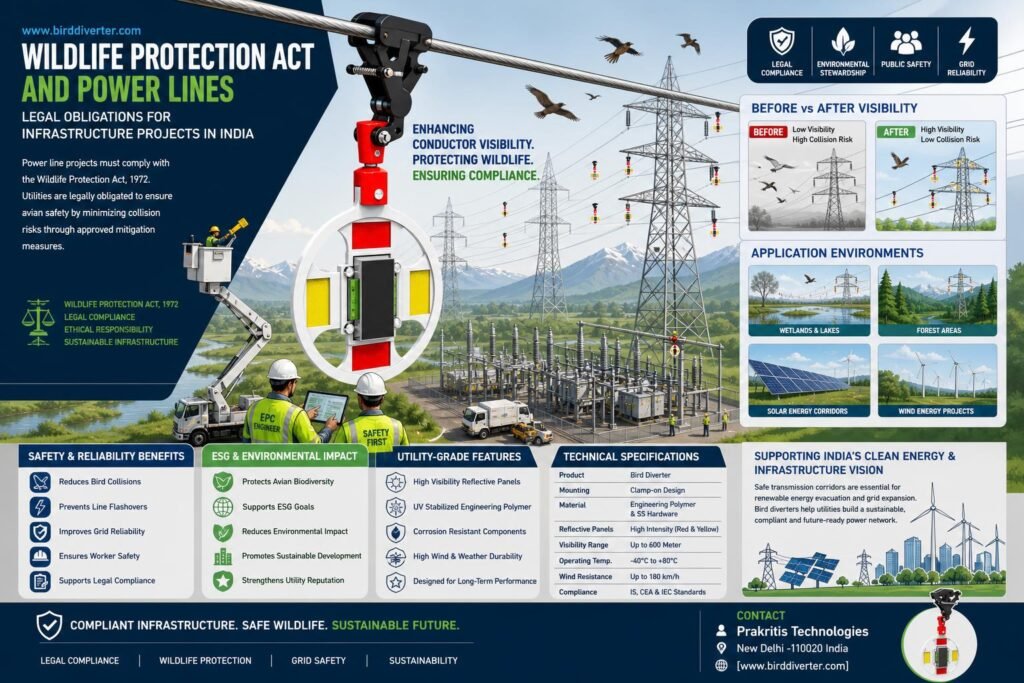
The Wildlife Protection Act (WPA) of 1972 plays a crucial role in ensuring that infrastructure projects, particularly power lines, adhere to environmental and wildlife protection standards in India. As the demand for energy continues to rise, the need for sustainable practices becomes ever more paramount. This article will explore the implications of the WPA on power line development, detailing the legal obligations of various stakeholders in the utility infrastructure sector.
Technical Overview of the Wildlife Protection Act
The Wildlife Protection Act was established to safeguard the country’s wildlife and ensure the ecological balance is maintained. It lays down specific provisions that govern the construction and maintenance of power lines to minimize their impact on wildlife populations.
Key Provisions Relevant to Infrastructure Projects
- Permits required for construction in wildlife habitats.
- Assessment of potential impacts on endangered species.
- Implementation of protective measures, such as bird diverters, to enhance visibility and reduce avian fatalities.
Compliance with the WPA is essential for all stakeholders, including State Power Utilities, EPC Contractors, and Renewable Energy Companies, as non-compliance can lead to legal repercussions and potential project delays.
Industry Applications
Understanding the regulations of the Wildlife Protection Act can significantly impact various sectors within the utility infrastructure industry. Here are some of the primary applications:
- State Power Utilities: Assertion of legal compliance while implementing new projects.
- EPC Contractors: Integration of wildlife protection measures during construction.
- Renewable Energy Companies: Adhering to environmental standards while optimizing energy production.
Benefits for Utilities and EPC Contractors
Integrating compliance with the Wildlife Protection Act into project planning provides numerous benefits, including:
- Reduced risk of legal challenges and penalties.
- Enhancements in public perception and community relations.
- Long-term cost savings through sustainable practices.
Relevance in Renewable Energy Transmission
With India’s commitment to increasing renewable energy capacities, adherence to the Wildlife Protection Act becomes even more pertinent. The Act ensures that new infrastructure developments prioritize avian protection and ecological sustainability. Notably, solar and wind projects that integrate bird diverters can help mitigate the risks posed by power lines to migratory bird populations.
Case Studies of Compliance in Renewable Energy
Several projects across India have successfully navigated the compliance landscape:
- Solar farms in Rajasthan implementing bird diverters to protect local avian species.
- Wind energy projects in Tamil Nadu incorporating visibility-enhancing technologies on power lines.
Transmission Safety Advantages
Ensuring the safety of transmission lines not only benefits wildlife but also enhances overall operational safety for utility companies. The implementation of bird diverters can:
- Reduce collision risks for birds, leading to fewer fatalities.
- Enhance visibility of power lines in areas with high bird populations.
Environmental Compliance and ESG Discussion
Environmental, Social, and Governance (ESG) criteria are becoming increasingly important for businesses worldwide. Compliance with the Wildlife Protection Act aligns with these criteria, promoting sustainable practices in infrastructure development.
Implications for ESG Reporting
Utilities must document their compliance efforts, emphasizing:
- Implementation of avian safety measures.
- Engagement with local communities regarding wildlife protection.
Product Comparison Table
| Product Name | Type | Features | Best For |
|---|---|---|---|
| LED Bird Diverter | Illuminated | High visibility, energy efficient | Nighttime safety |
| Non-LED Bird Diverter | Reflective | Cost-effective, durable | Daytime visibility |
| Aerospin Bird Diverter | Spinner | Wind action for visibility | High-wind areas |
Best Practices for Implementing the WPA
To ensure compliance with the Wildlife Protection Act, stakeholders should consider the following best practices:
- Conduct preliminary environmental impact assessments.
- Engage with wildlife biologists during project planning.
- Incorporate bird diverters and other protective technologies effectively.
Call to Action
At Bird Diverter, we are committed to supporting your infrastructure projects with solutions that comply with the Wildlife Protection Act. For technical consultation or to explore suitable bird diverter options, visit our contact us page today.
FAQ Section
What are bird diverters and how do they work?
Bird diverters are devices installed on power lines to enhance visibility and minimize bird collisions. They can be LED or reflective in nature and are especially beneficial in areas with high avian activity.
Why is avian protection necessary for power lines?
Power lines pose significant threats to bird populations due to collisions, especially during migratory seasons. Implementing protective measures is vital to ensuring ecological balance.
How does the Wildlife Protection Act affect utility projects?
The act mandates compliance measures to protect wildlife during the construction and maintenance of utility infrastructures, like power lines, ensuring minimal ecological disturbance.
What are the legal requirements for infrastructure projects under the Wildlife Protection Act?
Developers must conduct environmental assessments, secure necessary permits, and implement avian protection measures on all new projects involving power lines.
How can EPC contractors ensure compliance with wildlife laws in their projects?
EPC contractors can ensure compliance by incorporating wildlife safety strategies into their project planning and execution processes, including the installation of bird diverters whenever necessary.