
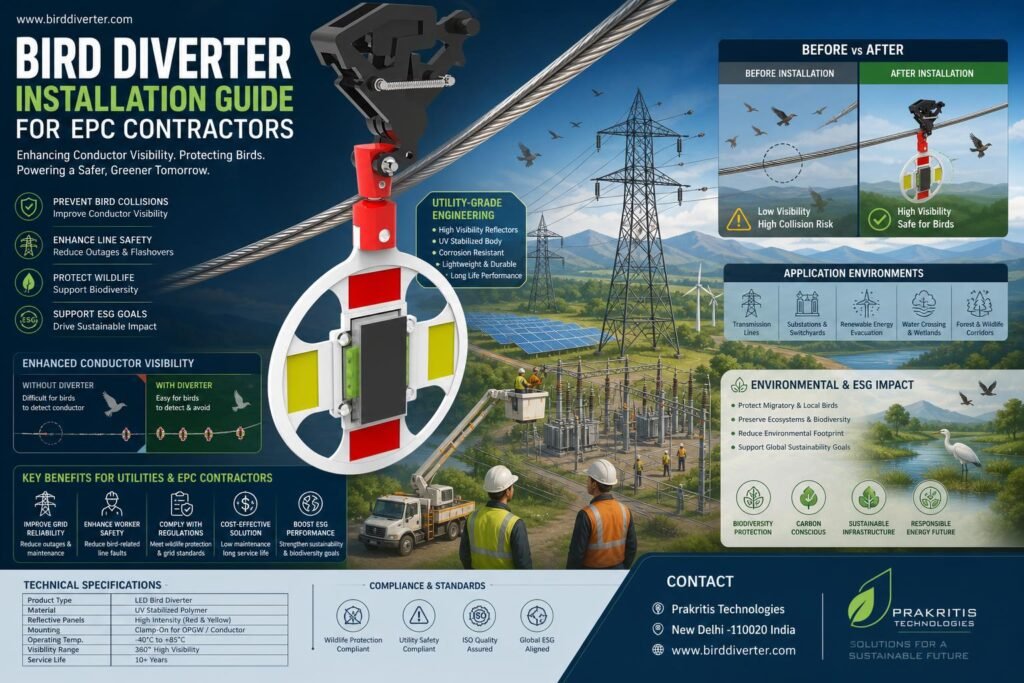
This comprehensive guide offers EPC contractors vital instructions for the effective installation of bird diverters on transmission lines. As avian protection becomes increasingly important, understanding the nuances of bird diverter installation can enhance safety protocols and ensure regulatory compliance across India and globally.
Technical Overview
Bird diverters are specialized devices designed to improve the visibility of overhead power lines to prevent bird collisions. Within the utility and transmission sectors, these tools are vital for maintaining grid reliability and environmental compliance. The installation process involves careful planning to ensure that these diverters are placed in accordance with established safety guidelines.
Key Components of Bird Diverters
- Visibility Markers: Utilized to enhance the detectability of lines, reducing risks to avian species.
- Attachment Mechanism: Ensures secure installation, facilitating long-term stability.
- Durable Materials: Constructed from weather-resistant substances to withstand environmental conditions.
- Color Variations: Typically bright colors to maximize visibility and attract attention for both birds and human operators.
Industry Applications
Bird diverters have significant utility across various sectors. They play a crucial role in the following:
- Transmission lines in urban areas where bird activity is prevalent.
- Renewable energy transmission setups to protect migratory birds.
- Areas with a high risk of avian collisions due to geographic factors.
Specific Use Cases
In India, where diverse bird species roam, effective installation can minimize fatalities while maintaining reliable utility services. Examples include:
- Solar farms employing overhead lines for energy distribution.
- Wind farms requiring compliance with environmental standards to protect local wildlife.
Benefits for Utilities and EPC Contractors
Implementing bird diverters brings various advantages that align with corporate social responsibility and safety standards:
- Improved Safety: Enhances visibility for avians, which leads to fewer accidents.
- Regulatory Compliance: Meets national and international environmental guidelines.
- Cost-Effective Solutions: Reduces potential penalties associated with wildlife collisions.
- Brand Reputation: Enhances utility’s reputation by demonstrating commitment to environmental stewardship.
Renewable Energy Transmission Relevance
As the demand for renewable energy grows, incorporating bird diverters into installations becomes imperative. By facilitating safe transmission methods, EPC contractors can support sustainability goals:
- Integration with New Technologies: Easily adaptable to evolve with innovative energy solutions.
- Enhanced Grid Reliability: Maintains connections through safe transmission practices.
Aligning with ESG Goals
Environmental, Social, and Governance (ESG) factors are increasingly scrutinized. Proper utilization of bird diverters aids companies in achieving their ESG objectives by enhancing sustainability and protecting biodiversity.
Transmission Safety Advantages
Ensuring the safety of both lines and wildlife is critical:
- Reduces bird strike incidents, protecting both species and power lines.
- Increases overall operational safety for maintenance crews.
- Supports automated and efficient monitoring of transmission line conditions.
Environmental Compliance and ESG Discussion
Compliance with environmental regulations affects operational efficiency:
- Implementing bird diverters is often a prerequisite for regulatory approvals on new projects.
- Demonstrates a proactive approach to environmental protection.
Product Comparison Table
| Feature | LED Bird Diverters | Non-LED Bird Diverters | AeroSpin Bird Diverters |
|---|---|---|---|
| Visibility | High | Moderate | High |
| Durability | Long-lasting | Long-lasting | Extreme conditions |
| Installation | Simple | Simple | Standardized |
| Environment Impact | Minimal | Minimal | Minimal |
Best Practices Section
To ensure the effectiveness of bird diverters, adhere to these best practices:
- Conduct site assessments to determine optimal installation points.
- Regularly maintain and inspect bird diverters for wear and tear.
- Train utility staff on safe installation and maintenance protocols.
- Engage with environmental organizations to promote awareness and compliance.
Call to Action
For support in selecting appropriate bird diverters or for technical consultation, reach out to us at Bird Diverter. Our team is ready to assist you in optimizing your installations.
FAQ Section
What is a bird diverter?
A bird diverter is a device used on overhead power lines to enhance visibility, preventing bird collisions and contributing to wildlife protection.
How do bird diverters enhance safety?
By making power lines more visible to birds, these devices significantly reduce collision risks and promote safer transmission line operations.
Are bird diverters required by law?
In many regions, regulations mandate the use of bird diverters, especially in areas known for bird migration, ensuring compliance with environmental standards.
What factors should be considered for installation?
Considerations include the geographic location, bird activity levels, and existing infrastructure to optimize installation and effectiveness.
How often should maintenance be performed on bird diverters?
Regular inspection is recommended, at least biannually, to ensure functionality and compliance with safety regulations.