
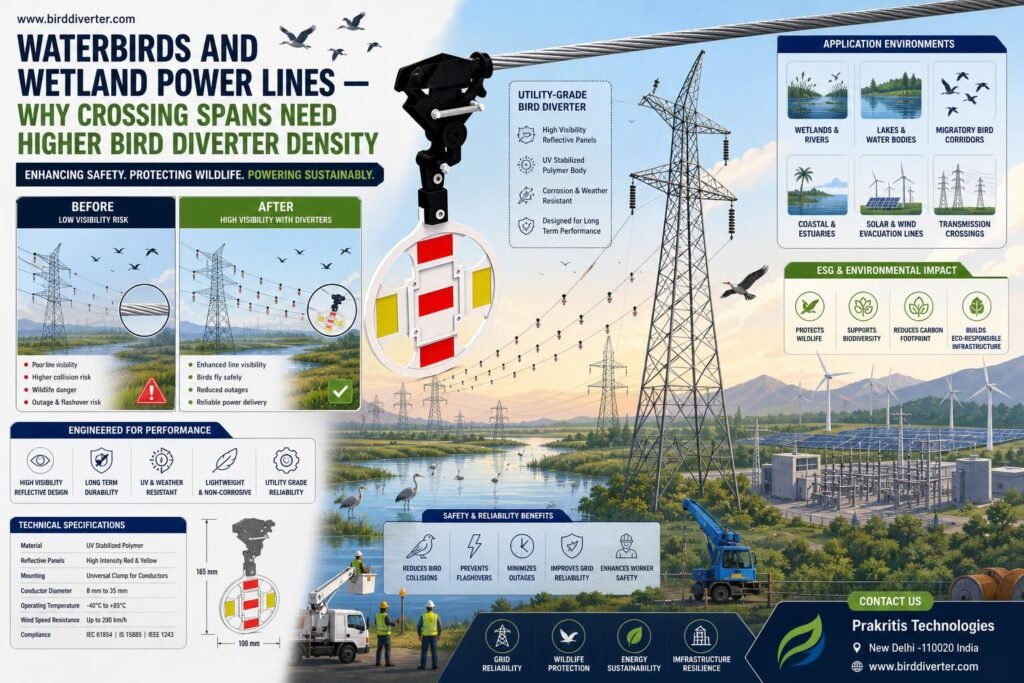
In the quest to maintain robust transmission infrastructure while safeguarding our environment, the utility industry faces distinct challenges, particularly when it comes to the intersection of power lines and wildlife. Among these challenges, waterbird power line collisions in wetland areas emerge as a pressing concern, necessitating the implementation of effective bird diverter strategies. This article elaborates on why increasing bird diverter density across crossing spans is crucial for ensuring both avian safety and grid reliability.
Technical Overview
High-voltage transmission lines traverse diverse landscapes, including wetlands that serve as critical habitats for numerous migratory bird species. Waterbirds, such as herons and storks, are particularly vulnerable to collisions with power lines. This vulnerability results from their foraging and nesting behaviors, often placing them in proximity to these infrastructures.
Bird diverters are devices installed on power lines intended to enhance visibility, thus reducing collision risk. However, the effectiveness of these devices significantly depends on their density along crossing spans. Increased diverter density provides greater visual cues for birds, aiding in their navigation through these areas.
Understanding Bird Diverter Density
Bird diverters enhance overhead line visibility in various ways:
- **Size and Color**: Larger diverters with vibrant colors are more visible to birds.
- **Spacing**: Properly spaced diverters maximize their effectiveness, ensuring consistent visibility intervals.
- **Types of Diverters**: There are various models, including LED and non-LED options. Each model serves different environmental conditions and utility requirements.
By adopting a higher density of bird diverters, utilities can significantly mitigate collision rates. This proactive approach not only improves bird conservation efforts but also enhances public perception of utility companies as environmentally responsible entities.
Industry Applications
The implications of enhanced bird diverter installations extend across several sectors:
State Power Utilities
State power utilities have critical roles in reducing wildlife collisions. By implementing higher bird diverter densities, they can align with sustainable practices while ensuring uninterrupted power delivery.
EPC Contractors
EPC (Engineering, Procurement, and Construction) contractors benefit by incorporating bird diverter solutions into their project designs. This integration ensures compliance with environmental regulations and enhances safety across their transmission lines.
Renewable Energy Companies
As renewable energy projects proliferate globally, the need for avian protection becomes paramount. Higher bird diverter densities can facilitate the safer integration of renewable infrastructures, such as solar or wind energy setups adjacent to wetland areas.
Transmission Line Companies
For transmission line companies, operating in bird-rich environments, adopting best practices for bird protection enhances their operational integrity and contributes to ESG (Environmental, Social, and Governance) efforts.
Benefits for Utilities and EPC Contractors
There are numerous advantages linked to the implementation of higher bird diverter densities for utilities and EPC contractors:
- Safety Improvement: Reducing the risk of bird collisions lessens the potential for operational disruptions caused by downed lines and improves animal welfare.
- Regulatory Compliance: Higher compliance with environmental regulations ensures project approval and smoother operational licensing.
- Enhanced Public Image: Proactive conservation strategies enhance reputational standing among stakeholders and the community.
- Cost Efficiency: Preventing collisions can mitigate costly repairs and regulatory fines.
Renewable Energy Transmission Relevance
The growth of renewable energy infrastructure is coupled with the necessity to protect avian populations. As renewable projects are often built in migratory paths, applying higher bird diverter densities becomes essential to ensure integration with existing power lines.
### Table 1: Renewable Energy Project Integration Challenges
| Challenge | Impact on Wildlife | Mitigation Strategies |
|---|---|---|
| Proximity to Wetlands | High collision rates among migrating birds | Install higher-density bird diverters along power lines |
| Increased Development | Habitat loss for avian species | Conduct thorough environmental impact assessments |
By prioritizing bird diverter installations in renewable projects, stakeholders can contribute meaningfully to both energy sustainability and wildlife preservation.
Transmission Safety Advantages
Integrating higher bird diverter densities into transmission lines fosters multiple safety advantages:
- **Minimized Collision Risks**: Enhanced visibility reduces risk for low-flying waterbirds during foraging.
- **Operational Reliability**: Fewer bird-related outages enhance mechanisms for grid reliability.
- **Improved Navigation**: A higher number of diverters along spans provide better cues for avian navigation, especially in low-visibility conditions.
Environmental Compliance and ESG Discussion
With growing emphasis on ESG criteria, utility companies must prioritize sustainable practices. Implementing bird diverters showcases a commitment to wildlife conservation, meeting both regulatory requirements and public expectations. This alignment not only enhances compliance but also fosters a culture of environmental stewardship within organizations.
Product Comparison
Below is a comparison table of different bird diverters available for utility applications:
| Product Type | Visibility Range | Installation Environment | Typical Applications |
|---|---|---|---|
| LED Bird Diverter | High | Urban and rural | High-voltage transmission lines, construction sites |
| Non-LED Bird Diverter | Moderate | Wetlands, agricultural areas | Low to mid-voltage lines, rural regions |
| Aerospin Bird Diverter | Very High | Windy and high-traffic areas | High wind environments, river crossings |
Best Practices Section
To maximize the effectiveness of bird diverters, consider the following best practices:
- **Conduct Environmental Assessments**: Understand the bird species in your area to tailor diverter density.
- **Regular Maintenance Checks**: Ensure diverters remain intact and clean for optimal visibility.
- **Collaborate with Wildlife Experts**: Engage ornithologists during the planning phase to choose the right diverters.
Call to Action
If your organization aims to enhance safety in transmission lines while protecting avian species, contact Bird Diverter today. Our team is ready to offer technical consultations and tailored solutions for your projects. Visit our contact page to get started.
FAQ Section
1. What are bird diverters?
Bird diverters are devices installed on power lines to increase visibility for birds and reduce collision risks.
2. How do bird diverters help in avian protection?
By enhancing visibility, bird diverters guide birds away from power lines, thus minimizing the incidence of collisions.
3. Why is higher bird diverter density recommended?
Higher density offers more visual cues for birds, significantly reducing collision rates, especially in critical habitats like wetlands.
4. What considerations should be taken during bird diverter installation?
Factors such as local bird species, environmental conditions, and voltage of power lines should be considered.
5. How can utilities ensure compliance with environmental regulations?
Implementing bird diverters and conducting environmental impact assessments can help meet regulatory requirements effectively.