
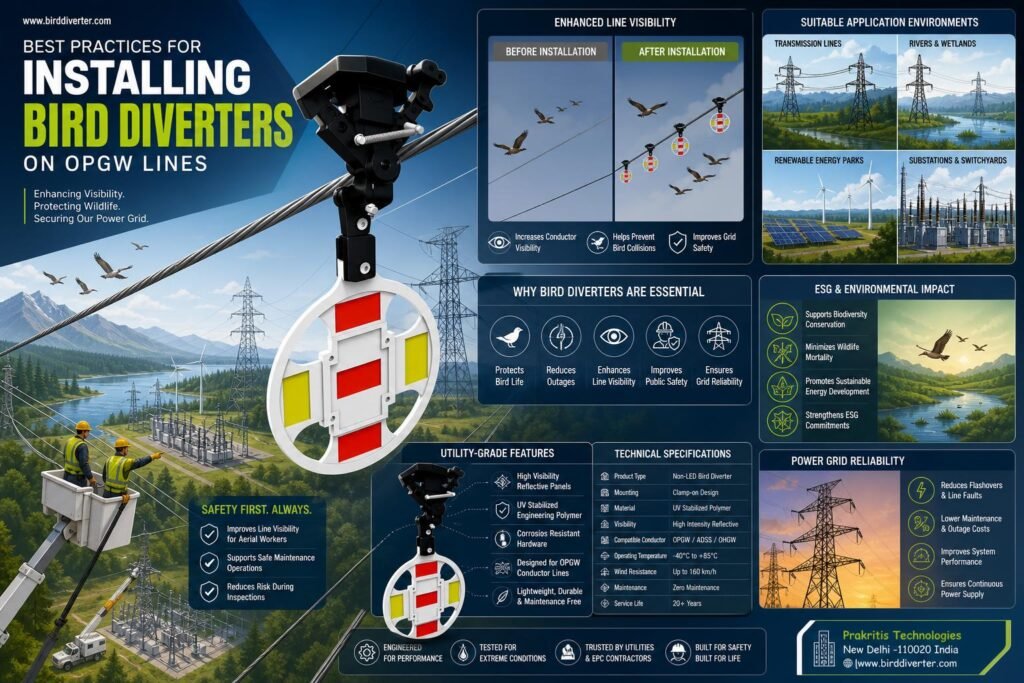
Bird diverters are becoming increasingly essential for ensuring the safety of avian species and enhancing transmission infrastructure visibility. In India and globally, the installation of OPGW (Optical Ground Wire) bird diverters on overhead transmission lines is a critical consideration for state power utilities and EPC contractors alike. Installing bird diverters helps achieve not only compliance with environmental regulations but also boosts overall grid reliability.
Technical Overview
An OPGW bird diverter is specifically designed to improve the visibility of overhead transmission lines, aiding birds in avoiding collisions. These diversters are made from various materials designed to withstand harsh weather while ensuring effective visibility during the day and night. The effectiveness of these diverters rests on various factors, including their size, color, and configuration.
Key Specifications of OPGW Bird Diverters
- Material: UV-resistant polymer or metal alloy
- Color: High-visibility colors like orange, yellow, or red
- Size: Minimum of 15 inches in diameter for optimal visibility
- Installation Angle: Must be placed at strategic intervals along the transmission line
Industry Applications
The applications for OPGW bird diverters span multiple sectors within the utility infrastructure landscape. Below are some pertinent areas of usage:
- State Power Utilities: Ensuring grid safety and reliability for bird populations.
- EPC Contractors: Incorporation into new projects for compliance with environmental standards.
- Renewable Energy Companies: Enhancing the grid infrastructure while promoting sustainability.
- Transmission Line Companies: Maintaining service reliability while mitigating avian collision risks.
- Government Infrastructure Agencies: Implementing regulations for environmental compliance in public infrastructure projects.
Case Study: Effective Bird Diverter Implementation
A recent project undertaken in Northern India involved the installation of OPGW bird diverters along a 250 km overhead line. Regular monitoring showed a notable decrease in bird collisions, validating the importance of these diversters in optimizing transmission lines for ecological and operational efficiency.
Benefits for Utilities and EPC Contractors
The implementation of OPGW bird diverters comes with a multitude of benefits for utilities and EPC contractors:
Improved Safety and Compliance
By installing bird diverters, utilities can substantially reduce the risk of avian collisions. This not only helps adhere to environmental regulations but also enhances the corporate sustainability image.
Cost-effective Solution
Investing in bird diverters is a proactive approach that minimizes potential future costs associated with bird collision incidents such as power outages or potential legal penalties.
Enhanced Visibility and Performance
With bright, visible diversters, utility lines become distinctly observable by birds, contributing to better functioning of the electric grid, especially in areas with high avian activity.
Renewable Energy Transmission Relevance
As renewable energy projects expand across India, ensuring that transmission lines are safe for both human operators and wildlife becomes critical. OPGW bird diverters serve as a dual solution: they mark overhead lines to improve visibility and safeguard migratory bird pathways, ultimately supporting the growth of sustainable energy initiatives.
Transmission Safety Advantages
Integrating OPGW bird diverters into transmission infrastructure enhances safety not just for avian life but also for utility workers. Here’s how:
- Reduces Collision Risks: Makes it easier for birds to navigate around overhead lines.
- Improves Line Management: Facilitates regular inspections and maintenance.
- Sustains Project Compliance: Aligns with environmental regulations and best practices.
Training and Awareness for Utility Workers
Utility workers must be trained in recognizing and addressing the environmental impacts associated with their roles. Training on the effective installation and maintenance of bird diverters is key to optimizing project success.
Environmental Compliance and ESG Discussion
Environmental, Social, and Governance (ESG) criteria have become critical for utilities and contractors in project implementation. Installing bird diverters can significantly enhance a project’s ESG profile:
- Environmental Impact: Directly contributes to avian conservation, aligning with global sustainability goals.
- Social Responsibility: Demonstrates commitment to ecological stewardship.
- Governance Compliance: Meets mandatory regulations enhancing the operational legitimacy of utility projects.
Product Comparison Table
| Product Type | Visibility | Material | Installation Cost |
|---|---|---|---|
| LED Bird Diverter | High | Plastic/Metal | Moderate |
| Non-LED Bird Diverter | Moderate | Plastic | Low |
| Aerospin Bird Diverter | High | Metal Alloy | High |
Best Practices Section
To ensure the successful installation and functionality of OPGW bird diverters, consider the following best practices:
- Install at regular intervals of 100 meters along the transmission line to maximize visibility.
- Ensure diverters are secured firmly to withstand extreme weather conditions.
- Conduct regular inspections to ensure diversters are intact and operating effectively.
- Integrate bird diverters in the design phase of new transmission projects to enhance visibility from the onset.
- Train your team on the importance of these diversions and how they influence avian behavior and grid safety.
CTA Section
If you’re interested in optimizing your transmission lines for avian safety and ensuring compliance with environmental regulations, contact Bird Diverter today for expert consultation on product selection and installation practices. Visit our contact page for more information.
FAQ Section
What is an OPGW bird diverter?
An OPGW bird diverter is a device designed to enhance the visibility of overhead transmission lines to prevent bird collisions.
How do bird diverters benefit transmission safety?
By improving the visibility of transmission lines, bird diverters help reduce the risk of collisions, protecting both wildlife and grid reliability.
What are the environmental compliance benefits of installing bird diverters?
Installing bird diverters supports avian protection efforts and aligns with national and international environmental regulations, improving the ESG profile of projects.
What is the recommended installation interval for bird diverters?
Bird diverters should be installed every 100 meters to maximize their visibility and effectiveness.
Are there different types of bird diverters available?
Yes, options include LED bird diverters, non-LED units, and specially designed units like Aerospin diverters, each offering different visibility and installation costs.