
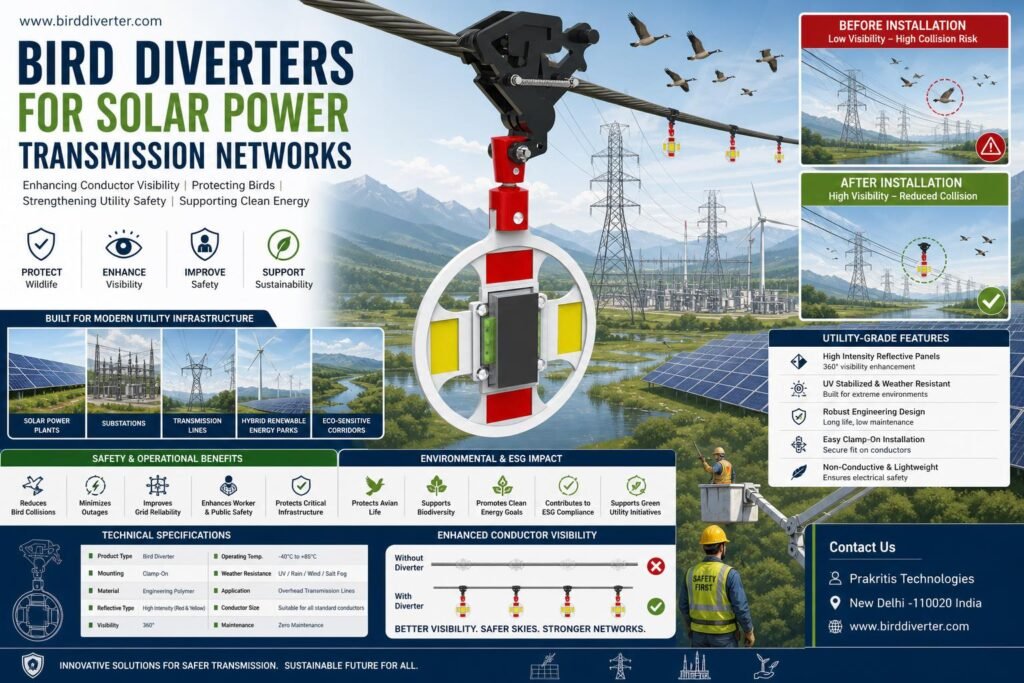
As the global emphasis on renewable energy intensifies, ensuring the safety of transmission lines becomes critical. State power utilities, EPC contractors, renewable energy companies, and government agencies must consider innovative solutions to protect both wildlife and energy infrastructure. Solar transmission bird diverters serve as an effective measure to achieve this objective. Through understanding their significance, technical aspects, and applications, industry stakeholders can enhance avian protection while maintaining efficient energy transmission.
Technical Overview of Solar Transmission Bird Diverters
Solar transmission bird diverters are specialized devices that improve the visibility of overhead power lines. Their key role is to prevent bird collisions with electrical infrastructure, which can lead to not only loss of avian life but also significant power outages. These diverters are designed with advanced materials that ensure high visibility under various environmental conditions.
Types of Bird Diverters
Bird diverters come in various types, including:
- LED Bird Diverters: Utilize LED technology to enhance visibility during day and night, making them particularly effective in areas with high bird traffic.
- Non-LED Bird Diverters: rely on reflective materials to catch the light and make overhead lines more visible. They are cost-effective alternatives but may not offer the same visibility level in low-light conditions.
- Aerospin Bird Diverters: These feature a spinning design that provides movement, capturing the sight of birds and directing them away from power lines.
Industry Applications of Bird Diverters
Solar transmission bird diverters find a diverse range of applications:
- Power Transmission Infrastructure: Essential for utility companies operating high-voltage transmission lines, ensuring minimal disruption from wildlife interactions.
- Renewable Energy Installations: Critical in solar farms, where extensive cabling may pose risks to local avian populations.
- Government Projects: Compliance with environmental regulations mandates the implementation of bird protection measures in utility installations.
Benefits for Utilities and EPC Contractors
The implementation of solar transmission bird diverters provides numerous advantages for utility companies and EPC contractors:
- Enhanced Transmission Safety: Reduces the likelihood of outages triggered by bird collisions, ensuring a steady flow of energy.
- Compliance with Environmental Standards: Helps fulfill governmental and environmental obligations related to wildlife protection.
- Cost Efficiency: By preventing outages and minimizing damages, bird diverters can save utilities significant repair costs.
Improved Public Perception
Incorporating wildlife protection measures can improve public relations and community support, enhancing the overall reputation of utility projects.
Renewable Energy Transmission Relevance
The transition to renewable energy is not without challenges. High-voltage solar transmission lines are vital for transporting electricity generated from solar farms to distribution networks. By integrating solar transmission bird diverters, renewable energy companies can ensure that they mitigate the impact on wildlife populations while also maintaining grid reliability and safety.
Transmission Safety Advantages
Minimizing Electric Shock Risks
Bird collisions can create serious electrical hazards. Implementing bird diverters significantly decreases the risks of electric shocks that can occur during such incidents.
Diversion and Recovery
Effective bird diverter systems not only safeguard wildlife but also contribute to the efficient management of the power transmission process.
Environmental Compliance and ESG Discussion
As companies increasingly embrace environmental, social, and governance (ESG) principles, implementing solutions like bird diverters demonstrates a commitment to sustainability. Regulatory requirements often necessitate the installation of avian protection systems within energy projects. Utilizing bird diverters directly assists in meeting these expectations, fostering a responsible image.
Product Comparison Table
| Product Type | Visibility Level | Cost | Best Use Case |
|---|---|---|---|
| LED Bird Diverter | High | $$$ | High traffic bird areas |
| Non-LED Bird Diverter | Moderate | $$ | Cost-sensitive projects |
| Aerospin Bird Diverter | Medium | $$$ | Areas with frequent bird activity |
Best Practices for Implementation
For effective implementation of bird diverters, consider the following best practices:
- Conduct site assessments to determine high-risk areas for bird collisions.
- Choose the appropriate type of diverter based on environmental conditions and expected avian activity.
- Regularly inspect and maintain diverters to ensure they remain effective throughout their operational life.
Call to Action
Bird Diverter is committed to supporting utility projects with the necessary tools and insights to enhance avian protection in transmission networks. For technical consultations, product selection, or project support, contact us to learn more.
Frequently Asked Questions
What are bird diverters?
Bird diverters are devices installed on power lines to enhance visibility, preventing bird collisions and ensuring safety in transmission networks.
How do bird diverters improve transmission safety?
By increasing the visibility of overhead lines, bird diverters significantly reduce the risk of bird collisions that can lead to electrical outages.
Are there different types of bird diverters?
Yes, there are LED bird diverters, non-LED bird diverters, and aerospin bird diverters, each catering to specific visibility needs.
Why is avian protection important for utilities?
It ensures compliance with environmental regulations and helps maintain public support while also protecting wildlife.
How do bird diverters relate to renewable energy projects?
Bird diverters are essential in mitigating the impact of high-voltage solar transmission lines on bird populations, promoting sustainable energy practices.