
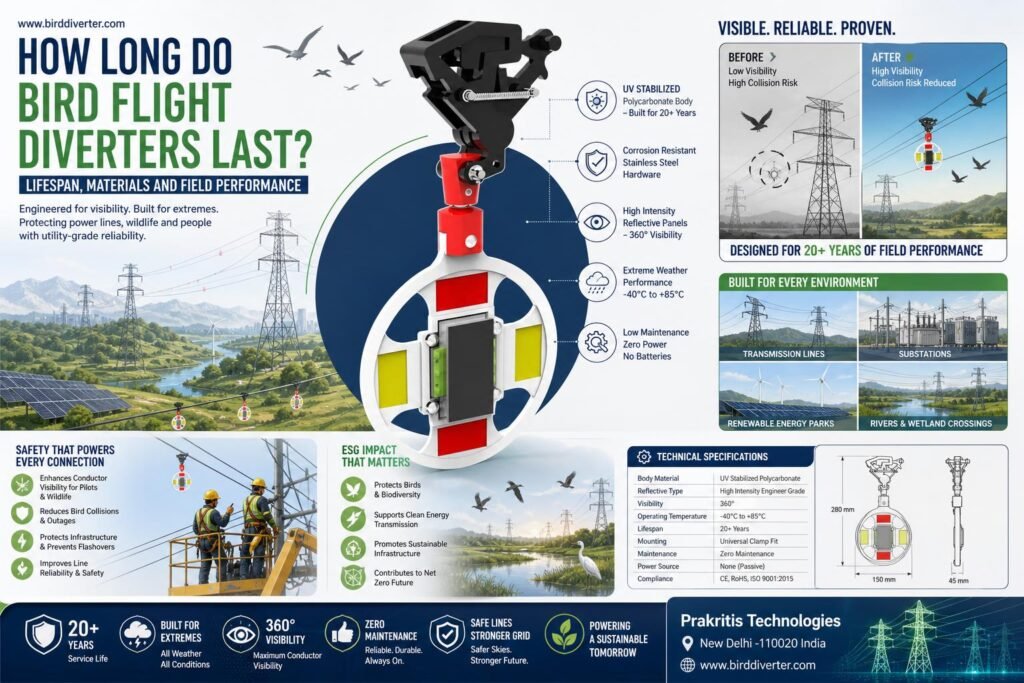
Bird flight diverters play a crucial role in utility infrastructure, particularly in minimizing avian collisions with high-voltage transmission lines. This article delves into the lifespan of bird flight diverters, exploring factors that influence their durability, materials used, and effectiveness across diverse climates, especially in India.
Technical Overview
Understanding the technical specifications of bird flight diverters is essential for evaluating their lifecycle and efficiency. Diverters are typically made from materials designed to withstand harsh weather conditions, UV exposure, and operational stresses.
- Materials: Most diverters are crafted from high-density polyethylene or similar materials that provide UV resistance and weather durability.
- Design: Aerodynamic designs ensure that the diverters are visible to birds while minimizing wind load on transmission structures.
- Maintenance: Ideally, bird flight diverters should be maintenance-free, relying on robust materials that do not degrade significantly over time.
Factors Influencing Lifespan
Several elements affect the lifespan and effectiveness of bird flight diverters:
- Climate Conditions: In regions like India, where monsoon and dry climates prevail, diverters need to resist moisture, temperature fluctuations, and UV exposure.
- Installation Quality: Proper installation is crucial for maximizing the service life of bird flight diverters.
- Material Quality: Higher quality materials lead to longer-lasting products that perform reliably.
Industry Applications
Bird flight diverters are essential across various sectors, particularly in:
- State Power Utilities: Enhancing safety and compliance with environmental regulations.
- EPC Contractors: Integrating diverters into new projects to ensure environmental sensitivity.
- Renewable Energy Companies: Protecting migratory birds near solar and wind facilities.
- Transmission Line Companies: Safeguarding infrastructure while promoting wildlife welfare.
- Government Infrastructure Agencies: Supporting ESG initiatives and avian protection policies.
Benefits for Utilities and EPC Contractors
The implementation of bird flight diverters offers several significant advantages:
- Enhances Safety: Reduces bird collisions, mitigating risks to wildlife and minimizing fines for non-compliance.
- Reduces Downtime: By preventing avian impacts, utilities can decrease outages and maintenance costs.
- Supports Sustainable Practices: Promotes environmental responsibility and compliance with local regulations.
Renewable Energy Transmission Relevance
As renewable energy infrastructure expands, the importance of avian protection becomes even more pronounced. Bird flight diverters help ensure:
- Visibility for Migratory Birds: Essential in areas with significant bird populations.
- Minimal Environmental Impact: Supporting wildlife while providing reliable energy transmission.
- Regulatory Compliance: Aligning with governmental policies focused on ecological preservation.
Transmission Safety Advantages
Employing bird flight diverters improves safety in multiple ways:
- Enhanced Visibility: Bold colors and reflective materials make overhead wires more noticeable.
- Interaction with Technology: Integration with monitoring systems can optimize bird flight paths around critical infrastructure.
- Community Trust: Demonstrating a commitment to both safety and environmental stewardship fosters goodwill among stakeholders.
Environmental Compliance and ESG Discussion
With increasing emphasis on Environmental, Social, and Governance (ESG) factors, empowering infrastructure projects with bird flight diverters aligns with these important principles:
- Avian Protection Regulations: Compliance with national and international standards.
- Sustainable Development Goals (SDGs): Aligning projects with SDGs related to life on land and responsible consumption.
- Long-term Ecosystem Health: Protecting wildlife contributes to overall ecological balance.
Product Comparison Table
| Type | Material | UV Resistance | Maintenance | Average Lifespan (Years) |
|---|---|---|---|---|
| LED Bird Diverter | Polycarbonate | Excellent | Maintenance Free | 10+ |
| Non-LED Bird Diverter | Polyethylene | Very Good | Maintenance Free | 7-10 |
| Aerospin Bird Diverter | Plastic Alloy | Good | Limited Maintenance | 5-8 |
Best Practices Section
To ensure optimal performance of bird flight diverters, consider the following best practices:
- Regular Inspections: Ensure installation integrity and material condition.
- Strategic Placement: Optimize positioning based on bird migration patterns.
- Collaboration with Experts: Engage with specialists to assess site-specific requirements.
Call to Action
To learn more about selecting the right bird flight diverters for your infrastructure projects, contact us today for technical consultation and product recommendations!
FAQ Section
1. How long do bird flight diverters typically last?
The lifespan of bird flight diverters varies by type and material, typically ranging from 5 to 10 years, depending on environmental conditions.
2. Are bird flight diverters effective in reducing bird collisions?
Yes, bird flight diverters have been proven effective in enhancing visibility of transmission lines, thus reducing collision incidents.
3. How do I choose the right bird flight diverter for my project?
Choosing depends on factors like environmental conditions, the type of transmission infrastructure, and compliance needs. Consulting with experts can help navigate these decisions.
4. What materials are bird flight diverters made from?
Common materials include high-density polyethylene, polycarbonate, and plastic alloys known for their durability and UV resistance.
5. How can bird flight diverters contribute to environmental sustainability?
By minimizing bird collision risk, these devices support avian conservation efforts and comply with environmental regulations, aligning with ESG goals.