
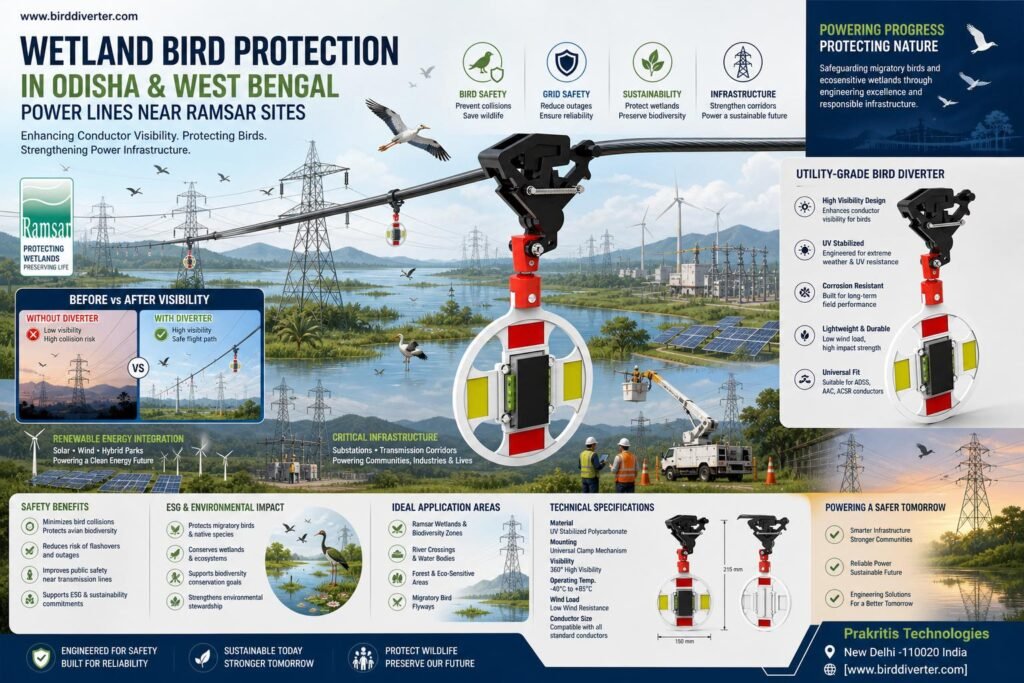
Power lines pose a significant risk to avian populations across India, particularly near Ramsar Wetland Sites, which are recognized for their ecological importance. This article discusses how the installation of bird diverters can mitigate these risks while also ensuring compliance with government regulations and enhancing utility infrastructure safety. By integrating bird diverters into power line design, utilities can contribute to bird conservation efforts without compromising energy transmission reliability.
Technical Overview
Bird diverters are devices installed on power lines to increase their visibility to birds, reducing collision risks. These devices play a pivotal role in safeguarding avian populations, especially in areas near wetland ecosystems, where migratory birds are prevalent. Proper installation of bird diverters can significantly increase overhead line visibility, reducing the frequency of avian strikes.
How Bird Diverters Work
Bird diverters utilize various design elements to enhance visibility:
- Color: Brightly colored materials attract birds’ attention.
- Reflective Surfaces: Reflective elements improve visibility during low light conditions.
- Size and Shape: Larger devices with distinctive shapes help in identifying the power lines from a distance.
Industry Applications
Bird diverters are essential components for several industries operating near or within Ramsar sites. Here are the key players:
- State Power Utilities: Adopt bird diverters for regulatory compliance and ethical responsibility in protecting avian populations.
- EPC Contractors: Include bird diverters in project bids to enhance safety and environmental sustainability.
- Renewable Energy Companies: Incorporate bird protection strategies into wind and solar projects.
- Transmission Line Companies: Utilize bird diverters as safety measures to minimize operational risks.
- Government Infrastructure Agencies: Promote avian safety through policy enforcement and subsidies on bird diverter installations.
Benefits for Utilities and EPC Contractors
Installing bird diverters offers multiple advantages:
- Enhanced Safety: Reduces the likelihood of bird collisions, ensuring environmental compliance.
- Regulatory Compliance: Meets guidelines set forth by safety regulatory authorities regarding avian protection.
- Operational Efficiency: Minimizes downtime and maintenance costs associated with avian incidents.
- Corporate Social Responsibility: Elevates corporate image among stakeholders and the community by demonstrating a commitment to wildlife protection.
Renewable Energy Transmission Relevance
As India moves towards increasing its renewable energy footprint, the integration of bird diverters becomes more critical. Renewable energy projects such as solar and wind farms often intersect with migratory pathways and wetland habitats, heightening the risk to birds. By implementing bird diverters on transmission lines connected to renewable energy infrastructures, companies can:
- Support Sustainability Goals: Align with environmental preservation efforts.
- Improve Grid Reliability: Ensure uninterrupted service while protecting wildlife.
- Enhance Community Relations: Foster positive relationships with local communities through wildlife protection initiatives.
Transmission Safety Advantages
The deployment of bird diverters significantly contributes to overall transmission safety. Some key benefits include:
- Visibility Improvements: Enhanced line visibility reduces collision rates, providing a safer environment for both birds and infrastructure.
- Reduced Operational Interruptions: Lower rates of bird-related accidents lead to fewer disruptions in service.
- Long-Term Cost Savings: Investing in bird diverters can result in reduced liability and maintenance costs over time due to fewer incident occurrences.
Environmental Compliance and ESG Discussion
Implementing bird diverters aligns with Environmental, Social, and Governance (ESG) principles, promoting sustainable practices in utility infrastructure.
- Ecological Responsibility: A commitment to preserving avian species strengthens corporate responsibility towards environmental sustainability.
- Regulatory Alignment: Mitigates risks associated with non-compliance to wildlife protection laws.
- Community Engagement: Demonstrates a proactive stance in addressing community concerns about environmental impacts.
Product Comparison Table
| Type of Bird Diverter | Visibility | Installation Ease | Cost |
|---|---|---|---|
| LED Bird Diverter | High | Moderate | $$$ |
| Non-LED Bird Diverter | Moderate | Easy | $$ |
| Aerospin Bird Diverter | High | Easy | $$$ |
Best Practices Section
To maximize the effectiveness of bird diverters, utilities and contractors should follow these best practices:
- Select Appropriate Diverters: Choose bird diverters based on the local avian population and environmental conditions.
- Conduct Surveys: Assess bird movement patterns to strategize installation locations.
- Routine Maintenance: Regularly inspect and maintain diverters to ensure optimal performance.
Call to Action
For technical consultation, product selection, or project support regarding bird diverters for Ramsar wetland power lines, contact Bird Diverter today. Together, we can enhance avian protection and transmission safety.
FAQ Section
What are bird diverters?
Bird diverters are safety devices installed on power lines to improve visibility for birds, thus reducing collision risks.
How do bird diverters help in avian protection?
By making power lines more visible, bird diverters help prevent bird strikes, particularly in areas with high avian activity.
Are there different types of bird diverters?
Yes, bird diverters come in various forms such as LED, non-LED, and Aerospin designs to cater to specific environmental needs.
Why is avian protection important for utility companies?
Ensuring avian protection is crucial for regulatory compliance, corporate social responsibility, and enhancing community relations.
Can bird diverters be installed on existing power lines?
Yes, bird diverters can be retrofitted onto existing power lines as part of safety upgrades.