
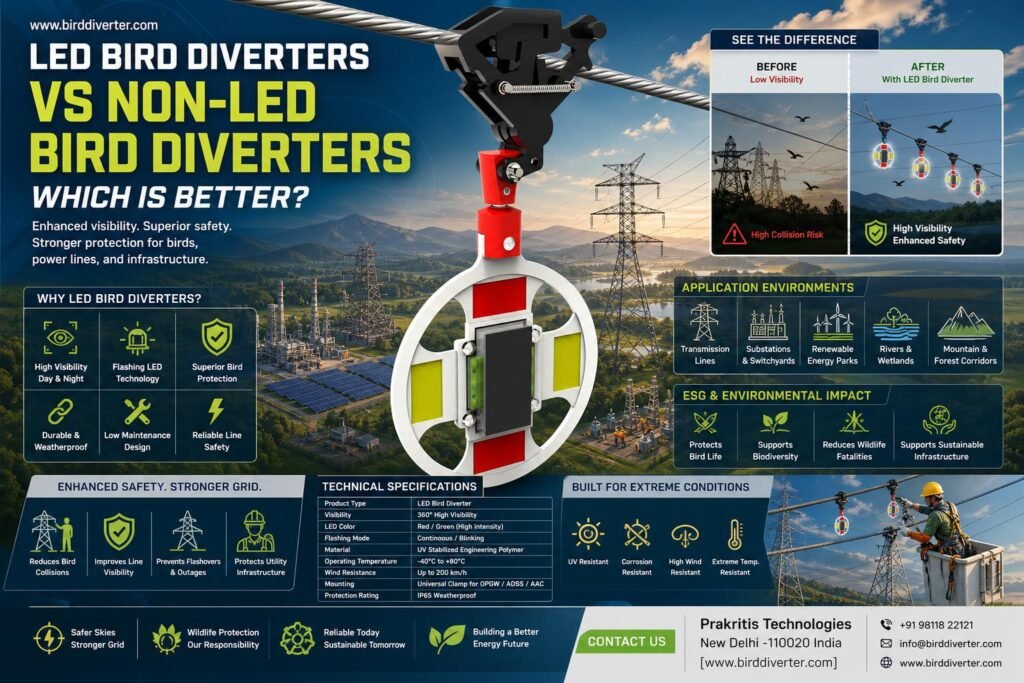
As the demand for renewable energy continues to rise, ensuring the safety of both infrastructure and wildlife becomes increasingly vital. This is especially true in the context of power transmission lines where bird collisions pose significant threats, not only to avian populations but also to the reliability of utility operations. This article delves into the differences between LED bird diverters and their non-LED counterparts, discussing their applications, benefits, and overall impact on transmission safety and environmental compliance.
Technical Overview of LED Bird Diverters
LED bird diverters represent an advanced solution designed to enhance the visibility of power lines for birds, thus minimizing collision risks. Using energy-efficient LED technology, these diverters emit bright light that is easily noticeable in varied weather conditions, including fog and rain. Unlike non-LED bird diverters, which typically rely on reflective surfaces or basic shapes to alert birds, LED options incorporate dynamic lighting systems that can be more effective in preventing bird strikes.
How LED Bird Diverters Work
LED bird diverters use a combination of light and design to improve visibility. The pulsing LED lights create a distinct visual signal that alerts birds of the overhead infrastructure. This is particularly useful in areas densely populated by both utility structures and avian populations. The following features highlight the significance of LED bird diverters:
- Enhanced Visibility: LED lights can be seen from larger distances compared to traditional markers.
- Energy Efficiency: Low power consumption minimizes the environmental impact while ensuring functionality.
- Durability: Built to withstand harsh weather conditions, ensuring longevity and performance.
Industry Applications
Both LED and non-LED bird diverters serve crucial roles across various industry sectors:
- State Power Utilities: Essential for minimizing outages caused by bird strikes on high-voltage lines.
- EPC Contractors: Often required to adhere to safety regulations, making bird diverters integral to project designs.
- Renewable Energy Companies: Vital in wind farms and solar power setups to protect local bird populations.
- Transmission Line Companies: Benefit from reduced maintenance costs associated with fewer bird-related incidents.
- Government Infrastructure Agencies: Support environmental compliance and sustainability goals.
Benefits for Utilities and EPC Contractors
Investing in LED bird diverters offers significant benefits to utilities and EPC contractors alike:
- Reduced Bird Collisions: Studies indicate LED markers can decrease bird collisions by up to 70%.
- Compliance with Regulations: Supports adherence to environmental guidelines and avian protection laws.
- Cost-Effectiveness: Lower repair and maintenance costs associated with bird strikes lead to long-term savings.
Renewable Energy Transmission Relevance
With the growing focus on renewable energy, the role of bird diverters becomes particularly salient. As wind and solar energy projects expand, the need for effective avian protection measures is paramount. LED bird diverters not only contribute to sustainability through their energy-efficient design but also support broader environmental initiatives aimed at protecting biodiversity.
Transmission Safety Advantages
The implementation of bird diverters enhances transmission safety by:
- Improving Visibility: Bright, flashing LED lights ensure that birds can see transmission lines from a great distance.
- Minimizing Service Disruptions: Fewer strikes mean more reliable service, which is critical for both businesses and end users.
- Ensuring Regulatory Compliance: Regulatory bodies often require installation of diverters for new power lines, promoting a safer infrastructure.
Environmental Compliance and ESG Discussion
Incorporating LED bird diverters aligns with environmental, social, and governance (ESG) frameworks. Utilities that engage in proactive avian protection not only mitigate risks but also enhance their reputations as responsible corporate citizens. This approach aids in obtaining operative licenses and can improve relationships with regulatory bodies.
Product Comparison Table
| Feature | LED Bird Diverter | Non-LED Bird Diverter |
|---|---|---|
| Visibility | High (LED lights) | Moderate (reflective) |
| Energy Efficiency | Very High | Low |
| Durability | High | Moderate |
| Cost | Higher initial investment | Lower initial cost |
| Long-term Savings | Significant | Minimal |
Best Practices Section
To maximize the effectiveness of bird diverters:
- Conduct regular maintenance checks to ensure optimal functioning.
- Assess the geographical area to determine the appropriate number and placement of diverters.
- Integrate diverter installations during the early stages of project planning to ensure compliance with safety regulations.
Call to Action
If you’re interested in enhancing the safety and compliance of your transmission lines, contact Bird Diverter today. Our experts can support you in selecting the right bird diverters for your infrastructure needs. Learn more about our products and services here.
FAQ
What are bird diverters and how do they work?
Bird diverters are devices installed on power lines that enhance visibility for birds, minimizing collision risks. LED bird diverters emit bright lights to alert birds of the overhead structures.
Are LED bird diverters more effective than non-LED ones?
Yes, LED bird diverters are proven to be more effective due to their high visibility and energy efficiency, significantly reducing bird collisions.
Do bird diverters contribute to environmental compliance?
Absolutely, using bird diverters helps utilities align with environmental regulations promoting avian protection, improving overall sustainability efforts.
What should I consider when installing bird diverters?
Factors to consider include the local avian population, placement of diverters, and compliance with regulatory standards.
Where can I find more information about bird diverters?
For more details, visit our product pages on LED bird diverters, non-LED bird diverters, and aerospin bird diverters.