
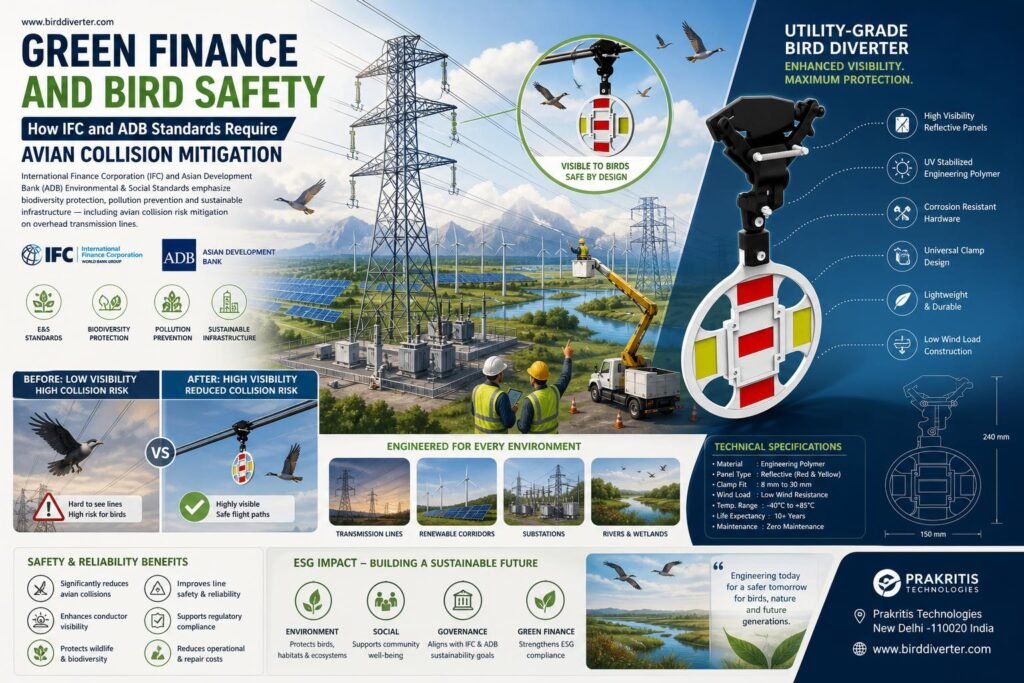
The intersection of green finance and avian safety is increasingly essential in today’s utility infrastructure landscape. With the rise in renewable energy projects and the expansive evolution of transmission networks, organizations are focusing on environmental compliance, specifically regarding avian collision mitigation. This article delves into the implications of the International Finance Corporation (IFC) Performance Standards and the Asian Development Bank (ADB) bird collision standards on infrastructure projects globally.
Technical Overview
The IFC Performance Standards, particularly PS6, focus on biodiversity conservation and the sustainable management of living natural resources. They emphasize the need for projects to avoid significant adverse impacts on biodiversity, including those related to avian safety. Concurrently, the ADB’s standards similarly prioritize the protection of wildlife and habitats during the design and implementation of energy projects.
Bird collisions with power lines can pose serious risks to avian populations, especially migratory species that rely on clear routes for navigation. Understanding the technical specifications and standards required for bird diverters is essential for utility organizations.
Understanding Bird Diverters
Bird diverters are specialized markers installed on power lines to enhance visibility, thereby reducing collision risks. These devices play a critical role in ensuring that birds can navigate safely through areas where overhead wires pose a danger. Types of bird diverters include:
- LED Bird Diverters
- Non-LED Bird Diverters
- Aerospin Bird Diverters
Each type has distinct features that cater to various project requirements.
Industry Applications
Compliance with IFC and ADB standards is particularly relevant for several sectors within the utility infrastructure domain. Key applications include:
State Power Utilities
Power utilities must abide by strict environmental regulations. Implementing avian collision mitigation measures, such as bird diverters, aids in meeting these standards and minimizing ecological impact.
EPC Contractors
Engineering, procurement, and construction contractors are essential intermediaries in infrastructure projects. Their role in ensuring bird-friendly designs can mitigate additional costs and potential delays caused by non-compliance with environmental standards.
Renewable Energy Companies
The transition to renewable energy necessitates new transmission solutions. Addressing potential avian hazards during the planning and implementation phases is critical for securing funding and ensuring project sustainability.
Government Infrastructure Agencies
Government agencies play a pivotal role by establishing regulatory frameworks that promote sustainable practices in infrastructure development. They can incentivize the use of bird diverters to align with green finance goals.
Benefits for Utilities and EPC Contractors
Investing in bird diverters yields significant advantages for utilities and EPC contractors.
- Environmental Compliance: Reduces legal and financial risks associated with environmental violations.
- Enhanced Visibility: Improves safety for both avian species and utility operations by minimizing collision risks.
- Public Relations: Demonstrates commitment to sustainability, bolstering the organization’s reputation in a competitive market.
- Long-term Cost Savings: Prevents potential fines and delays due to regulatory non-compliance.
Renewable Energy Transmission Relevance
As nations worldwide shift toward renewable energy, the integration of green finance in transmission projects becomes crucial. The incorporation of bird diverters within the framework of these projects supports compliance with IFC and ADB standards while fostering environmental stewardship.
Implementation Strategies
Organizations should consider several strategies for effective implementation:
- Conduct thorough environmental assessments to identify potential collision risks.
- Integrate avian protection measures in the design phase of transmission projects.
- Collaborate with stakeholders, including environmental experts, to determine the most effective bird diverter systems.
- Monitor and evaluate the performance of installed bird diverters to ensure ongoing compliance and safety.
Transmission Safety Advantages
Beyond environmental compliance, bird diverters improve overall transmission safety. High-voltage transmission lines present inherent dangers not only for birds but also for utility workers. By making lines more visible, bird diverters enhance safety protocols.
Environmental Compliance and ESG Discussion
Environmental, Social, and Governance (ESG) standards are becoming non-negotiable for businesses, especially those involved in infrastructure. Projects that demonstrate a commitment to avian safety through the implementation of bird diverters can enhance ESG ratings and improve the likelihood of securing green financing.
Product Comparison Table
| Type | Visibility | Installation Complexity | Cost |
|---|---|---|---|
| LED Bird Diverters | High | Medium | Higher |
| Non-LED Bird Diverters | Medium | Low | Lower |
| Aerospin Bird Diverters | Medium | Medium | Medium |
Best Practices Section
To maximize the effectiveness of bird diverting measures, utilities should adopt the following best practices:
- Regular maintenance checks on diverters.
- Use a combination of diverter types to adapt to specific environmental conditions.
- Educate stakeholders on the importance of avian safety and compliance measures.
- Leverage data and technology for tracking bird movements and optimizing diverter placement.
Call to Action
For utilities and EPC contractors looking to comply with IFC and ADB standards while enhancing avian safety, consider the variety of bird diverters available. Contact us for expert guidance on technical consultation, product selection, and project support.
Get in touch with Bird Diverter today!
FAQ Section
What are bird diverters?
Bird diverters are devices installed on power lines to increase visibility and reduce the risk of bird collisions.
How do IFC and ADB standards affect transmission projects?
These standards require adherence to strict environmental regulations that include avian collision mitigation to protect biodiversity.
Why is avian protection important for utilities?
Protecting avian populations minimizes ecological impacts and aligns with environmental compliance requirements, enhancing the organization’s reputation.
What are the benefits of using LED bird diverters over non-LED options?
LED bird diverters offer higher visibility, potentially leading to greater reductions in collision risk, although they may involve higher initial costs.
How can I ensure compliance with environmental regulations?
Integrate avian protection measures into project designs, conduct thorough assessments, and monitor installed diverters for effectiveness.