
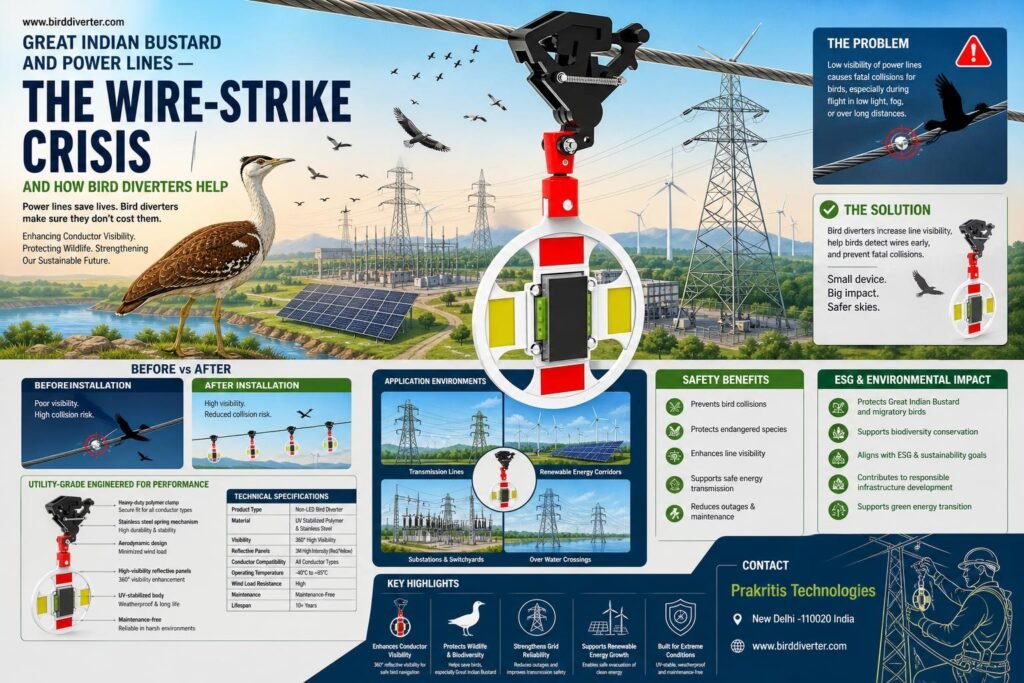
The Great Indian Bustard (GIB) is one of the most critically endangered birds in India, facing severe threats from habitat loss and collisions with man-made structures, particularly power lines. As renewable energy scales up, understanding the implications of Great Indian Bustard power line collision becomes essential for sustaining biodiversity while enabling infrastructure development. This article dives deep into the wire-strike crisis affecting GIB, the efficacy of bird diverters, and how various stakeholders can contribute to avian protection.
Technical Overview
Power lines, while crucial for electricity transmission, pose significant threats to several bird species, including the Great Indian Bustard. These birds often fly at low altitudes, making them susceptible to colliding with overhead lines. The GIB’s declining population necessitates robust solutions to mitigate these collision risks.
Engineering solutions, especially bird diverter installations, are proving effective in increasing overhead line visibility. Bird diverters, which can be installed along power lines, serve as visual markers that help GIBs avoid collisions. Several types of bird diverters range from LED options, which enhance visibility at night, to non-LED designs that work effectively during the day.
Understanding Bird Diverters
- LED Bird Diverters: These utilize bright lights designed for low and high-light conditions, ensuring GIBs can see them.
- Non-LED Bird Diverters: These often feature reflective materials that enhance daytime visibility.
- Aerospin Bird Diverters: Specially designed to spin in the wind, attracting the bird’s attention.
Industry Applications
The primary application areas for bird diverters are across utility sectors where high-voltage electricity transmission is indispensable. Here are some sectors where bird diverter implementation is crucial:
- State Power Utilities: Mandated to ensure the safe passage of wildlife and prevent power outages due to wildlife interactions.
- EPC Contractors: Responsible for constructing transmission lines and integrating safety measures.
- Renewable Energy Companies: As turbine installations expand, managing avian interactions becomes vital.
- Transmission Line Companies: Concerned with infrastructure integrity and safety alignment with ecological balance.
- Government Infrastructure Agencies: Overseeing compliance with environmental regulations and avian protection standards.
Benefits for Utilities and EPC Contractors
Incorporating bird diverters into power line design and maintenance offers a host of benefits:
- Reduced Collision Rates: Effective use of diverters significantly lessens the chances of avian wire strikes.
- Compliance with Environmental Regulations: Facilitating adherence to legal mandates concerning wildlife protection.
- Improved Public Perception: Demonstrating corporate responsibility towards ecological sustainability enhances brand reputation.
- Potential Cost Savings: Lower damage and maintenance costs through reduced outages and collisions.
Renewable Energy Transmission Relevance
As India makes strides toward a renewable energy future, the need to integrate avian protection mechanisms within transmission lines becomes paramount. Renewables such as wind and solar require extensive transmission infrastructure, often traversing migratory paths of the Great Indian Bustard.
By adopting bird diverters in renewable energy projects, companies can proactively address ecological concerns while maintaining grid reliability. This approach aligns with the industry’s move towards sustainable practices, thereby attracting environmentally-conscious investments.
Transmission Safety Advantages
Of equal consideration is the inherent safety advantage of using bird diverters. Their role in enhancing visibility leads to safer energy infrastructure, reducing risks not only for wildlife but also for utility workers engaged in maintenance and monitoring tasks.
By implementing these devices, organizations can foster safer environments around transmission lines, thus encouraging collaborative efforts among different sectors of the utility infrastructure.
Environmental Compliance and ESG Discussion
Environmental, Social, and Governance (ESG) standards are becoming critical benchmarks for businesses today. By effectively implementing bird diverters, organizations demonstrate a commitment to avian conservation, fulfilling their environmental obligations. This proactive approach can be pivotal when seeking funding or partnerships in future projects.
Furthermore, agencies may find it increasingly beneficial to design programs that encourage compliance with these standards, reinforcing the importance of integrating ecological considerations into utility infrastructure development.
Product Comparison Table
| Type of Diverter | Visibility Range | Night Use | Ease of Installation | Cost |
|---|---|---|---|---|
| LED Bird Diverter | High | Yes | Moderate | Higher |
| Non-LED Bird Diverter | Moderate | No | Easy | Lower |
| Aerospin Diverter | High | Yes | Moderate | Moderate |
Best Practices Section
The installation of bird diverters should adhere to best practices to maximize effectiveness:
- Conduct site assessments to identify high-risk areas for avian collisions.
- Engage with local wildlife agencies for guidance on installation placement and styles.
- Regularly monitor diverter effectiveness to evaluate if additional measures are necessary.
- Ensure compliance with all local and national wildlife protection laws.
Call to Action
If your organization is involved in utility infrastructure projects, consider integrating bird diverters into your operations. This not only safeguards avian populations but enhances the overall safety of energy transmission networks. Contact us for technical consultation and comprehensive support on how to select the right bird diverters for your projects.
FAQ Section
What are bird diverters?
Bird diverters are devices installed on power lines to enhance their visibility, helping to prevent bird collisions with overhead wires.
How effective are bird diverters in reducing collisions?
Bird diverters have proven highly effective in reducing bird collisions with power lines by increasing visibility for birds, especially in flight paths.
What types of bird diverters are available?
Common types of bird diverters include LED diverters, non-LED reflective diverters, and aerospin diverters, each designed to improve visibility under different conditions.
Are bird diverters cost-effective for utilities?
Yes, while there is an upfront investment, the long-term savings from reduced collision-related costs and compliance with regulations can make them cost-effective.
How do bird diverters contribute to environmental compliance?
By reducing bird strikes, bird diverters help utilities adhere to environmental regulations and enhance their ESG initiative, showcasing commitment to biodiversity conservation.