
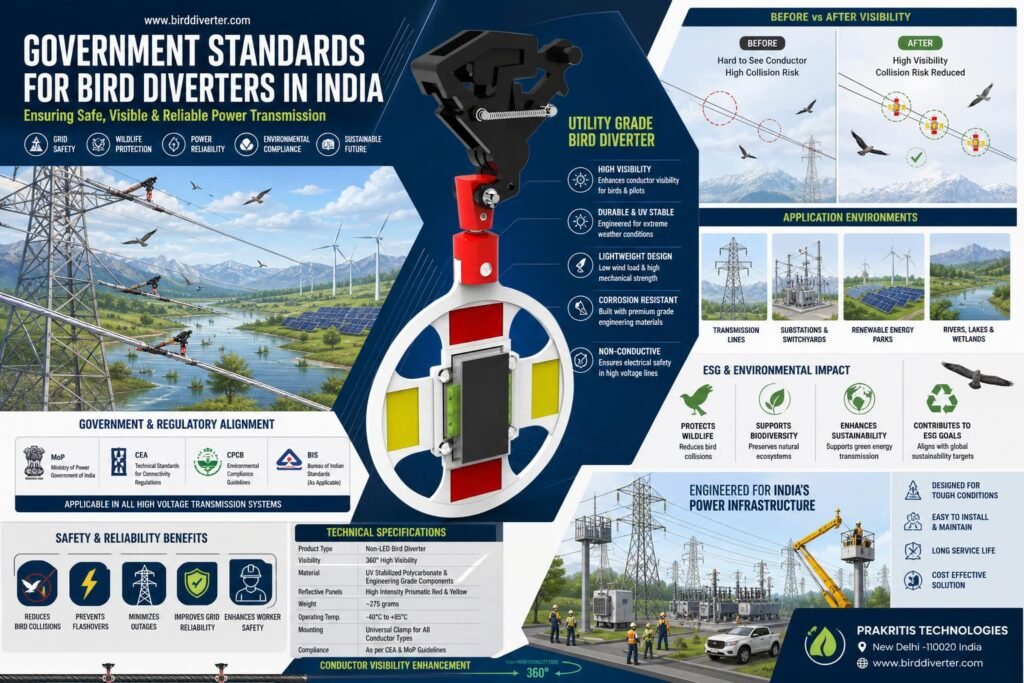
As India continues to expand its power generation capabilities, particularly in renewable energy, the integration of bird diverters becomes increasingly critical. These devices serve a dual purpose: ensuring that transmission lines are visible to birds and thereby minimizing avian collisions, and maintaining compliance with government regulations aimed at protecting wildlife. In this article, we delve into the bird diverter standards in India, exploring their technical specifications, industry applications, and the benefits they provide to utilities and contractors.
Technical Overview
Bird diverters are essential components of high-voltage transmission systems, designed to enhance the visibility of overhead lines. They come in various forms, including LED and non-LED options, to suit different operational requirements. The primary standards concerning bird diverters in India are set forth by regulatory bodies, ensuring that they meet specific safety and efficacy criteria.
The technical specifications for bird diverters commonly include:
- High visibility materials that can withstand extreme weather conditions.
- Installation configurations that do not impede the functionality of the transmission line.
- Compliance with environmental standards to support avian protection.
Industry Applications
Bird diverters are utilized across various sectors, including:
- State Power Utilities: Ensuring compliance with government regulations while safeguarding local bird populations.
- EPC Contractors: Implementing bird diverter standards during the construction of new transmission lines.
- Renewable Energy Companies: Enhancing the safety of transmission methods as they relate to environmental sustainability.
- Transmission Line Companies: Upgrading existing infrastructure to meet modern safety standards.
- Government Infrastructure Agencies: Overseeing compliance and advocating for best practices in avian protection.
Benefits for Utilities and EPC Contractors
Integrating bird diverters within utility infrastructure yields numerous advantages:
- Enhanced Safety: Reducing the risk of bird strikes decreases operational interruptions and enhances public safety.
- Regulatory Compliance: Adhering to bird diverter standards safeguards against legal issues and fines that can arise from non-compliance.
- Cost Savings: Preventing bird collisions can mitigate maintenance costs and increase the lifespan of transmission equipment.
- Improvement in Public Image: Demonstrating a commitment to environmental stewardship enhances stakeholder trust and supports corporate social responsibility goals.
Renewable Energy Transmission Relevance
As the focus shifts toward renewable energy sources, the importance of bird diverters becomes even more pronounced. Wind farms and solar installations require effective transmission systems that safeguard avian populations while efficiently delivering power. Implementing bird diverters not only aligns with compliance but enhances the sustainability of these energy projects.
Transmission Safety Advantages
Bird diverters contribute significantly to transmission safety in various ways:
- They provide visual markers that enhance aerial awareness for birds, minimizing accidents.
- Placing diverters on specific sections of transmission lines improves the overall safety of the network.
- The installation of diverters promotes adherence to international best practices regarding wildlife protection.
Environmental Compliance and ESG Discussion
As Environmental, Social, and Governance (ESG) factors gain importance in industry assessments, implementing bird diverter standards positions utilities favorably within the sustainability landscape. Compliance not only protects wildlife but also aligns with global efforts to reduce the carbon footprint and protect biodiversity.
Product Comparison Table
| Product Type | Features | Best For |
|---|---|---|
| LED Bird Diverter | High visibility, energy-efficient, weather-resistant | Renewable energy infrastructure |
| Non-LED Bird Diverter | Durability, UV resistance, cost-effective | Traditional utility applications |
| AeroSpin Bird Diverter | Wind and vibration-resistant, 360° visibility | Areas with high bird migration |
Best Practices Section
Adhering to best practices during the implementation of bird diverters ensures optimal performance and compliance. These practices include:
- Conducting site assessments to determine ideal installation locations.
- Regular maintenance checks to ensure all marks are functional and visible.
- Training utility staff on the importance of avian protection and compliance.
Call to Action
For expert technical consultation, product selection, or project support regarding bird diverter standards in India, contact Bird Diverter today.
FAQ Section
What are bird diverters?
Bird diverters are devices installed on power lines to enhance visibility for birds, reducing the risk of collisions.
Why are bird diverters important for transmission safety?
They help prevent accidents involving birds and minimize disruptions in service, ensuring safer transmission infrastructure.
How do bird diverters comply with environmental regulations?
Bird diverters meet specific safety and visibility standards, protecting avian populations while adhering to government regulations.
What types of bird diverters are available?
Common types include LED bird diverters, non-LED options, and specialized designs like AeroSpin diverters.
Who should implement bird diverter standards?
State power utilities, EPC contractors, and renewable energy companies should all implement bird diverter standards to ensure compliance and protect wildlife.