
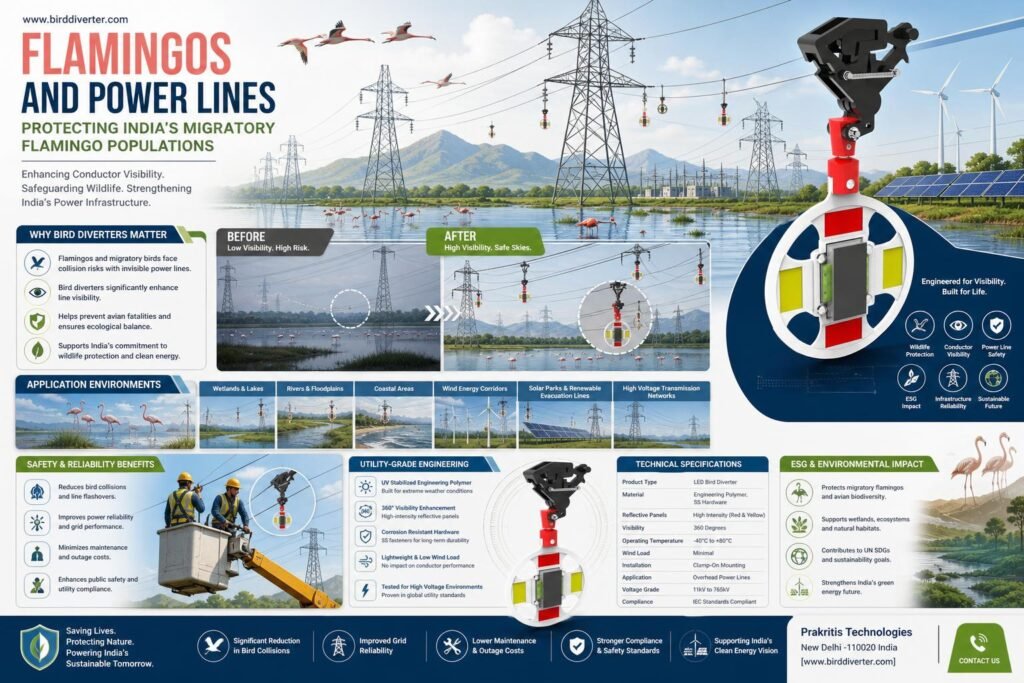
India’s unique ecosystems and vibrant avian populations face significant threats from infrastructure development, especially power lines. As migratory birds, such as flamingos, traverse vast distances, they encounter dangers from overhead electrical structures. The challenge of reducing flamingo power line collisions has gained prominence in discussions about wildlife conservation and utility infrastructure. This article explores the impact of power line collisions on flamingos in India, particularly in regions like Gujarat and the Rann of Kutch, and discusses solutions that enhance avian safety while supporting transmission efficiency.
Technical Overview
Power line collisions with birds are a pressing issue in the infrastructure sector. These collisions can result in significant avian mortality, impacting various species and disrupting local ecosystems. In India, the case of flame-colored flamingos, particularly during their migratory seasons, presents a unique challenge due to the increased risk of these collisions. As utilities expand transmission lines to support growing energy needs, the integration of bird diverters becomes crucial in mitigating these risks.
Understanding Bird Diverters
Bird diverters are innovative devices designed to enhance the visibility of power lines to avian species, thereby reducing collision risks. These products are strategically installed on existing infrastructure and serve multiple utilities:
- Enhancing overhead line visibility for migratory birds.
- Minimizing collision incidents during peak migratory seasons.
- Supporting compliance with environmental regulations and standards.
Industry Applications
State power utilities and renewable energy companies are increasingly implementing bird diverters as part of their commitment to environmental stewardship. This commitment not only aligns with government mandates for ecological protection but also enhances the reliability of transmission networks.
Utility Infrastructure Integration
Utilizing bird diverters in state power projects can lead to the following benefits:
- Improved transmission line safety, reducing repair costs associated with wildlife-related outages.
- Strengthened community relations through proactive environmental measures.
- Alignment with ESG (Environmental, Social, and Governance) goals that resonate with stakeholders and investors.
Benefits for Utilities and EPC Contractors
As utilities and EPC contractors prioritize safety and compliance, adopting bird diverters offers numerous operational benefits:
- Cost Reduction: Preventing bird strikes can lead to diminished maintenance costs due to fewer power outages caused by collisions.
- Enhanced Public Image: Demonstrating a commitment to wildlife protection fosters community trust and strengthens corporate reputation.
- Regulatory Compliance: Many regions mandate measures to protect endangered species, positioning companies favorably for future growth opportunities.
Renewable Energy Transmission Relevance
With India’s transition towards renewable energy, particularly solar and wind power, the establishment of new transmission networks is essential. However, this expansion must also consider the ecological impact:
- Bird diverters can be effectively applied in wind farms and solar installations to enhance avian safety.
- Increased focus on wildlife conservation can attract environmentally-conscious investors and customers.
Transmission Safety Advantages
Integrating bird diverters into transmission projects enhances safety not only for wildlife but also for infrastructure integrity:
- Reducing collision rates contributes to the operational reliability of transmission systems.
- Enhanced visibility of power lines protects maintenance workers during servicing and repairs.
Environmental Compliance and ESG Discussion
Today’s infrastructure projects must adhere to stringent environmental regulations. Bird diverters represent a proactive measure for compliance with initiatives aimed at avian protection:
- Contributing to biodiversity conservation efforts aligns with government policy goals.
- Meeting international standards for wildlife protection enhances project viability in bidding processes.
Product Comparison Table
| Product | Type | Features | Advantages |
|---|---|---|---|
| LED Bird Diverter | LED-based | High visibility at night | Optimal for regions with nocturnal bird activity |
| Non-LED Bird Diverter | Reflective | Cost-effective solution | Ideal for daytime visibility |
| AeroSpin Bird Diverter | Wind-activated | Highly visible in motion | Engages birds by movement, encouraging avoidance |
Best Practices for Implementation
Implementing bird diverters effectively requires adherence to best practices ensuring maximum impact:
- Conduct thorough site assessments to identify high-risk areas.
- Integrate diverters into ongoing maintenance schedules for existing power lines.
- Engage with local communities to raise awareness about avian protection initiatives.
Call to Action
Bird Diverter offers technical consultation and product selection to support your projects. We encourage you to contact us for tailored solutions to enhance avian protection and improve your utility infrastructure.
FAQ Section
What are bird diverters?
Bird diverters are devices installed on power lines to enhance their visibility to birds, thereby reducing collision risks.
How do bird diverters help protect flamingos?
By making power lines more visible during migration seasons, bird diverters significantly reduce the chances of flamingo collisions.
Are bird diverters effective for all bird species?
Yes, bird diverters can be effective for various species, particularly migratory birds that may have difficulty seeing overhead lines.
What regulations apply to avian protection in India?
India has regulations mandating the protection of migratory birds, requiring utilities to implement safety measures like bird diverters.
How can utilities benefit from installing bird diverters?
Utilities can reduce maintenance costs, enhance public relations, and ensure compliance with environmental regulations by installing bird diverters.