
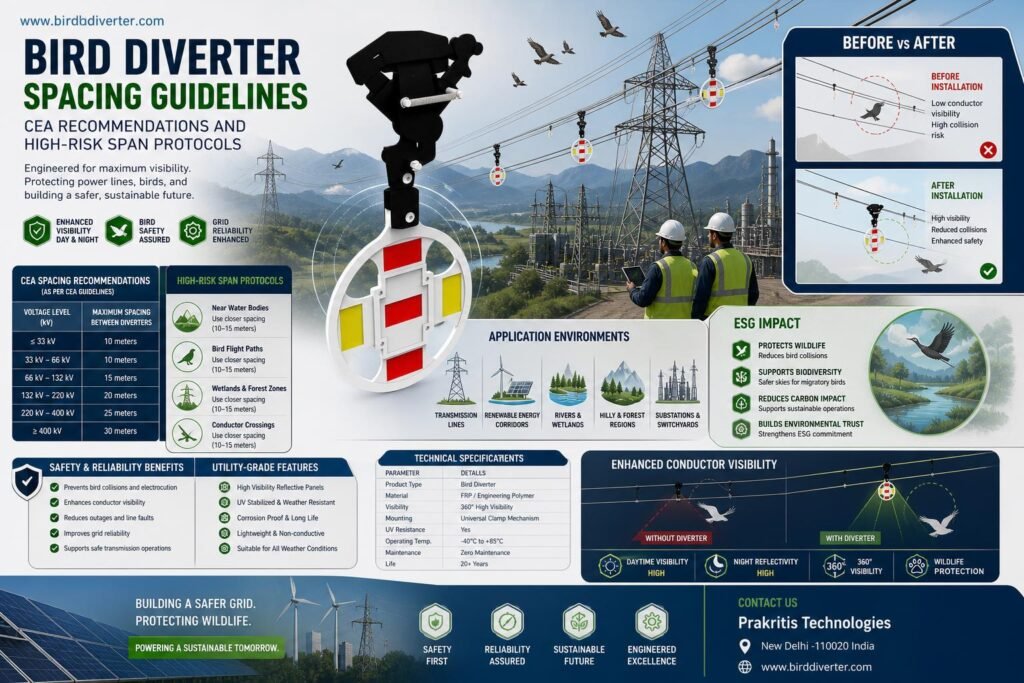
Bird diverters are crucial components in protecting both avian species and electrical infrastructure. In India, the spacing of these diverters is guided by CEA recommendations to maximize visibility and mitigate risks. This article delves into the essential guidelines on bird diverter spacing to enhance transmission line safety and compliance for power utilities and associated contractors.
Technical Overview
The Central Electricity Authority (CEA) of India provides key guidelines for the installation of bird diverters on high-voltage transmission lines. Bird diverters are designed to make power lines more visible to birds, thereby reducing collision incidents. Proper spacing is vital for ensuring that these safety devices function effectively, especially in regions with high avian activity.
Understanding Bird Diverters
Bird diverters can come in several forms, including LED and non-LED models, with functionality tailored for specific environmental conditions. The choice of diverter type impacts not only installation practices but also overall effectiveness. Moreover, factors such as line height, voltage levels, and the density of local bird populations should be considered during the installation process.
Industry Applications
Numerous sectors can benefit from effective bird diverter implementation. Let’s explore the various domains where these guidelines are critical:
- State Power Utilities: Adequate bird diverter spacing aligns with regulatory compliance while enhancing operational safety.
- EPC Contractors: Understanding proper spacing guidelines is crucial for successful project execution in avian-sensitive areas.
- Renewable Energy Companies: Wind and solar projects benefit from bird mitigation measures that comply with environmental regulations.
- Transmission Line Companies: Ensuring wire visibility in urban and rural environments protects both birds and utility assets.
- Government Infrastructure Agencies: As policymakers, adhering to avian safety guidelines enhances public trust and environmental stewardship.
Benefits for Utilities and EPC Contractors
Implementing proper bird diverter spacing not only ensures compliance but provides numerous operational benefits:
- Enhanced Safety: Reduces the likelihood of bird collisions, thereby minimizing outages and maintenance costs.
- Regulatory Compliance: Adheres to CEA guidelines, ensuring permits and licenses are secured without disturbance.
- Public Image: Demonstrates commitment to environmental protection, enhancing stakeholder trust.
- Operational Efficiency: Fewer downtime incidents lead to improved power supply reliability.
Renewable Energy Transmission Relevance
With India progressively moving toward renewable energy sources, avian protection becomes increasingly paramount. Renewable energy project developers must integrate bird diverter spacing guidelines to ensure sustainable operations, aligning with national environmental goals. Moreover, the visibility enhancements provided by diverters promote both avian safety and grid reliability.
Transmission Safety Advantages
The installation of bird diverters following CEA spacing recommendations offers critical safety advantages:
- High-Voltage Systems: Diverters reduce collision rates significantly for high-voltage overhead lines.
- Migratory Bird Protection: Ensures safe passage for migratory species, particularly in regions with known migratory patterns.
- Infrastructure Integrity: Minimizes wear and tear on infrastructure by preventing accidental damages caused by colliding birds.
Environmental Compliance and ESG Discussion
Environmental, Social, and Governance (ESG) factors are becoming integral to project decision-making. By implementing bird diverters, utilities and contractors demonstrate adherence to environmental compliance, elevating their ESG profiles. This proactive approach not only aligns with global best practices but also meets local regulatory frameworks that promote biodiversity and sustainable development.
Product Comparison Table
| Type of Bird Diverter | Visibility Distance | Installation Height | Recommended Spacing |
|---|---|---|---|
| LED Bird Diverter | Up to 300 meters | Above 10 meters | 10 meters apart |
| Non-LED Bird Diverter | Up to 200 meters | Above 10 meters | 5-10 meters apart |
Best Practices Section
To optimize bird diverter placement:
- Conduct avian studies to identify high-risk areas.
- Follow CEA spacing recommendations closely for effective implementation.
- Ensure regular maintenance and inspections of installed diverters for continuous visibility.
- Consult with avian specialists during planning phases for tailored solutions.
Call to Action
If you are considering the installation of bird diverters or require technical consultation, contact Bird Diverter today for expert guidance and support tailored to your project’s needs.
FAQ Section
What is a bird diverter?
A bird diverter is a device installed on power lines to enhance visibility and reduce the risk of bird collisions.
How far apart should bird diverters be installed?
As per CEA recommendations, bird diverters should typically be spaced 10 meters apart, depending on local conditions.
Why is bird diverter spacing important?
Proper spacing ensures maximum visibility, effectively minimizing the risk of collisions and operational disruptions.
What are the benefits of using LED bird diverters?
LED bird diverters offer enhanced visibility, especially under low-light conditions, significantly improving bird safety.
How do bird diverters contribute to environmental compliance?
They help utilities adhere to environmental regulations and promote biodiversity, enhancing the overall ESG profile of an organization.