
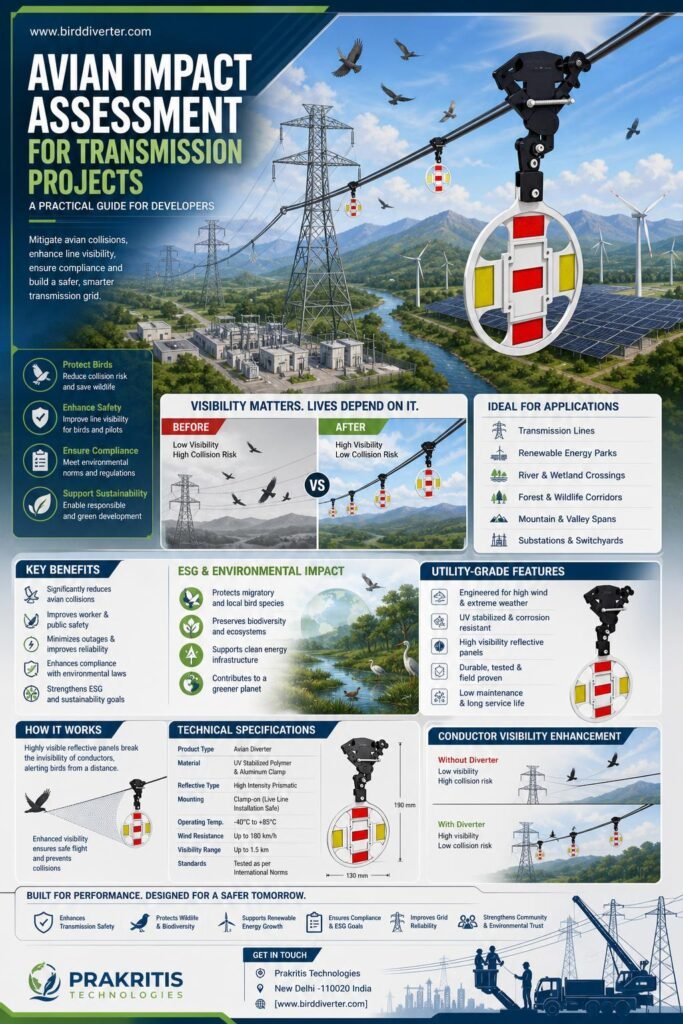
As renewable energy projects proliferate and transmission line networks expand, ensuring avian protection becomes paramount. An avian impact assessment for transmission line projects not only satisfies regulatory requirements but also enhances operational efficiency. This article serves as a practical guide for developers navigating the complexities of avian impact assessments, with specific focus on the challenges faced in India’s dynamic infrastructure landscape.
Technical Overview
The concept of avian impact assessment revolves around evaluating how transmission infrastructure affects local bird populations. Key aspects include risk identification, collision risks, and the implementation of mitigation measures. A thorough EIA (Environmental Impact Assessment) is necessary to comply with regulatory frameworks and promote sustainable practices.
Key Components of Avian Impact Assessment
- Field Studies: Conducting detailed studies to understand bird behavior in the vicinity of proposed transmission lines.
- Data Analysis: Utilizing statistical methods to analyze collision risks based on historical data and bird migration patterns.
- Mitigation Strategies: Developing actionable plans to minimize avian collisions, such as implementing bird diverters and marked conductors.
Industry Applications
Avian impact assessments are integral to various stakeholders within the utility and transmission sectors. From state power utilities to EPC contractors, understanding the implications of avian interactions with infrastructure is vital.
State Power Utilities
As custodians of regional energy resources, state power utilities must prioritize avian safety to maintain compliance with environmental standards while ensuring grid reliability. Mitigative measures must be integrated into project design from the onset.
EPC Contractors
EPC contractors are tasked with executing transmission projects effectively. Implementing a well-planned avian impact assessment can preemptively address potential risks, facilitating smoother project execution.
Renewable Energy Companies
With an increasing focus on sustainability, renewable energy companies are under pressure to harmonize project development with avian conservation. Integrating avian impact assessments helps align business objectives with environmental stewardship.
Benefits for Utilities and EPC Contractors
Investing in avian impact assessments provides multifaceted benefits to utilities and EPC contractors, ensuring compliance,enhancing safety, and fostering sustainable practices.
Enhanced Safety
Implementing effective avian protection measures reduces the risk of bird collisions, enhancing the overall safety of transmission lines. This not only protects avian populations but also minimizes potential service disruptions.
Regulatory Compliance
Conducting thorough avian impact assessments aligns with local and national regulations, reinforcing a commitment to environmental responsibility—a key consideration for stakeholders during project lifecycles.
Renewable Energy Transmission Relevance
In the era of renewable energy, avian impact assessments play a crucial role in ensuring the effective integration of clean energy solutions into existing grids. The expansion of wind farms, solar plants, and other renewable projects necessitates a proactive approach to avian risk management.
Integration with Renewable Technologies
Bird diverters can be crucial in renewable energy infrastructure, ensuring that transmission lines remain visible to migratory birds. For example, innovative products like LED bird diverters and non-LED solutions are designed to minimize avian collisions effectively.
Transmission Safety Advantages
The safety of overhead transmission lines is paramount, particularly in areas frequented by migratory birds. Effective avian impact assessments incorporate specific measures to enhance the visibility of overhead conductors.
Overhead Conductor Visibility
Integrating visibility enhancement strategies, such as incorporating brightly colored markers and reflective devices on transmission lines, significantly reduces collision risks. This not only aligns with avian protection goals but also fosters greater public acceptance of infrastructure projects.
Environmental Compliance and ESG Discussion
As environmental, social, and governance (ESG) criteria gain importance, the role of avian impact assessments in utility projects cannot be overstated. Proactive engagement in avian protection activities demonstrates corporate responsibility and enhances stakeholder relationships.
Impact on ESG Reporting
Investors and regulators are increasingly scrutinizing companies’ commitment to environmental stewardship. By implementing robust avian impact assessments, utilities can bolster their ESG profiles, showcasing their dedication to sustainable practices.
Product Comparison Table
| Product Type | Features | Effectiveness |
|---|---|---|
| LED Bird Diverter | High visibility, energy-efficient, durable | High |
| Non-LED Bird Diverter | Cost-effective, simple design | Moderate |
| AeroSpin Bird Diverter | Wind-activated spin, enhanced visibility | Very High |
Best Practices Section
To achieve optimized results, developers should adhere to best practices in avian impact assessments:
- Conduct comprehensive baseline surveys to gather data on local avian species.
- Engage with local ornithological experts to inform assessment processes.
- Utilize high-tech solutions for monitoring avian activity around transmission lines.
Call to Action
At Bird Diverter, we specialize in avian protection solutions for transmission infrastructure. Whether you need guidance on product selection or technical consultation for your upcoming project, contact us today for expert support.
FAQ Section
What is an avian impact assessment?
An avian impact assessment evaluates the effects of transmission infrastructure on local bird populations, focusing on collision risks and mitigation strategies.
How do bird diverters work?
Bird diverters enhance the visibility of transmission lines for birds, reducing collision risks by alerting them to their presence.
Why are avian impact assessments important for transmission projects?
These assessments ensure regulatory compliance, promote environmental stewardship, and enhance safety for both birds and infrastructure.
What are some common mitigation measures?
Common measures include installing bird diverters, conducting pre-construction avian surveys, and implementing signage to warn of overhead lines.
How can renewable energy projects benefit from avian impact assessments?
By integrating avian protection strategies, renewable energy projects can reduce risks, ensuring the safety of both birds and the infrastructure that supports the transition to clean energy.