
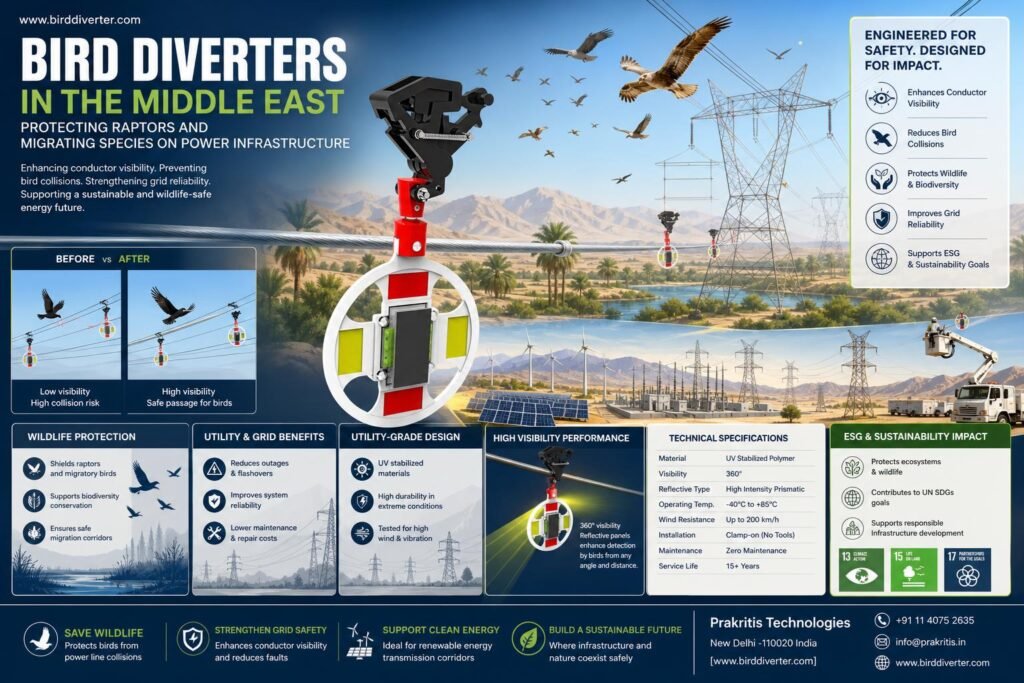
In the Middle East, the intersection of power infrastructure and wildlife conservation has led to innovative solutions aimed at protecting raptors and migrating species. Bird diverters play a pivotal role in creating safer environments for these birds while ensuring the integrity of our power lines. As infrastructure expands, addressing the challenges posed by avian interactions with power lines is more critical than ever. This article examines the technical aspects, industry applications, and numerous benefits of implementing bird diverters in the region’s utility landscape.
Technical Overview
Bird diverters are devices attached to power lines that enhance the visibility of these structures for birds, particularly raptors and migratory species. By increasing the likelihood of collision detection, these diverters significantly reduce avian fatalities.
Types of Bird Diverters
Bird diverters come in various forms, each designed to suit specific conditions. Here are three primary types:
- LED Bird Diverters: Utilize light to attract attention.
- Non-LED Bird Diverters: Use physical shapes and colors for visibility without electricity.
- Aerospin Bird Diverters: Create visual movement, mimicking natural threats.
Each type has its applications, making it crucial for utilities and EPC contractors to choose appropriate models for their specific conditions. For instance, LED diverters are ideal in urban areas with high bird activity, while non-LED options may be suitable for rural installations.
Industry Applications
The implementation of bird diverters is increasingly becoming a necessity across various sectors, particularly for:
State Power Utilities
State power utilities are required to adhere to environmental regulations that mandate the protection of local wildlife. Implementing bird diverters on transmission lines not only fulfills these obligations but also enhances grid reliability.
EPC Contractors
For EPC contractors, integrating bird diverters into project designs ensures that utilities meet both functional and environmental standards. By using bird markers, contractors can enhance the overall safety and sustainability of their projects.
Renewable Energy Companies
As renewable energy expands, integrating bird diverters into solar and wind projects is essential. These structures can be strategically placed to minimize collisions around solar arrays and wind turbines, thus improving avian protection measures.
Benefits for Utilities and EPC Contractors
Implementing bird diverters offers manifold advantages:
Enhanced Safety
By increasing visibility for birds, diverters significantly reduce the risk of collisions, thereby promoting enhanced safety for avian populations.
Compliance with Environmental Regulations
Utilities are often bound by laws that protect endangered species. Installing bird diverters helps meet these legal requirements and boosts the company’s reputation.
Cost Savings
Reducing avian-related power outages can lead to significant cost savings for utilities in terms of infrastructure repair and service interruptions. Bird diverters help mitigate these risks.
Renewable Energy Transmission Relevance
As the Middle East invests heavily in renewable energy projects, bird diverters are essential for ensuring that these projects align with environmental and operational standards. The installation of diverters on high-voltage transmission lines can facilitate safer migration for birds and create eco-friendly power generation solutions.
Transmission Safety Advantages
Bird diverters contribute significantly to the overall safety of transmission systems. Their role in:
- Reducing bird strikes
- Minimizing service disruptions
- Enhancing visibility in complex environments
is invaluable for maintaining the resilience and reliability of our power networks.
Environmental Compliance and ESG Discussion
Environmental, Social, and Governance (ESG) factors are increasingly shaping the operational standards for utilities. Installations of bird diverters represent a proactive approach in aligning with ESG goals:
- Environmental Protection: By safeguarding endangered species, utilities showcase their commitment to environmental stewardship.
- Social Responsibility: Ensuring safe power lines fosters community confidence in utility operations.
- Governance: Compliance with regulations helps avoid legal repercussions and maintains operational licenses.
Product Comparison Table
| Type | Visibility Method | Application Environment | Cost |
|---|---|---|---|
| LED Diverters | Light Emission | Urban | Higher |
| Non-LED Diverters | Color and Shape | Rural | Moderate |
| Aerospin Diverters | Movement Simulation | Varied | Higher |
Best Practices Section
To maximize the efficacy of bird diverters, consider the following best practices:
- Conduct thorough site assessments to determine avian activity in the area.
- Implement a mix of diverter types based on specific project needs.
- Regularly inspect and maintain diverters to ensure effectiveness.
Call-to-Action
For utilities looking to enhance safety and environmental compliance on their transmission lines, implementing bird diverters is crucial. Contact Bird Diverter today for a technical consultation, product selection, or project support at our contact page.
FAQ Section
What are bird diverters?
Bird diverters are devices that increase the visibility of power lines to prevent bird collisions, promoting avian safety.
Why are bird diverters important for power lines?
They minimize the risk of birds striking power lines, thus enhancing safety and compliance with environmental regulations.
How do bird diverters help with avian protection?
By making power lines more visible, bird diverters ensure birds can detect obstacles, reducing collision rates significantly.
Are bird diverters necessary for renewable energy projects?
Yes, integrating bird diverters is essential for ensuring compliance with environmental standards in renewable projects.
What types of bird diverters are available?
Common types include LED bird diverters, non-LED diverters, and Aerospin bird diverters, each suited for different environments.