
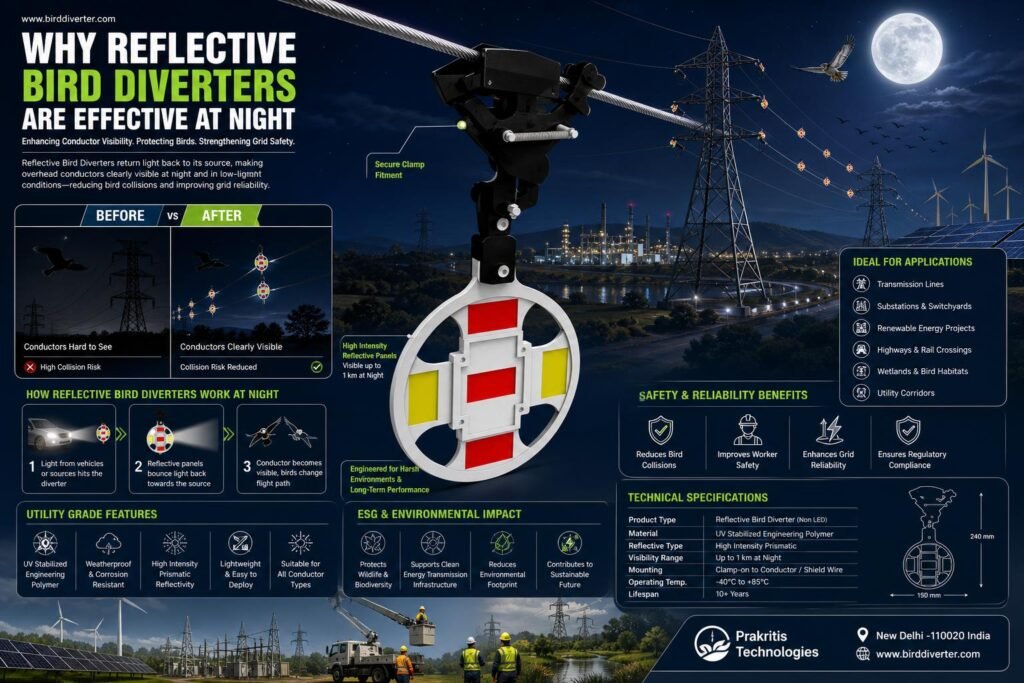
In the realm of utility infrastructure, especially within transmission line companies, enhancing safety and visibility is paramount. As transmission systems expand, so does the necessity for effective avian protection solutions, particularly at night. This article delves into the efficacy of reflective bird diverters, demonstrating their importance in improving visibility, ensuring safety, and aiding in environmental compliance.
Understanding Reflective Bird Diverters
Reflective bird diverters are innovative devices designed to increase the visibility of overhead lines, thereby reducing the risk of bird collisions. These devices utilize light reflection properties to ensure that transmission lines are noticeable to birds, particularly in low-light conditions. Their construction typically features high-visibility materials that reflect both natural and artificial light sources, marking dangerous areas effectively.
How Reflective Bird Diverters Function
The mechanism of a reflective bird diverter is straightforward yet effective. When birds approach transmission lines, the reflective surfaces catch their attention, guiding them away from potential collisions. The effectiveness increases significantly at night, when visibility is reduced.
- Light Reflection: Reflective materials capture ambient light, enhancing visibility.
- Increased Awareness: Birds can detect these diversions, averting unintended contact with power lines.
- EPC Integration: These devices can be seamlessly integrated into existing transmission infrastructure.
Industry Applications of Reflective Bird Diverters
Various sectors benefit from the implementation of reflective bird diverters, particularly in regions with high avian populations or migratory pathways. Key players include:
- State Power Utilities: Ensuring compliance with avian protection regulations.
- EPC Contractors: Incorporating diverters in new installations for enhanced safety.
- Renewable Energy Companies: Protecting wildlife while harnessing sustainable energy.
- Transmission Line Companies: Mitigating risks of bird strikes in densely populated areas.
- Government Infrastructure Agencies: Meeting legal requirements for environmental safety.
Benefits for Utilities and EPC Contractors
Integrating reflective bird diverters into utility projects presents multiple advantages:
- Cost Efficiency: Reducing the chances of accidents leads to lower maintenance costs.
- Regulatory Compliance: Aligning with environmental legislation helps avoid fines.
- Improved Safety: Protecting both wildlife and infrastructure ensures reliability.
Relevance to Renewable Energy Transmission
As renewable energy transmission continues to grow, the role of reflective bird diverters becomes increasingly crucial. With the rise in wind and solar farms, the potential for bird strikes amplifies. The installation of these diverters not only enhances safety but also aligns with the sustainability goals of renewable energy projects.
Transmission Safety Advantages
The safety of high-voltage transmission systems is a concern that extends beyond human operators. The following points highlight the safety benefits:
- Reduced Collisions: Effective design minimizes contact between birds and power lines.
- Operational Reliability: Fewer disruptions lead to better grid stability.
- Public Perception: Enhanced environmental responsibility fosters better community relations.
Environmental Compliance and ESG Discussion
In recent years, environmental sustainability has surfaced as a vital consideration in infrastructure development. The use of reflective bird diverters supports environmental, social, and governance (ESG) goals by:
- Mitigating Environmental Impact: By protecting avian populations, companies enhance their ecological footprint.
- Supporting Biodiversity: Active measures to protect migratory birds align with broader conservation efforts.
Comparison of Bird Diverter Types
| Diverter Type | Visibility | Installation | Cost |
|---|---|---|---|
| LED Bird Diverter | High | Easy | Premium |
| Non-LED Bird Diverter | Moderate | Standard | Economical |
| AeroSpin Bird Diverter | Medium | Advanced | Variable |
Best Practices in Installation and Maintenance
For optimal performance, it is essential to follow best practices:
- Regular Inspections: Frequent checks for wear and tear can prolong the lifespan of diverters.
- Proper Placement: Positioning diverters at appropriate intervals enhances visibility.
- Training for Installation Teams: Ensuring that workers are skilled reduces the chance of installation errors.
Call to Action
As the importance of avian protection and transmission safety grows, so does the need for effective solutions such as reflective bird diverters. Contact Bird Diverter today for a technical consultation, product selection, or project support to enhance your infrastructure safety.
FAQ Section
What are reflective bird diverters?
Reflective bird diverters are devices installed on overhead power lines designed to enhance visibility and reduce bird collisions, particularly during low-light conditions.
How do reflective bird diverters improve night visibility?
They utilize reflective materials that catch natural and artificial light, making transmission lines more noticeable to birds at night.
Are reflective bird diverters effective for all bird species?
While they are particularly effective for migratory species, their design can help various bird populations by increasing awareness of overhead lines.
What is the installation process for bird diverters?
Installation can vary by type but generally involves securing the device at regular intervals along the transmission line, ideally during the daytime for maximum visibility.
How can I ensure the maintenance of bird diverters?
Regular inspections for damage, proper placement, and training installation teams are recommended best practices to ensure their effectiveness.