
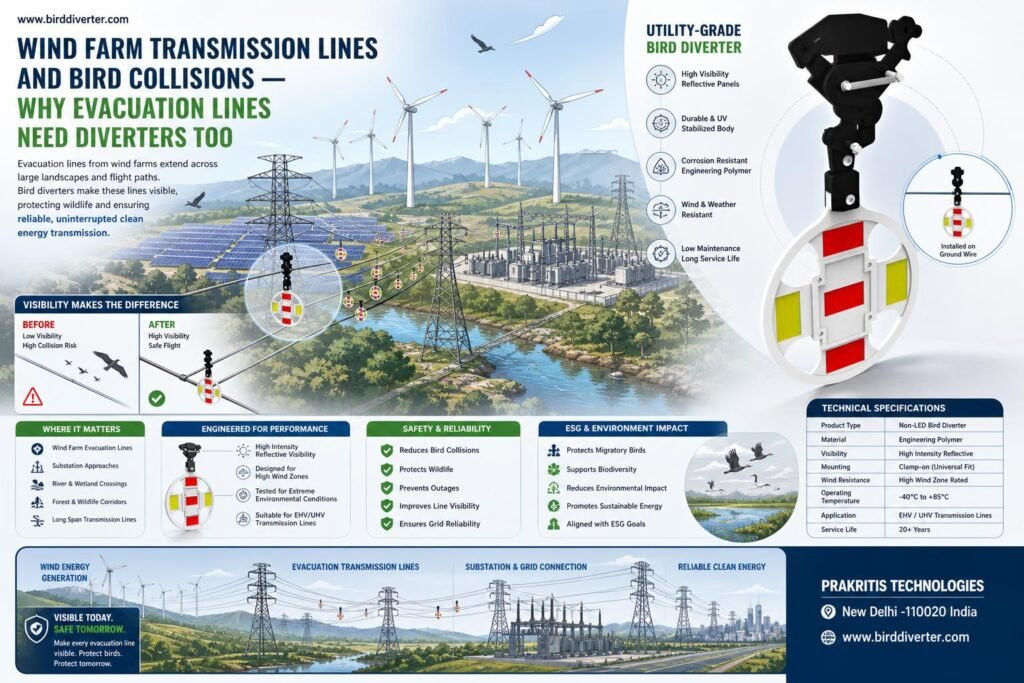
The importance of bird diverters in the context of wind farm transmission lines is an often overlooked aspect of avian protection and infrastructure safety in the renewable energy sector. As wind energy resources expand globally, ensuring the safe coexistence of wildlife and energy transmission becomes paramount. This article delves into the significance of using bird diverters on evacuation lines, sheds light on their applications, benefits, and industry relevance, particularly focused on India’s evolving energy landscape.
Technical Overview
Wind farm transmission lines play a critical role in the energy workflow, transferring electricity generated by wind turbines to the grid. However, they can also pose hazards to birds, particularly migratory species. Integrating bird diverters within the transmission systems enhances visibility, effectively reducing bird collisions.
Bird diverters are specialized devices designed to increase the visibility of overhead lines. These devices are situated along power lines and evacuation routes, helping to notify birds of the presence of these structures. The types of bird diverters include:
- LED Bird Diverters
- Non-LED Bird Diverters
- Aerospin Bird Diverters
The selection of an appropriate bird diverter system depends on various factors, including local avian species, terrain, and line configurations.
Industry Applications
The implementation of bird diverters finds relevance across multiple sectors. Here are some key applications:
- State Power Utilities: Enhancing grid reliability while protecting avian species.
- EPC Contractors: Meeting regulatory compliance and ensuring safety during construction and maintenance.
- Renewable Energy Companies: Supporting sustainable practices and minimizing environmental impacts.
- Transmission Line Companies: Ensuring transmission safety and reducing operational hazards.
- Government Infrastructure Agencies: Complying with wildlife protection laws and international guidelines.
Benefits for Utilities and EPC Contractors
Integrating bird diverters into wind farm transmission infrastructure offers numerous benefits:
- Reduced Collisions: Significantly lowers the risk of bird collisions with power lines.
- Improved Safety: Enhances overall safety for both wildlife and utility workers.
- Compliance and ESG: Helps meet environmental, social, and governance (ESG) standards.
- Cost Efficiency: Reduces potential liabilities related to wildlife incidents.
By investing in bird diverters, utilities and contractors can ensure they meet industry regulations while promoting wildlife conservation.
Renewable Energy Transmission Relevance
The expansion of renewable energy sources, particularly in India, creates an increased need for effective wildlife mitigation strategies. The push for cleaner energy illustrates a dual responsibility: to maintain ecological balance and ensure energy transmission reliability. Bird diverters play a critical role in achieving this balance by enhancing visibility and reducing avian fatalities.
Transmission Safety Advantages
Transmission safety is of utmost importance within the utility sector. Bird diverters contribute to:
- Visibility Enhancement: Marking lines improves visibility during poor weather conditions.
- Line Protection: Helps prevent outages caused by bird-related incidents.
Ensuring appropriate visibility for both birds and utility personnel is essential in creating a safe operational environment.
Environmental Compliance and ESG Discussion
Environmentally responsible practices have become crucial for utility and renewable energy companies. The adoption of bird diverters aligns with environmental compliance measures by promoting avian protection. This effort aids in fulfilling ESG goals, fostering a positive community image, and reducing legal risks.
Product Comparison Table
| Type of Diverter | Key Features | Best Use Scenario |
|---|---|---|
| LED Bird Diverter | High visibility, long lifespan, low power consumption | High collision areas |
| Non-LED Bird Diverter | Cost-effective, simple installation | Moderate collision risk areas |
| Aerospin Bird Diverter | Wind-driven visibility, low maintenance | Rural regions with migratory paths |
Best Practices Section
To maximize the efficacy of bird diverters, the following best practices should be considered:
- Conduct wildlife impact assessments prior to installation.
- Utilize durable materials suitable for local weather conditions.
- Regularly inspect and maintain diverters for optimal performance.
- Ensure compliance with local wildlife protection laws.
Call to Action
For technical consultation and product selection support for your transmission line projects, reach out to Bird Diverter today. We are here to help you ensure compliance and enhance safety in your infrastructure applications.
FAQ Section
What are bird diverters?
Bird diverters are devices attached to overhead power lines to increase their visibility and reduce bird collisions.
How do bird diverters improve transmission safety?
They enhance line visibility, which helps prevent accidents involving birds and protects the integrity of the power lines.
Are bird diverters required by law?
While regulations may vary by region, many areas have guidelines in place to promote wildlife protection in utility infrastructure.
What types of bird diverters are available?
Common types include LED, non-LED, and aerospin bird diverters, each designed for specific applications and conditions.
How do I choose the right bird diverter for my project?
Consider factors such as local bird populations, environmental conditions, and compliance requirements to determine the best diverter type.