
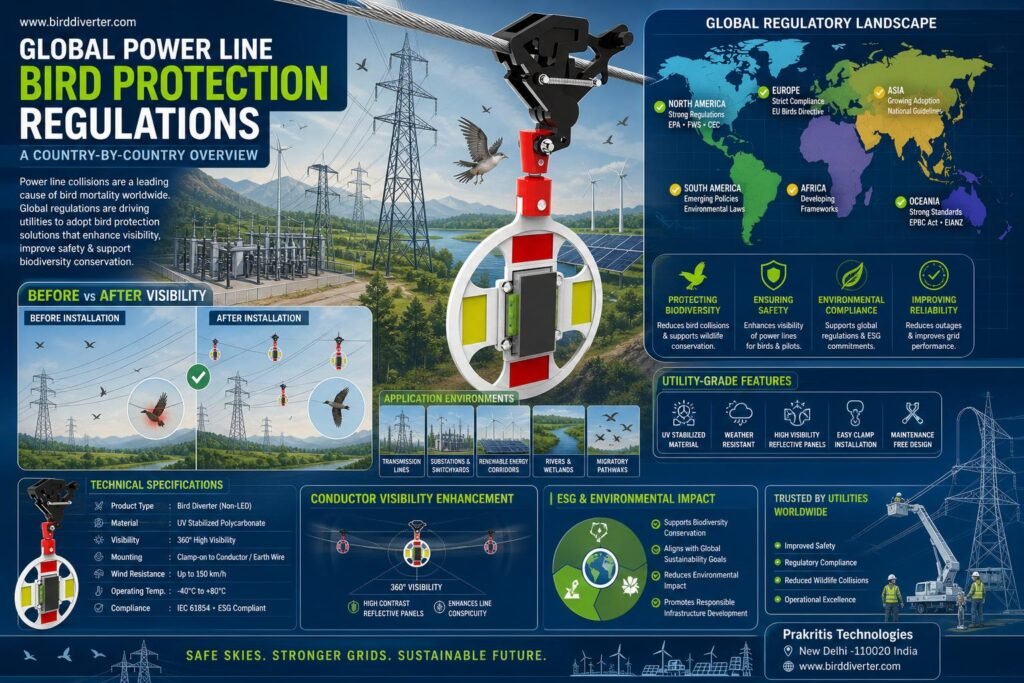
In an era where sustainable energy and infrastructure development intersect, power line bird protection regulations have become increasingly crucial for utilities and contractors worldwide. These regulations not only address environmental compliance but also ensure the safety of avian species affected by transmission lines. This article delves into the nuances of power line bird protection regulations globally, focusing on the implementation and importance of these standards for various stakeholders including state power utilities, EPC contractors, and renewable energy companies.
Technical Overview
Power line bird protection regulations primarily consist of guidelines and standards aimed at reducing avian mortality caused by collisions with power lines. Understanding these regulations involves a comprehensive look at the technology used to enhance visibility and safety along transmission lines. Implementations typically include:
- Bird Diverters: Devices installed on power lines to increase their visibility for birds, thus minimizing collision risks.
- Conductor Visibility Enhancements: Utilization of overhead line markers and other visibility aids to make lines conspicuous.
- Height Regulations: Guidelines dictating the height of power lines to avoid interaction with bird habitats.
International Regulatory Landscape
Globally, various countries have adopted specific bird protection regulations tailored to their ecological context. The following countries stand out for their proactive approach:
1. USA
In the United States, the Migratory Bird Treaty Act plays a pivotal role in enforcing avian protection strategies. Utilities must comply with guidelines set forth by the U.S. Fish and Wildlife Service, mandating the installation of bird diverters and regular audits for compliance.
2. UK
The UK has introduced stringent regulations focusing on enhancing bird safety in urban and rural areas. The Wildlife and Countryside Act obliges utilities to mitigate risks through specific safety designs and strategies.
3. Australia
In Australia, the Environment Protection and Biodiversity Conservation Act necessitates the adoption of bird safe standards, particularly in regions hosting migratory species. Collaborations with environmental agencies ensure adherence to these regulations.
Industry Applications
The implementation of bird protection regulations has far-reaching implications across multiple sectors:
- State Power Utilities: Compliance with regulations not only safeguards avian populations but also enhances the utility’s reputation and stakeholder trust.
- EPC Contractors: Ensuring contractual obligations are met regarding environmental safety contributes to broader project success.
- Renewable Energy Companies: As renewable projects expand, adherence to bird protection standards is becoming increasingly critical in securing funding and public approval.
Benefits for Utilities and EPC Contractors
The integration of bird diverter systems is beneficial for utilities and EPC contractors in several ways:
- Mitigation of Risks: Reduces the risk of avian fatalities, thereby aligning operations with environmental compliance.
- Enhanced Project Viability: Demonstrates commitment to sustainable practices, attracting environmentally-conscious clients and stakeholders.
- Cost Savings: Minimizes potential legal liabilities and associated costs from avian-related incidents.
Renewable Energy Transmission Relevance
The transition toward renewable energy sources requires innovative approaches to avian protection in power transmission:
- Integrative Design: Wind and solar farms must embed bird safety considerations into their infrastructure designs, largely dictated by local and international regulations.
- Collaboration with NGOs: Partnering with organizations focused on avian conservation can lead to the development of improved safety protocols.
Transmission Safety Advantages
Implementing robust avian protection strategies has broader implications for transmission safety:
- Increased Reliability: Effective bird protection measures lead to reduced service interruptions caused by avian impacts.
- Enhanced Grid Management: By ensuring that transmission infrastructure is compliant with safety regulations, utilities can better manage grid performance.
Environmental Compliance and ESG Discussion
Alignment with avian protection regulations supports Environmental, Social, and Governance (ESG) initiatives:
- Reinforcing Environmental Stewardship: Companies are positioned as leaders in sustainability by prioritizing ecological safety in their operations.
- Stakeholder Engagement: Transparency in operations regarding ecological impacts fosters better relationships with community stakeholders.
Product Comparison Table
Here is a comparative overview of different bird diverter products available:
| Product | Type | Visibility Impact | Installation Type |
|---|---|---|---|
| LED Bird Diverter | Electric | High | Easy |
| Non-LED Bird Diverter | Passive | Medium | Moderate |
| AeroSpin Bird Diverter | Mechanical | High | Complex |
Best Practices Section
To ensure compliance and safety, utilities and contractors should consider the following best practices:
- Conduct regular audits of bird protection measures.
- Invest in training for staff on avian interaction and safety protocols.
- Collaborate with environmental organizations to refine protection strategies.
Call to Action
For technical consultation, product selection, or project support regarding power line bird protection regulations, please contact us at Bird Diverter. We are committed to helping you navigate the complexities of avian safety.
FAQ
What are bird diverters and how do they work?
Bird diverters are safety devices installed on power lines to enhance visibility for birds. They help minimize collision risks by making lines more noticeable, especially in areas frequented by migratory species.
Why are power line bird protection regulations important?
These regulations are essential for environmental compliance, risk mitigation, and ensuring the safety of avian populations, thus promoting sustainability in utility operations.
How do bird diverters contribute to transmission safety?
Bird diverters reduce the risk of collisions, decreasing the likelihood of service interruptions and ensuring grid reliability, which is critical for effective energy distribution.
Are there specific regulations for bird protection in renewable energy projects?
Yes, many countries have specific guidelines that require renewable energy projects to integrate bird safety protocols into their designs and operations to minimize ecological impacts.
What role do EPC contractors play in avian protection?
EPC contractors are responsible for implementing avian protection measures during construction and maintenance phases, ensuring compliance with regulations and contributing to sustainable infrastructure development.