
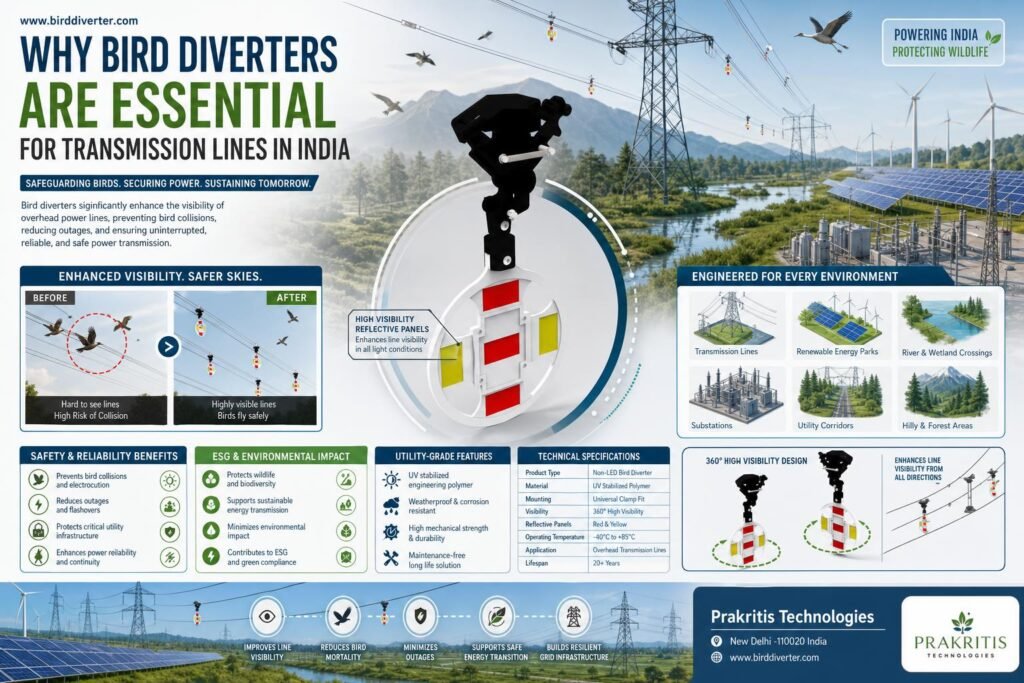
As India rapidly advances towards enhancing its energy infrastructure, the significance of bird diverters for transmission lines has become increasingly paramount. These devices not only ensure the safety of avian species but also protect the interests of utility companies and energy projects. In this article, we will explore the technical aspects, industry applications, benefits for various stakeholders, and the critical environmental compliance associated with bird diverters.
Technical Overview of Bird Diverters
Bird diverters, also known as avian diverters, are devices designed to enhance the visibility of electrical transmission lines to birds and other wildlife. They come in various shapes, sizes, and materials, making them suitable for different environments and utility applications.
How Bird Diverters Work
These devices are typically installed on overhead power lines or transmission towers. By altering the physical and visual properties of the wires, bird diverters effectively increase the aerial awareness of birds, minimizing the risk of collision. This is achieved through:
- Reflective surfaces increasing visibility in low-light conditions.
- Bright colors that draw attention during daylight.
- Strategic placement to optimize functionality along migratory paths of birds.
Types of Bird Diverters
The common types of bird diverters include:
- LED Bird Diverters: Using energy-efficient LED technology, these diverters are highly visible, even at night.
- Non-LED Bird Diverters: These traditional designs rely on color and shape to enhance visibility.
- AeroSpin Bird Diverters: These employ a spinning motion to catch the attention of nearby birds.
Industry Applications
Bird diverters serve multiple sectors within the utility industry. Here are some of their significant applications:
State Power Utilities
State power utilities have a critical role in implementing avian protection measures. Installing bird diverters on transmission lines can significantly reduce avian mortality and promote biodiversity, aligning with government regulations and standards.
EPC Contractors
Engineering Procurement and Construction (EPC) contractors are tasked with ensuring a safe construction environment. By incorporating bird diverters into their projects, EPC contractors can adhere to environmental compliance, thus enhancing their project value.
Renewable Energy Companies
In renewable energy projects, such as solar and wind farms connected to high-voltage transmission lines, bird diverters help mitigate the impact on local wildlife, ensuring that projects remain sustainable.
Transmission Line Companies
Transmission line companies must comply with various safety and environmental regulations. The strategic deployment of bird diverters contributes to reducing the risk of bird strikes, protecting their infrastructure and the ecosystem.
Benefits for Utilities and EPC Contractors
Integrating bird diverters into transmission line infrastructure offers various benefits:
Enhanced Safety
Bird diverters improve operational safety by reducing potential collisions with birds, thus avoiding interruptions and costly repairs.
Environmental Compliance
With increasing emphasis on environmental, social, and governance (ESG) compliance, using bird diverters showcases a commitment to protecting biodiversity, which can enhance a company’s public image.
Renewable Energy Transmission Relevance
As India shifts towards renewable energy, ensuring wildlife safety is paramount. Bird diverters play a crucial role in sustainable energy transmission, especially in areas with significant bird populations.
Transmission Safety Advantages
Beyond avian protection, bird diverters enhance transmission safety. Key advantages include:
- Reduction in power outages caused by bird collisions.
- Minimization of the risks associated with high-voltage lines.
- Improved grid reliability through reduced equipment damage.
Environmental Compliance and ESG Discussion
Implementing bird diverters is closely tied to environmental commitments. More than just a regulatory requirement, they represent an investment in ecological sustainability. Engaging with local communities and stakeholders helps in maintaining trust and demonstrating corporate responsibility.
Product Comparison Table
| Type | Visibility | Installation | Material | Cost |
|---|---|---|---|---|
| LED Bird Diverter | High | Simple | Plastic + LED | Moderate |
| Non-LED Bird Diverter | Moderate | Simple | Plastic | Low |
| AeroSpin Diverter | High | Moderate | Metal + Plastic | High |
Best Practices Section
To maximize the effectiveness of bird diverters, utilities should consider the following best practices:
- Conduct site assessments to identify critical areas for installation.
- Integrate diverter installation into new projects alongside existing infrastructure upgrades.
- Monitor bird behavior and adjust installation strategies accordingly.
- Collaborate with environmental specialists to ensure compliance and effectiveness.
Call to Action
For technical consultation, product selection, or project support related to bird diverters, please contact us today. Our experts are ready to assist you in ensuring both avian safety and enhanced operational efficiency.
FAQ Section
What are bird diverters?
Bird diverters are devices installed on transmission lines to make them more visible to birds, reducing the risk of collisions.
How do bird diverters improve transmission safety?
By enhancing the visibility of power lines, bird diverters help prevent bird strikes that cause outages and infrastructure damage.
Why are bird diverters important for renewable energy projects?
Bird diverters protect wildlife near renewable energy sites, helping projects comply with environmental regulations and sustainability goals.
Are there different types of bird diverters?
Yes, common types include LED bird diverters, non-LED options, and AeroSpin diverters, each offering unique benefits.
How can I ensure effective installation of bird diverters?
Conduct thorough site assessments, collaborate with experts, and monitor bird behavior for optimal installation strategies.