
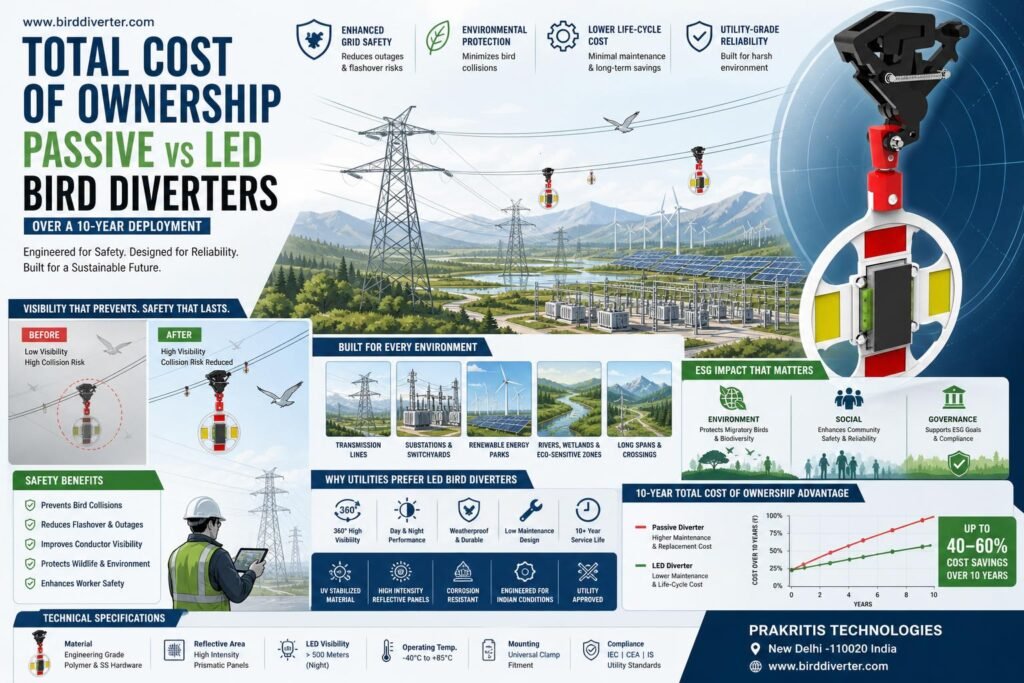
As global energy demands rise, the need for effective avian protection measures in utility infrastructure becomes increasingly critical. This article delves into the bird diverter total cost of ownership, comparing both passive and LED bird diverters, highlighting their implications over a 10-year deployment for state power utilities, EPC contractors, and renewable energy companies.
Technical Overview
Bird diverters are devices installed on overhead power lines, designed to enhance visibility for birds, thus reducing the risk of collisions and improving safety for avian species. The efficacy of these diverters is pivotal not only for environmental compliance but also for maintaining uninterrupted service in high-voltage transmission systems.
Types of Bird Diverters
- Passive Bird Diverters
- LED Bird Diverters
Passive bird diverters increase visibility using bright colors and reflective materials, while LED bird diverters utilize light emissions to enhance visibility significantly, particularly during low-light conditions.
Industry Applications
Bird diverters find applications in numerous sectors involved in transmission and utility infrastructure. They play a crucial role in maintaining grid reliability while adhering to environmental regulations.
Utility and Transmission Use Cases
Key applications include:
- Overhead transmission lines
- Renewable energy projects (solar/wind)
- Government infrastructure initiatives
Benefits for Utilities and EPC Contractors
Understanding the total cost of ownership for bird diverters assists utilities and EPC contractors in making informed decisions. While initial installation costs may differ between passive and LED systems, the long-term maintenance and effectiveness of these systems can significantly impact overall expenditures.
Cost Analysis
| Type of Bird Diverter | Initial Cost | Maintenance Cost (10 Years) | Total Cost of Ownership |
|---|---|---|---|
| Passive Bird Diverters | INR 500 each | INR 1,500 | INR 2,000 |
| LED Bird Diverters | INR 1,200 each | INR 700 | INR 1,900 |
As shown in the table, while passive diverters may have a lower initial cost, LED diverters tend to offer a lower total cost of ownership when maintenance and replacement are considered.
Renewable Energy Transmission Relevance
Renewable energy projects are increasingly being integrated into existing utility infrastructures. Bird diverters ensure compliance with environmental regulations and provide essential avian protection, vital for sustainable energy practices.
Transmission Safety Advantages
Implementing bird diverters enhances the safety of transmission lines by minimizing avian collisions. This not only protects wildlife but also helps utilities avoid potential system downtimes due to avian-related incidents.
Environmental Compliance and ESG Discussion
Incorporating bird diverters into transmission line projects aligns with environmental, social, and governance (ESG) standards. It showcases a commitment to protecting biodiversity while meeting regulatory requirements.
Best Practices for Implementation
- Regular inspections and maintenance of installed bird diverters.
- Integrating bird diverter technology into new utility projects.
- Training utility workers on the benefits and installation of bird diverters.
Call To Action
To maximize the benefits of bird diverter technology in your next project, contact Bird Diverter for expert advice on product selection and installation best practices.
FAQ Section
What are bird diverters?
Bird diverters are devices installed on overhead power lines to improve visibility for birds and reduce collision risks.
Why are bird diverters important for transmission safety?
Bird diverters help ensure that birds can see power lines, reducing the likelihood of collisions and promoting avian protection.
How do LED bird diverters compare to passive models?
LED bird diverters provide enhanced visibility, particularly in low-light conditions, thus improving effectiveness over passive models.
What maintenance is required for bird diverters?
Routine inspections and timely replacements are necessary to ensure bird diverters function effectively throughout their lifecycle.
Are there specific regulations for bird protection in India?
Yes, India has regulations that mandate the protection of avian species, particularly in renewable energy projects, requiring the use of effective bird diverters.