
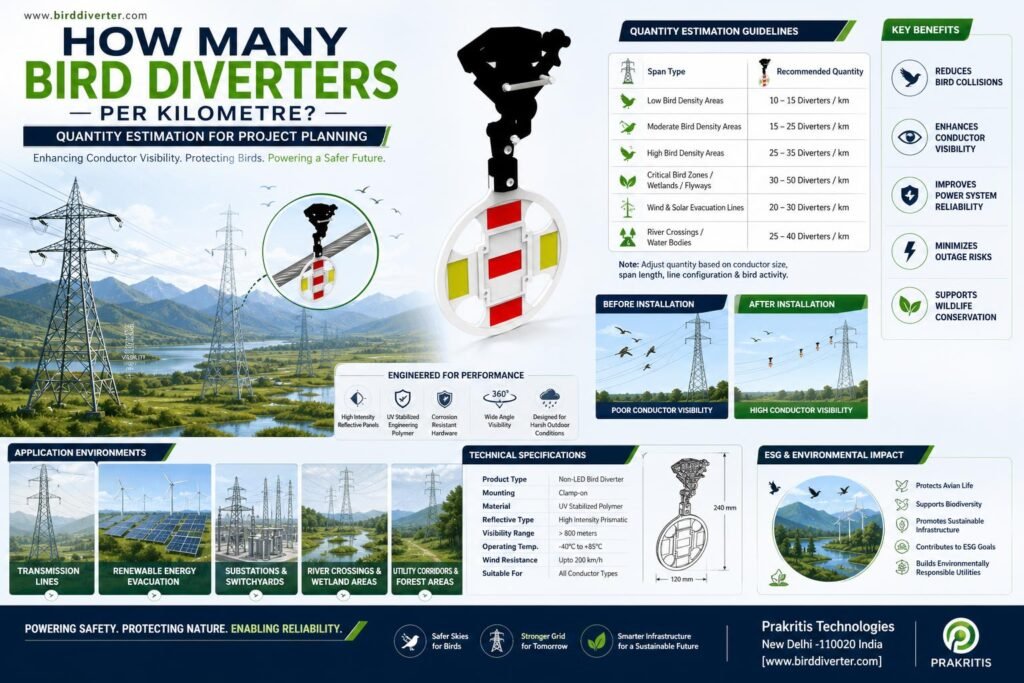
In the evolving landscape of energy transmission and utility infrastructure, avian protection has become a paramount consideration. With the critical role that bird diverters play in enhancing overhead conductor visibility and ensuring the safety of migrating birds, determining the correct quantity of bird diverters per kilometre is essential. This blog serves as a comprehensive guide for State Power Utilities, EPC Contractors, Renewable Energy Companies, Transmission Line Companies, and Government Infrastructure Agencies looking to optimize their bird diverter installations.
Technical Overview
Bird diverters are devices installed on overhead power lines and transmission towers designed to make the lines more visible to birds, thereby reducing the likelihood of collisions. The installation of bird diverters is particularly important in areas frequented by migratory birds, which can help utilities comply with various environmental regulations and improve their ESG (Environmental, Social, and Governance) profiles.
The effectiveness of bird diverters hinges on several technical parameters, including:
- Color and Reflectivity: Bright colors and reflective materials enhance visibility.
- Placement: Strategic installation along transmission lines maximizes their effectiveness.
- Type of Diverter: Options include LED, non-LED, and aerospin models, each with distinct characteristics.
Bird Diverter Types and Specifications
| Type | Visibility Range | Durability | Recommended Spacing |
|---|---|---|---|
| LED Bird Diverter | Up to 600 meters | 5+ years | 15-20 m |
| Non-LED Bird Diverter | Up to 200 meters | 3-5 years | 10-15 m |
| Aerospin Bird Diverter | Up to 400 meters | 5 years | 20-30 m |
Industry Applications
The relevance of bird diverters extends across various industries, particularly in energy and telecommunications. These applications include:
- Transmission Line Safety: Reducing bird mortality and enhancing grid reliability.
- Renewable Energy Projects: Ensuring avian compliance in wind and solar installations.
- Infrastructure Development: Meeting regulatory requirements in new construction projects.
Benefits for Utilities and EPC Contractors
The advantages of deploying bird diverters are multifaceted, particularly for State Power Utilities and EPC Contractors:
- Avian Protection: Enhanced safety measures leading to reduced risk of bird collisions.
- Regulatory Compliance: Meeting environmental regulations and minimizing ecological impact.
- Improved Public Image: Commitment to sustainability fosters trust and credibility.
Renewable Energy Transmission Relevance
As renewable energy sources gain traction, incorporating bird diverters has become increasingly crucial. Their role in mitigating the impact of transmission lines on bird populations aligns with global sustainability goals. Renewable energy projects often require more extensive transmission infrastructure, emphasizing the need for effective avian risk management.
Transmission Safety Advantages
The implementation of bird diverters is a proactive measure to enhance transmission safety:
- Increased Visibility: Diverters significantly improve conductor visibility in critical migratory corridors.
- Collision Reduction: Studies have shown that proper spacing and types of diverters can drastically reduce bird collisions.
Environmental Compliance and ESG Discussion
In today’s regulatory landscape, environmental compliance is non-negotiable. The installation of bird diverters supports ESG initiatives by demonstrating a commitment to environmental stewardship. Utilities can enhance their standing with regulators and the public by implementing effective avian protection strategies.
Product Comparison Table
A comparative analysis helps identify the best bird diverters for specific needs:
| Feature | LED Bird Diverter | Non-LED Bird Diverter | Aerospin Bird Diverter |
|---|---|---|---|
| Light Source | LED | Reflective | Rotating Mechanism |
| Installation Difficulty | Moderate | Easy | Moderate |
| Cost | Higher | Lower | Moderate |
Best Practices Section
For optimal effectiveness, adhere to the following best practices when planning bird diverter installations:
- Conduct thorough site assessments to understand bird migration patterns.
- Choose appropriate diverter types based on environmental conditions and visibility needs.
- Regularly evaluate the effectiveness of installed diverters to adapt to changing conditions.
Call to Action
By understanding how many bird diverters per kilometre are needed, your utility organization can greatly enhance its project planning and avian safety initiatives. If you require technical consultation, product selection assistance, or project support, do not hesitate to contact Bird Diverter today.
FAQ Section
What is a bird diverter?
A bird diverter is a device designed to increase the visibility of power lines and prevent bird collisions through various design features such as bright colors and reflective materials.
How many bird diverters should be installed per kilometre of transmission line?
The quantity of bird diverters per kilometre depends on factors such as line height, local bird species, and environmental conditions. Generally, spacing can range from 10 to 30 meters apart, depending on these factors.
What are the benefits of using bird diverters for utilities?
Bird diverters offer multiple benefits including enhanced safety, regulatory compliance, improved public perception, and a commitment to sustainability.
How do bird diverters contribute to renewable energy projects?
In renewable energy projects, bird diverters play a critical role in mitigating the impact of transmission lines on avian populations, aligning with sustainability goals and regulatory requirements.
What are common types of bird diverters?
Common types include LED bird diverters, non-LED bird diverters, and aerospin bird diverters, each suited for different applications and visibility needs.