
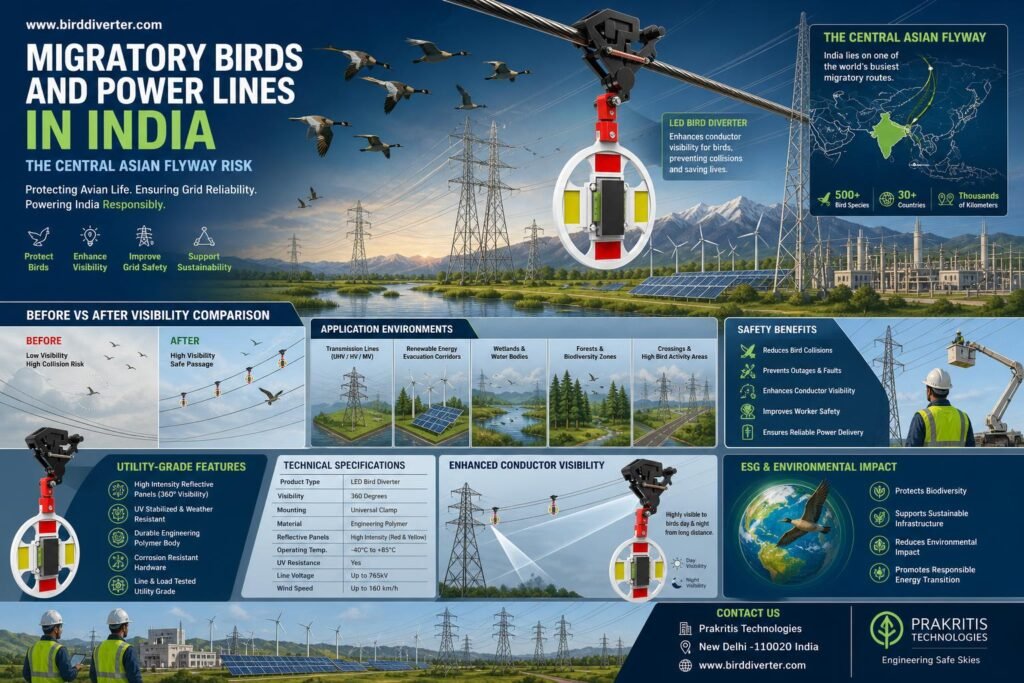
This article addresses the urgent issue of migratory birds and power lines in India, focusing on the threats posed by the Central Asian Flyway. With the ongoing expansion of electricity infrastructure, safeguarding avian species has become a pressing concern for state power utilities, EPC contractors, and government agencies. Through effective mitigation strategies, we can protect these birds while ensuring the reliability of our power grid.
Technical Overview
The Central Asian Flyway is a crucial migratory route for many bird species traveling between their breeding and wintering grounds. Power lines along this route present significant risks, including collision and electrocution, particularly during night migration when visibility is reduced. Understanding the dynamics of migratory bird behavior is essential for implementing effective safety measures.
Migration Patterns and Risks
Migratory birds often navigate using visual cues from their environment. During migration, many species fly at altitudes that intersect with transmission lines, increasing the likelihood of collision. Additionally, the use of high-voltage lines further amplifies the risks, as birds can become electrocuted when perched or attempting to cross these structures.
Bird Diverters as a Solution
Bird diverters play a critical role in enhancing overhead conductor visibility, thereby reducing collision rates. These devices are designed to disrupt the flight path of birds, alerting them to the presence of power lines. Various types of bird diverters are available, including LED and non-LED models, each with specific benefits.
Industry Applications
For organizations involved in energy transmission and infrastructure, addressing the issue of migratory birds is essential for compliance with environmental regulations and social responsibility. The implementation of bird diverters is increasingly recognized as a standard practice among state power utilities and EPC contractors.
Power Line Bird Diverter Models
| Model | Type | Visibility Range | Installation Environment |
|---|---|---|---|
| LED Bird Diverter | LED | Up to 1,000 meters | High-voltage transmission lines |
| Non-LED Bird Diverter | Reflective | Up to 500 meters | Medium-voltage lines |
| AeroSpin Bird Diverter | Mechanical | Up to 800 meters | Wind energy sites |
Benefits for Utilities and EPC Contractors
The integration of bird diverters into existing infrastructure offers multiple benefits for utilities and project contractors. These advantages include:
- Enhanced safety for avian populations
- Reduction in power line outages due to bird collisions
- Improved compliance with environmental regulations
- Positive public perception and community relations
Case Studies
Utilities that have adopted bird diverters report significant decreases in avian collision incidents. These case studies exemplify how investment in bird protection translates into operational efficiency and sustainability.
Renewable Energy Transmission Relevance
The renewable energy sector is expanding rapidly in India, necessitating effective avian protection strategies. Wind and solar farms frequently intersect with migratory paths, making the implementation of bird diverters crucial in these settings.
Collaboration Opportunities
Renewable energy companies are encouraged to collaborate with existing energy utilities to develop integrated solutions for protecting migratory birds. Joint partnerships can lead to innovative advancements in avian protection technologies.
Transmission Safety Advantages
Integrating bird diverters into power lines not only protects birds but also enhances overall transmission safety. The incorporation of these devices contributes to:
- Increased visibility of power lines
- Mitigation of electrical hazards for birds and humans
- Improved grid reliability and resilience
Maintenance Considerations
Regular maintenance of bird diverters is necessary to ensure their effectiveness. Utilities should develop schedules for inspection and upkeep as part of their overarching maintenance strategy.
Environmental Compliance and ESG Discussion
In today’s regulatory environment, addressing environmental concerns is not just a best practice; it’s a requirement. Implementing bird diverters aids in fulfilling commitments to environmental, social, and governance (ESG) criteria.
Reporting and Documentation
Utilities should maintain comprehensive records of bird diverter installations and their efficacy in reducing collision rates as part of their corporate responsibility reporting.
Best Practices Section
Utilities and contractors should adopt best practices when deploying bird diverters:
- Conduct comprehensive site assessments before installation
- Engage with local wildlife agencies for guidance
- Implement ongoing monitoring programs
- Utilize a combination of diverter types for optimal effectiveness
Call to Action
Bird Diverter is dedicated to providing robust solutions for avian protection. Contact us today for technical consultation, product selection, or project support at our website.
FAQ Section
What are bird diverters and how do they work?
Bird diverters are devices installed on power lines to enhance visibility and reduce collision risks for birds. They can be reflective, LED, or mechanized to alert birds of the presence of lines.
Are bird diverters effective in preventing bird collisions?
Yes, studies have shown that bird diverters significantly reduce collision rates, especially in areas with high avian traffic.
How can renewable energy projects integrate bird diverters?
Renewable energy projects can install bird diverters on new and existing power lines, ensuring that migratory paths are safe for avian species.
What are the regulatory requirements for avian protection?
Regulatory bodies may require utilities to implement measures for bird protection as part of their environmental compliance efforts.
How do I choose the right type of bird diverter?
The choice of bird diverter depends on specific environmental conditions, visibility needs, and the type of power lines in use. Consulting with experts is recommended.