
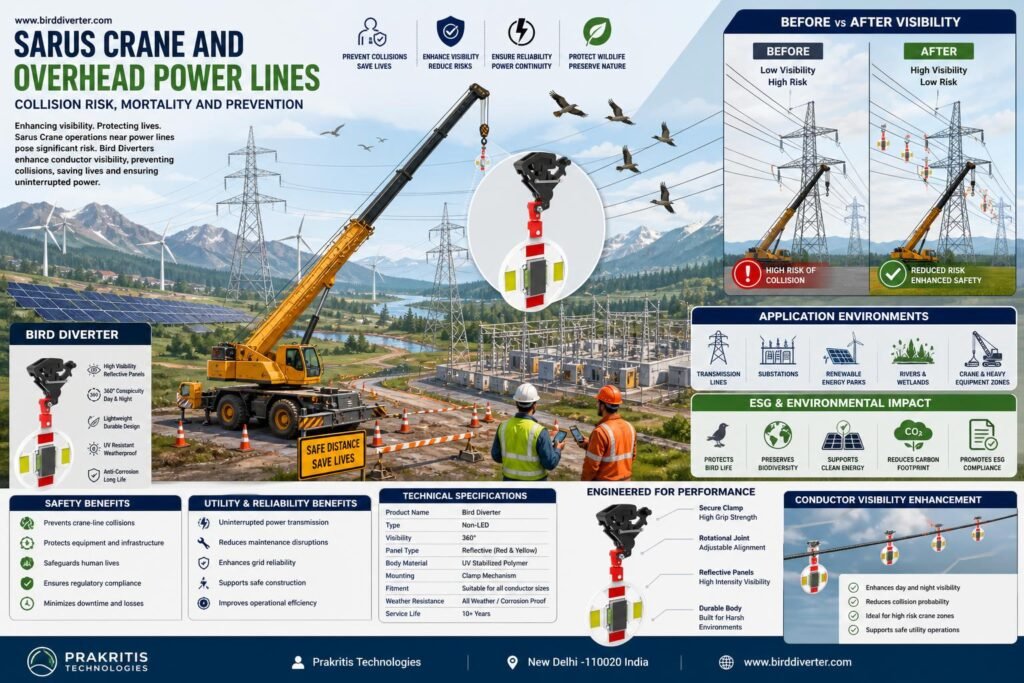
The Sarus Crane (Grus antigone), known for its striking stature and grace, is a vital species in India’s avian ecosystem. However, recent developments in overhead power lines have raised significant concerns regarding their safety and mortality rates due to collision risks. Understanding these risks and implementing effective prevention strategies is crucial for both avian conservation and the integrity of our utility infrastructure.
Technical Overview
Overhead power lines have become an essential part of India’s transmission infrastructure. While they enable the delivery of electricity across vast distances, they pose a significant threat to large bird species like the Sarus Crane. The collision of these birds with power lines is often fatal, leading to a decrease in their population and affecting ecological balance.
Understanding the Collision Risk
- Sarus Cranes are tall, with a wingspan that can reach up to 2.5 meters.
- They typically fly at altitudes where overhead lines are positioned, heightening the risk of collisions.
- Wetlands, their primary habitat, often overlap with utility corridors, increasing interaction.
Statistics on Mortality
Research indicates that thousands of avian fatalities occur each year due to power line collisions. For Sarus Cranes, these numbers are alarming and call for immediate action:
- Estimates suggest around 3,000 crane collisions annually.
- Mortality rates in certain regions could lead to local extinctions if not addressed.
Industry Applications
State power utilities and EPC contractors must recognize their role in mitigating risks for wildlife, specifically for species like the Sarus Crane. Here are key applications:
- Employing bird diverters to enhance visibility of lines.
- Conducting environmental impact assessments before new line installations.
- Collaborating with conservation organizations to implement protective measures.
Benefits for Utilities and EPC Contractors
Implementing bird diverters and similar solutions provides numerous benefits to utility organizations:
- Compliance with Environmental Regulations: Helps meet regulatory requirements aimed at protecting local fauna.
- Enhanced Public Perception: Positions companies as environmentally responsible entities.
- Reduction in Liability: Mitigates risks of litigation related to avian deaths.
Renewable Energy Transmission Relevance
As India shifts towards renewable energy sources, the importance of integrating wildlife protection measures in these projects cannot be overstated. Wind and solar farms present unique challenges but also opportunities:
- Incorporating bird diverters in solar and wind installations.
- Designing power lines that avoid critical crane habitats.
Transmission Safety Advantages
Utilizing bird diverters not only protects the Sarus Crane but also enhances overall safety in the power transmission network:
- By improving visibility of wires, diversifiers significantly reduce collision incidents.
- They can be installed quickly and cost-effectively, making them an ideal solution for both new and existing infrastructure.
Environmental Compliance and ESG Discussion
Meeting environmental, social, and governance (ESG) standards is critical for modern utilities. Bird diverter implementation aligns with these initiatives by:
- Supporting biodiversity conservation efforts.
- Promoting sustainable utility practices.
Strategic Benefits of ESG Compliance
Fulfilling ESG commitments is beneficial for long-term organizational viability. Here’s how bird diverters play a role:
- Reduction in negative environmental impacts.
- Improved relationships with stakeholders and regulatory bodies.
Product Comparison Table
| Product | Visibility Enhancement | Installation Environment | Benefits |
|---|---|---|---|
| LED Bird Diverter | High | Wetlands, rural areas | 24/7 visibility, reduced collisions |
| Non-LED Bird Diverter | Moderate | Urban areas | Cost-effective, easy installation |
| Aerospin Bird Diverter | High | Coastal areas | Effective for high-risk zones |
Best Practices Section
To ensure the effectiveness of bird diverters in preventing crane collisions, utilities should consider the following best practices:
- Conduct thorough site assessments to identify high-risk areas.
- Engage with local wildlife agencies for insights on best practices.
- Regularly monitor the effectiveness of diverters and make adjustments as needed.
Call to Action
Bird Diverter offers a range of solutions tailored to address bird collision risks effectively. For technical consultation, product selection, or project support, contact us today to enhance your infrastructure’s safety.
FAQ Section
What are bird diverters?
Bird diverters are devices installed on power lines to improve visibility for birds, thereby reducing collision risks.
How do bird diverters work?
They enhance the visibility of overhead lines through colors, lights, or designs that attract the attention of birds.
Why are Sarus Cranes at risk of collision?
Sarus Cranes typically fly at altitudes where power lines are present, increasing their risk of collision.
What measures can utilities take to protect wildlife?
Utilities can conduct environmental assessments, install bird diverters, and ensure that new projects consider wildlife habitats.
What is the role of renewable energy in bird protection?
Renewable energy projects must integrate wildlife-friendly designs to minimize impact and ensure avian safety during construction.